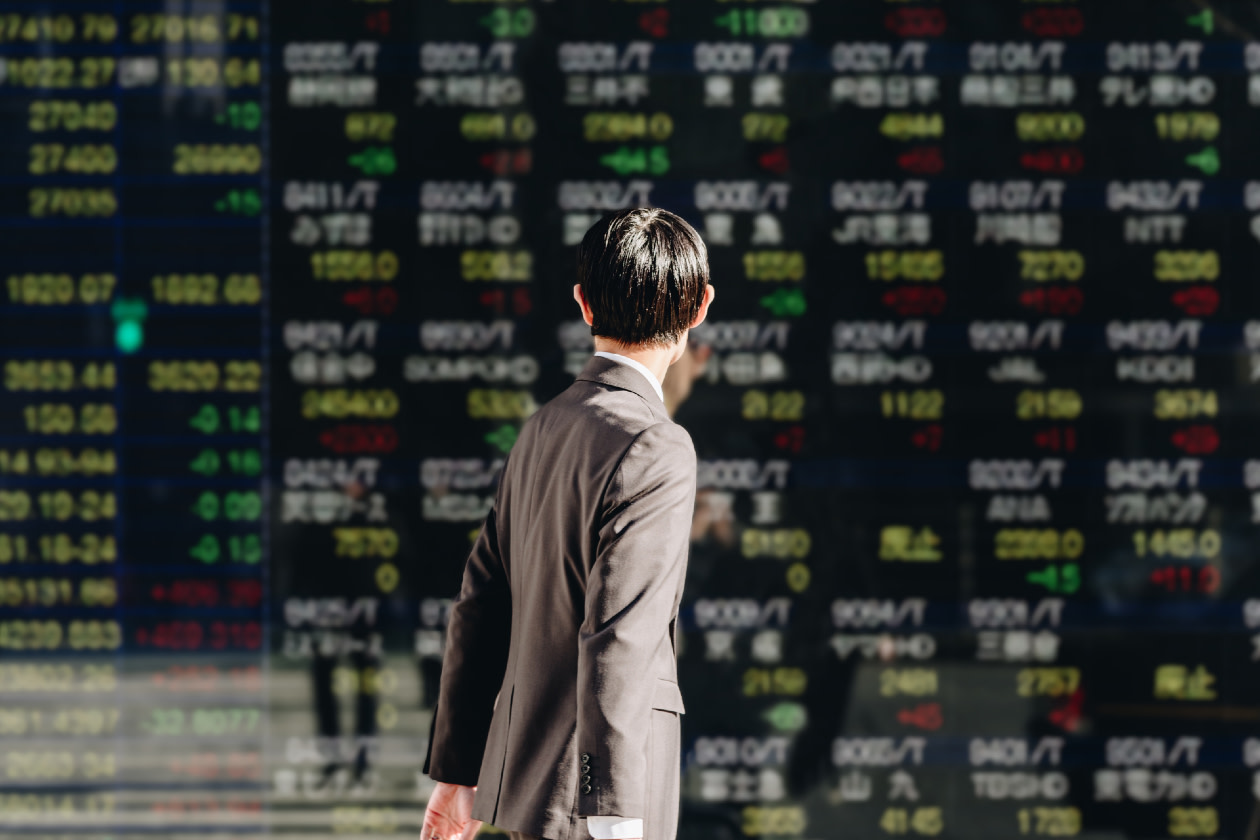

Asian share markets sputtered on Monday as caution took hold ahead of a crucial earnings season for the AI sector, while the potential for increased supply weighed on oil prices and promised relief from inflationary pressures.
Althoughthere were no new developments in the fractious U.S.-Iran peace talks, ships are passing through the Strait of Hormuz, with 160 vessels reported from Monday to Saturday last week.
OPEC+ also agreed a further increase in output targets by 188,000 barrels per day from August, on top of similar increases for June and July. As a result, Brent slipped 0.2% to near four-month lows at $71.95 a barrel and U.S. crude was flat at $68.72. [O/R]
The cooling in energy costs, combined with a softer U.S. payrolls report, led markets to scale back the risk of a Federal Reserve rate hike in the near term, with futures implying a 78% chance of a steady outcome at the July 29 meeting.
Minutes of the Fed's last meeting are due on Wednesday and should offer colour on the hawkish turn by some board members, though that preceded the recent slide in oil.
"Even if you thought there was a risk the Fed might move soon, I think we're safe at least for another month," said Richard Yetsenga, head of research at ANZ.
"Our view overall still is the Fed won't do anything, but clearly we've been above target on the Fed's preferred inflation measure for five years," he added. "There is some risk that the Fed just runs out of patience."
The diminished risk of a hike this month should allow investors to focus on the looming earnings season, when the AI boom is set to deliver bumper tech profits.
This week has just Delta Air Lines and PepsiCo as tasters, though Samsung Electronics is set to make a splash on Tuesday as analysts expect an 18-fold increase in profits.
Profit bonanza for chipmakers
Samsung, the world's largest memory chipmaker by sales, is likely to flag an operating profit of 86 trillion won ($56.35 billion) for the April to June quarter, according to an LSEG SmartEstimate.
South Korea's red-hot market cooled a little last week but is still up 90% for the year so far as AI demand and tight supplies boost chip prices. The index eased 0.8% on Monday, while Japan's Nikkei fell 0.4%.
MSCI's broadest index of Asia-Pacific shares outside Japan fell 0.2%, and Chinese blue chips were little changed.
In Europe, EUROSTOXX 50 futures fell 0.1%, and DAX futures and FTSE futures were flat. S&P 500 futures firmed 0.2%, and Nasdaq futures added 0.7% on top of a 2.1% gain last week.
U.S. President Donald Trump will attend a NATO meeting in Turkey this week and is due to meet with Ukrainian President Volodymyr Zelenskiy to make a renewed push to end the war in Ukraine.
The data calendar kicks off with the U.S. ISM Services survey later on Monday, and forecasts favour a slight pullback to a still-healthy 54.0 in June.
A clutch of central bankers are speaking at an ECB conference later in the day, including Fed Board Governor Christopher Waller, and ECB President Christine Lagarde is also due to speak in Paris.
Influential New York Fed President John Williams appears on Thursday, ahead of next week's testimony by Fed Chair Kevin Warsh before the House Financial Services Committee.
New Zealand's central bank is due to meet on Wednesday, and markets are wagering it will raise its 2.25% cash rate by a quarter point, the first hike since mid-2023.
Policymakers have foreshadowed a tightening for some time, though again that was before the tumble in oil prices and there has to be a chance it will surprise by holding rates steady.
"Even if the Fed stays on hold, a still-stretched manufacturing sector, the threat of higher food costs thanks to El Niño, and weaker local currencies are keeping monetary officials on the defensive," argued Frederic Neumann, chief Asia economist at HSBC.
He expects hikes in New Zealand and South Korea this month, with Indonesia in play as well.
In currency markets, the dollar index had steadied at 100.880 after dipping in the wake of the disappointing June payrolls report. The euro was flat at $1.1434, just above the recent 13-month low of $1.1325.
The dollar firmed 0.3% to 161.96 yen and not far from 40-year peaks of 162.84 as speculators test the Japanese authorities' resolve on intervention.
In commodity markets, gold was a shade lower at $4,166 an ounce, having bounced 2% last week. [GOL/]
(Reporting by Wayne Cole; Editing by Jacqueline Wong and Stephen Coates)
Copyright (2026) Thomson Reuters.
This article was written by Wayne Cole from Reuters and was legally licensed through the DiveMarketplace by Industry Dive. Please direct all licensing questions to legal@industrydive.com.