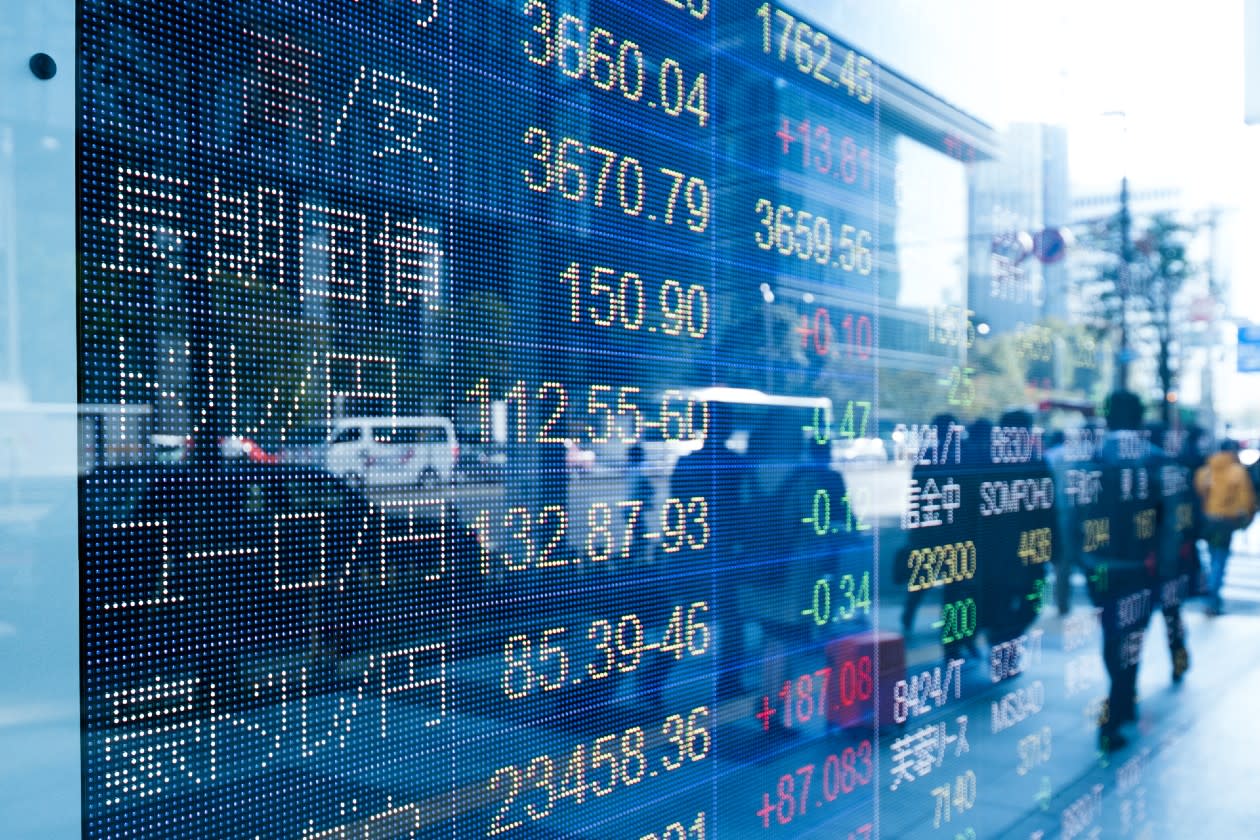

Asian shares were mostly higher Wednesday following a rally on Wall Street, despite concerns about higher oil prices and inflation.
Japan's benchmark Nikkei 225 rose 1.9% to 67,511.12, after the government reported that both imports and exports rose last month from a year earlier, as the weakening yen raised the value of both when converted from dollars to yen.
Australia's S&P/ASX 200 added 0.4% to 8,830.60. South Korea's Kospi surged 4.6% to 7,061.36. The Hang Seng dipped 0.7% to 24,947.30, and the Shanghai Composite gained nearly 0.5% to 3,882.95.
More gains for makers of computer chips and other companies benefiting from the artificial-intelligence boom carried Wall Street higher. The S&P 500 climbed 0.9%. The Dow Jones Industrial Average added 385 points, or 0.7%, and the Nasdaq composite rose 1.3%.
AI stocks once again were at the centre of the action, and they rose for a second straight day after tumbling the week before.
After rocketing higher because of the boom in investment in AI chips and data centres, they have come under pressure in recent weeks on worries that they shot too high.
Micron Technology jumped 12.2% and added to its 1.9% gain from the day before, coming off its 13.3% drop from last week. Nvidia added 2%, and they were the two strongest forces lifting the S&P 500.
The gains came despite more climbs for oil prices, which followed continued attacks between the United States and Iran.
In energy trading early Wednesday, benchmark U.S. crude added 85 cents to $85.19 a barrel. Brent crude, the international standard, rose $1.04 to $92.05 a barrel.
“Oil makes the situation more difficult because Japan imports most of its energy. A weaker yen and higher crude prices arrive together like two waves hitting the same seawall,” said analyst Stephen Innes, a former trader.
In currency trading, the U.S. dollar was unchanged at 163.14 Japanese yen. The euro cost $1.1406, inching up from $1.1404.
Rising oil prices are again pushing inflation higher, just as increases for prices were slowing more than economists expected. That, in turn, could push the Federal Reserve and other central banks to raise interest rates, which would slow economies and undercut prices for stocks and other investments.
AP Business Writer Stan Choe contributed to this report.
This article was written by Yuri Kageyama from The Independent and was legally licensed through the DiveMarketplace by Industry Dive. Please direct all licensing questions to legal@industrydive.com.