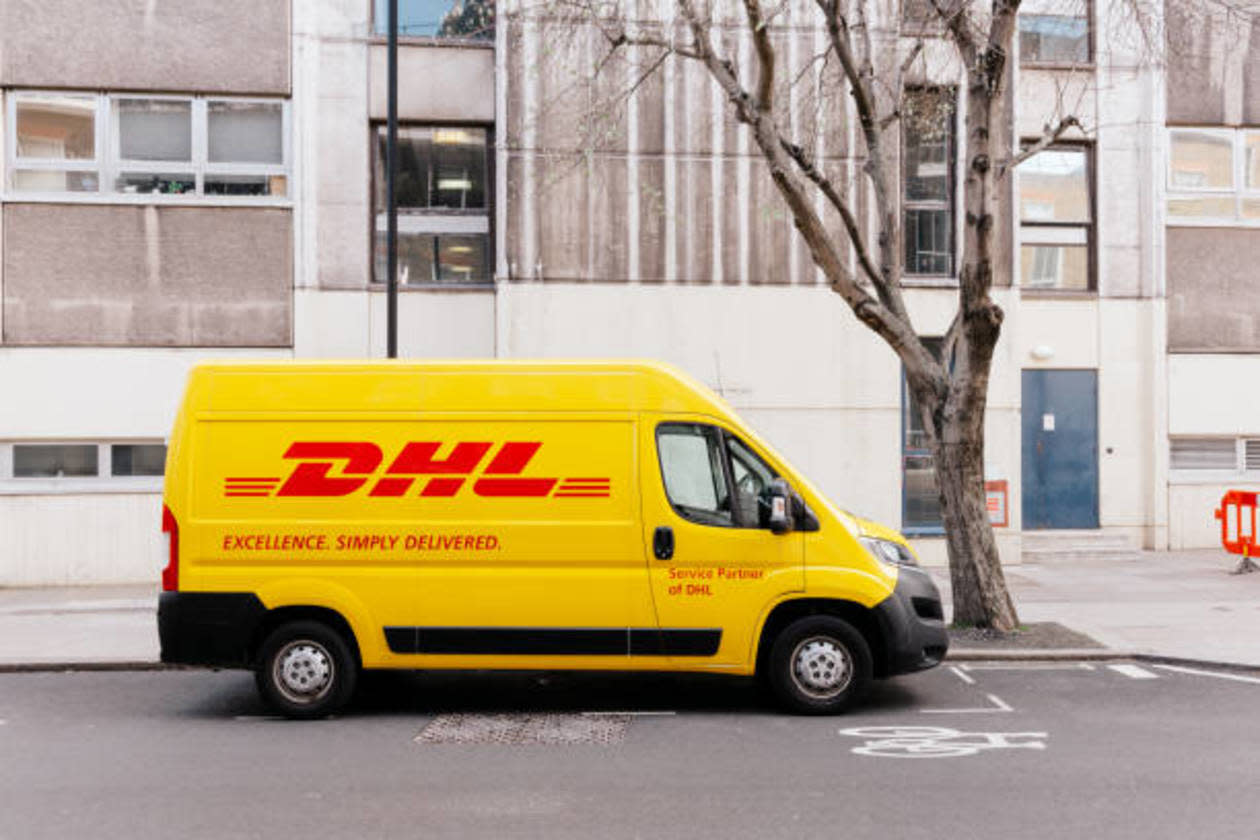

German logistics group DHL on Thursday forecast a higher operating profit for 2026, broadly in line with market expectations, despite the worsening geopolitical environment.
It expects earnings before interest and taxes to exceed 6.2 billion euros ($7.2 billion), after reporting 6.1 billion euros for last year. Free cash flow excluding acquisitions should be around 3 billion euros.
Both targets matched analysts' average forecasts in a company-provided consensus.
"There is still significant geopolitical volatility and uncertainty out there, as we have already seen in the first two months of the year," CEO Tobias Meyer said in a statement. "Our forecast does not assume any improvement in the global economic environment."
Logistics and shipping companies are facing mounting disruptions across air and sea routes as the conflict in the Middle East intensifies.
Iran’s closure of the Strait of Hormuz on Sunday forced major carriers including Maersk, Hapag-Lloyd and CMA CGM to once again divert vessels around Africa, adding significant transit time and costs.
U.S. parcel giant FedEx also said on Monday it was temporarily halting services in five countries in the region.
DHL reported a 1.3% decline in its fourth-quarter operating profit to 1.83 billion euros, as expected by analysts. The result was weighed down by its freight forwarding business, where earnings slumped 36%.
European shipping and logistics firms have been grappling with weaker demand and a series of trade disruptions, including a raft of tariffs imposed by U.S. President Donald Trump.
"In air and ocean freight, we see declining freight rates. In road freight, we feel the weak economic situation in Europe, and especially in Germany," Meyer said.
($1 = 0.8591 euro)
(Reporting by Emanuele Berro and Matthias Inverardi; editing by Milla Nissi-Prussak)
Copyright (2026) Thomson Reuters.
This article was written by Emanuele Berro from Reuters and was legally licensed through the DiveMarketplace by Industry Dive.