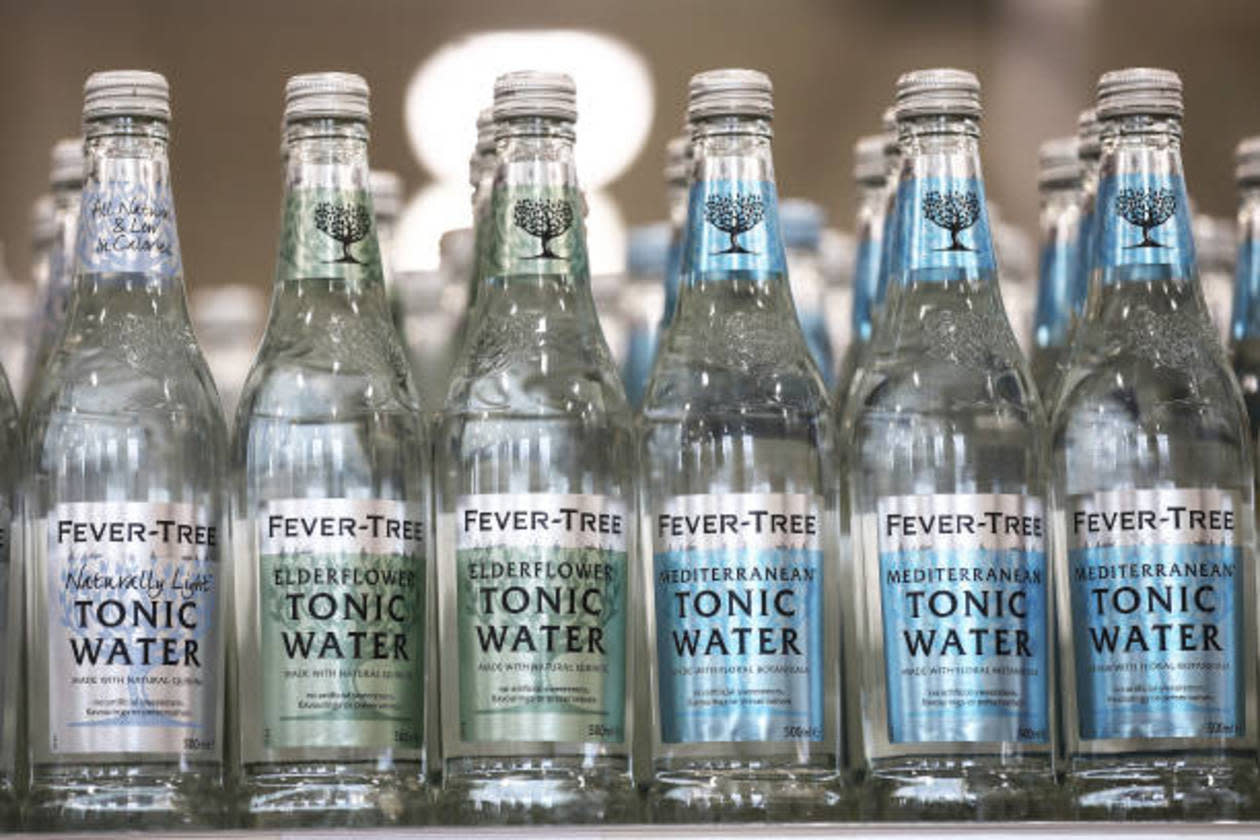

Fever-Tree Drinks reported a 16% drop in annual profit on Tuesday after booking a one-off 2.8-million-pound ($3.76 million) charge over a disputed packaging levy and facing margin pressure from its U.S. partnership with Molson Coors.
The company said it has launched a formal legal challenge against the UK Environment Agency over the Extended Producer Responsibility levy, which Fever-Tree argues should not apply to certain glass formats sold in bars and restaurants.
Fever-Tree is the latest British company to clash with regulators over new environmental packaging rules that shift recycling costs onto producers, adding to the broader cost pressures weighing on profitability.
"The decision to take a provision to cover a possible additional EPR liability represents accounting prudence rather than any change in Fever-Tree's confidence in its position," Matthew Webb, an Investec Bank analyst noted.
Fever-Tree shares fell 5.7% in early trade, but reversed course to trade 2.8% higher by 0850 GMT.
Molson Coors deal
Fever-Tree, which manufactures most of the products it sells in the U.S. in Britain, signed a distribution and manufacturing agreement with Molson Coors last year to help localise production amid rising tariffs and boost its U.S. sales.
The tonic maker's U.S. revenue, which accounts for about one-third of the total, grew 6% on a constant-currency basis in 2025.
CEO Tim Warrillow said the strategic partnership creates "a significant opportunity to take Fever-Tree to the next level" in its largest growth market, adding that the company remains comfortable with market expectations for 2026.
"2026 will start to show the benefits of the TAP deal with a major uplift in scale and execution capability in the US," Jefferies analysts said, adding that they expect sales to pick up toward the end of the first half and gather further momentum in the second half.
Fever-Tree reported adjusted core profit of 42.4 million pounds, down from 50.7 million pounds last year. Analysts' expectations, on average, were at 44.4 million pounds, according to a company-compiled poll.
($1 = 0.7449 pounds)
(Reporting by Yamini Kalia in Bengaluru; Editing by Sherry Jacob-Phillips and Louise Heavens)
Copyright (2026) Thomson Reuters.
This article was from Reuters and was legally licensed through the DiveMarketplace by Industry Dive.