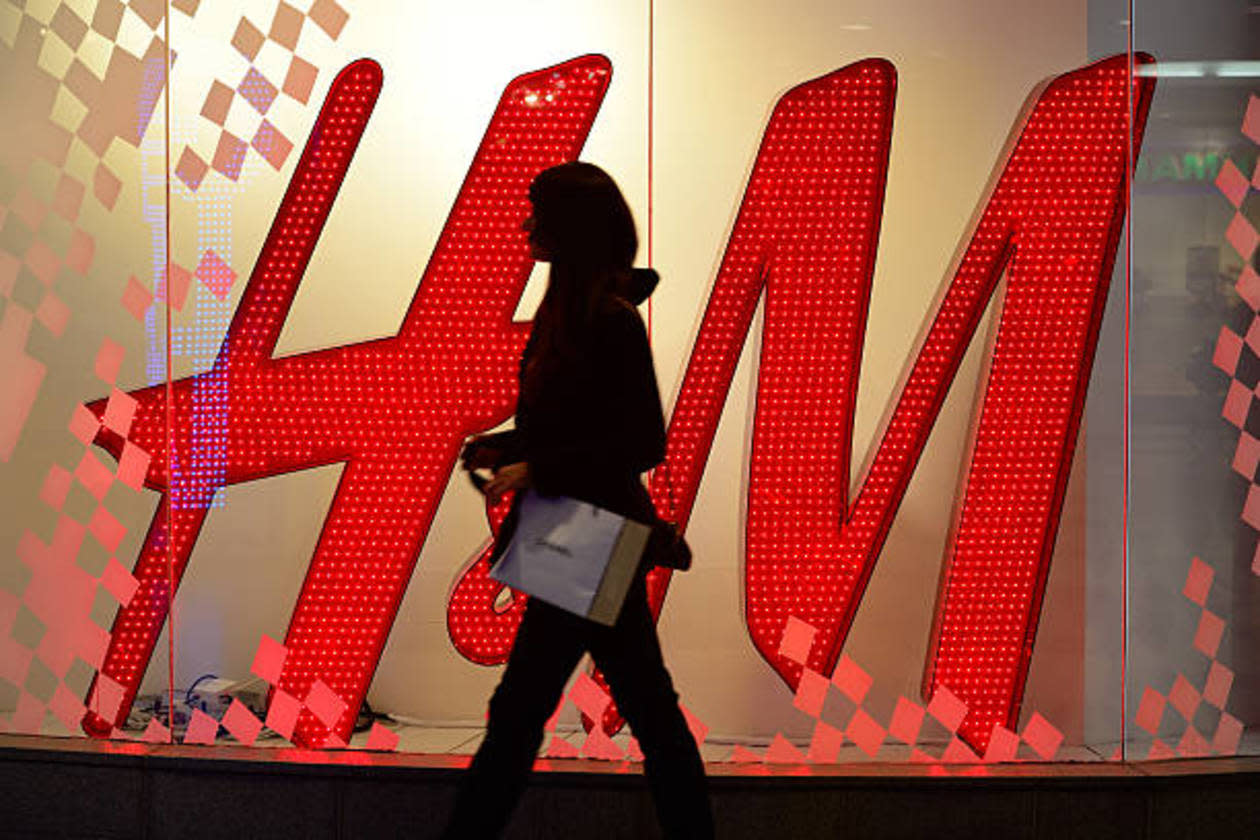

Fashion retailer H&M on Thursday forecast a small rise in March sales, a subdued outlook that hit its shares despite a bigger than expected increase in first-quarter profit, helped by tight cost control.
The Swedish group said its flexible supply chain would allow it to adapt, if needed, to economic fallout from the Iran war.
"In a still challenging macroeconomic environment marked by increased geopolitical uncertainty, flexibility is more important than ever. With the customer in focus, short decision paths and good cost control, we can adapt to a rapidly changing environment," CEO Daniel Erver said in a statement.
'Somewhat disappointing'
Operating profit for December-February rose for a third consecutive quarter to 1.51 billion crowns ($162 million) from 1.20 billion a year earlier, topping the 1.39 billion expected in an LSEG poll of analysts.
"Towards the end of the quarter our well-received spring collections contributed to a positive sales trend, which also continued into March," Erver said.
Sales measured in local currencies were down 1%, implying a sequential improvement in February from the first two months of the quarter. H&M had previously flagged a 2% drop in December-January. It predicted on Thursday a 1% increase in March.
Analysts said the March outlook fell short of expectations, and H&M's shares were down 5% in early trade to September 2025 lows.
"Only 1% ... is somewhat disappointing given management’s comments that the spring collection has been well received," Alphavalue analyst Jie Zhang said.
The rival to Inditex said it was closely monitoring developments in the Middle East and the implications for global trade.
"With good flexibility in the supply chain and a low proportion of air freight, there are opportunities to adapt the flow of goods to changed conditions," it said. "Middle Eastern markets account for a small portion of the company's total sales and the markets are operated through franchise partners."
($1 = 9.3424 Swedish crowns)
(Reporting by Greta Rosen Fondahn. Additional reporting by Vera Dvorakova in Gdansk. Writing by Anna Ringstrom. Editing by Mark Potter)
Copyright (2026) Thomson Reuters.
This article was from Reuters and was legally licensed through the DiveMarketplace by Industry Dive.