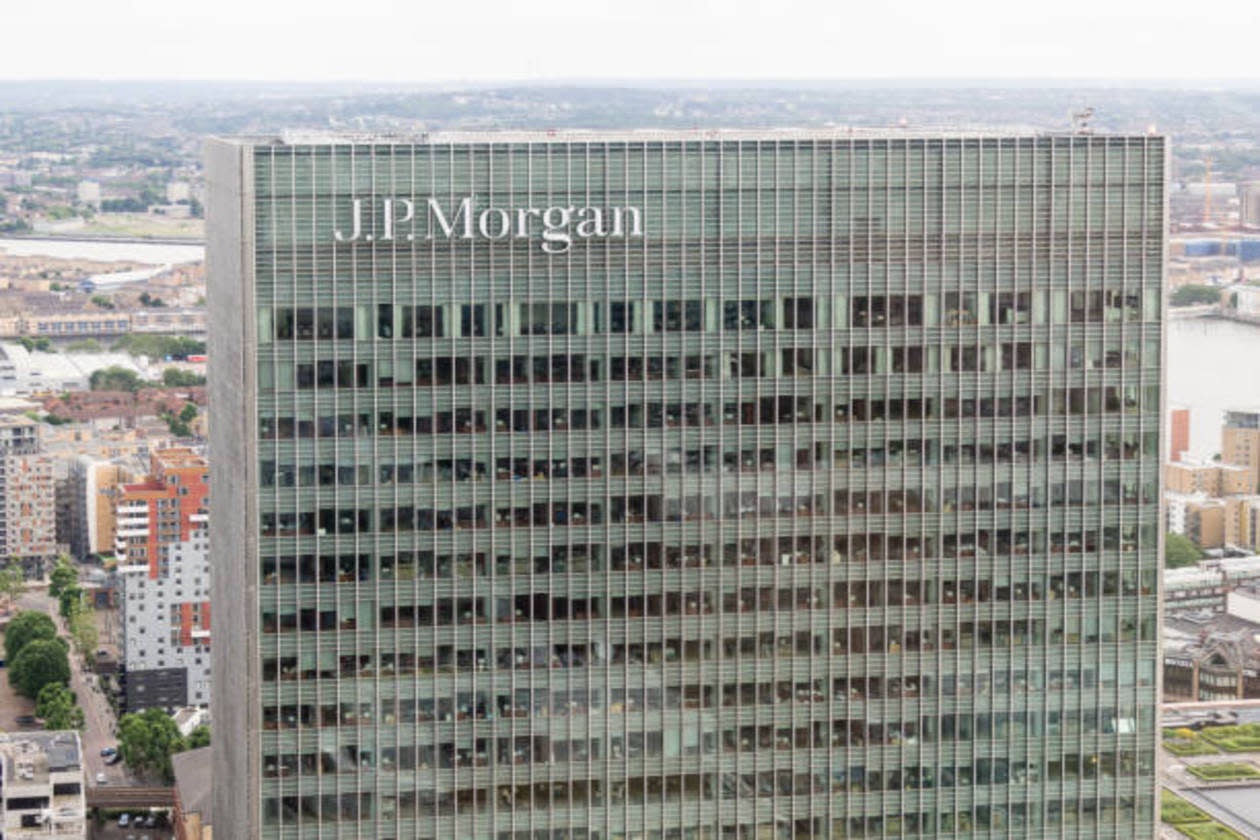

J.P. Morgan raised its year-end target for the S&P 500 index to 8,000 from 7,800 on Monday, citing prospects of solid corporate earnings and rising confidence that AI investments by large hyperscalers would drive faster revenue growth.
The new target implies about 3.1% upside from the index's last close of 7,757.64 and adds to a growing wave of bullish calls, with at least seven brokerages now expecting the benchmark to reach the 8,000 level by 2026-end.
"As elevated backlogs convert into recognized revenue, cloud growth should remain well supported, helping validate rising AI capex, strengthen order coverage, and further ease ROIC (return on invested capital) concerns," J.P. Morgan analysts said.
The brokerage also revised its S&P 500 earnings-per-share forecasts to $365 for 2026 and to $420 for 2027. It had earlier expected $350 for 2026 and $390 for 2027.
Of the 436 S&P 500 companies that had reported June-quarter results through Friday morning, 85.1% beat analyst expectations, according to LSEG data, well above the long-term average of 68% since 1994.
J.P. Morgan said the benefits of rising AI investments were clearer in the second quarter, especially at Google, Amazon and Microsoft, as strong cloud growth, larger backlogs and better cash-flow visibility eased investor concerns about returns on spending.
Despite the strong earnings backdrop, J.P. Morgan maintained its forward valuation multiple target at about 20 times, citing higher interest rates, geopolitical risks and a large supply of equity and debt issuance.
The S&P 500 has gained 13.3% so far this year, buoyed by AI optimism, even as uncertainty over the reopening of the Strait of Hormuz and talks involving Iran, Oman and the United States has kept pressure on oil markets and shipping.
(Reporting by Kanishka Ajmera in Bengaluru; Editing by Mrigank Dhaniwala and Subhranshu Sahu)
Copyright (2026) Thomson Reuters.
This article was from Reuters and was legally licensed through the DiveMarketplace by Industry Dive. Please direct all licensing questions to legal@industrydive.com.