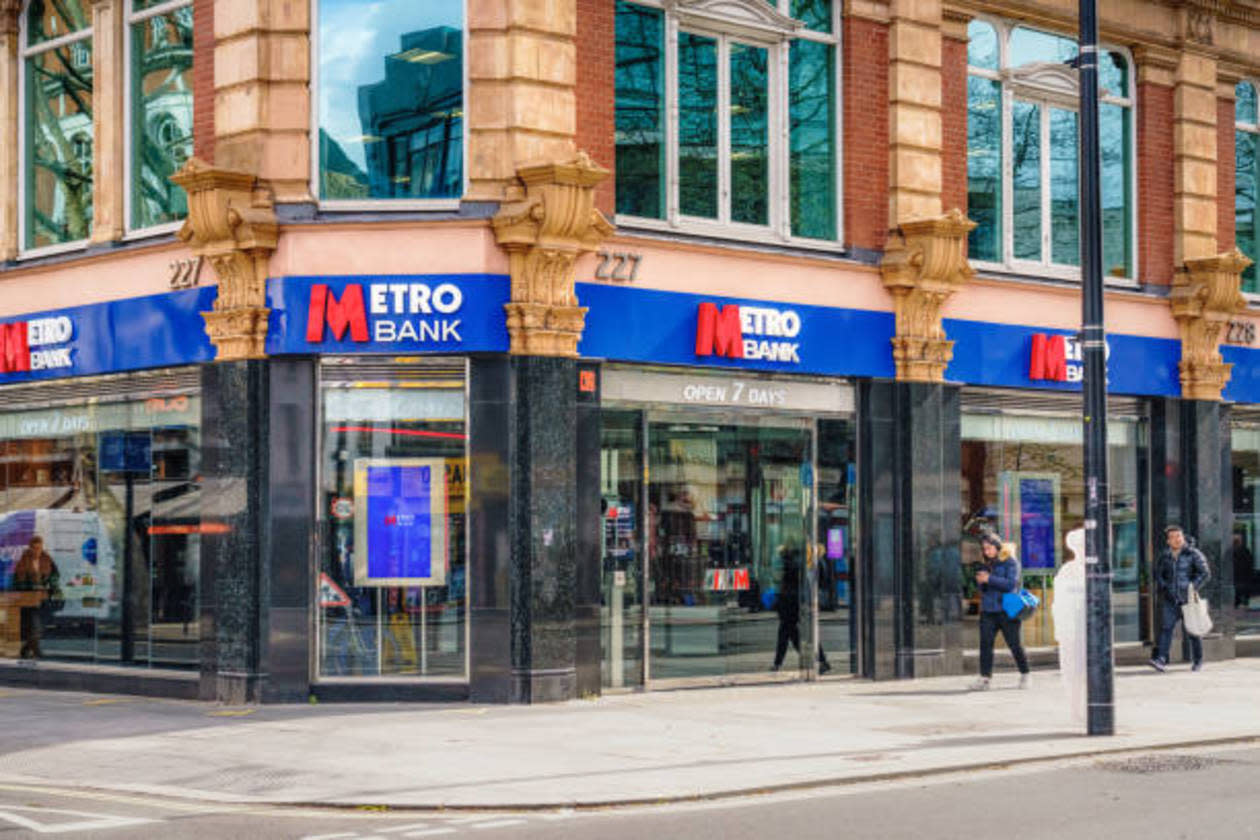

Metro Bank has revealed a return to profit for the past year after slashing costs across its operations and shifting more towards corporate lending.
The London-based lender told shareholders on Wednesday that it delivered an £87.2 million pre-tax profit for 2025, bouncing back from a £212.1 million loss a year earlier.
The profit came after the company cut its costs by 7% over the year, more than the 4% to 5% range previously expected.
Boss Dan Frumkin told reporters that the reductions were linked to renegotiations with some of its larger customers, the “streamlining” of some operations as well as increased automation.
The company has heavily reduced its cost base in recent years as part of a major turnaround since 2023.
In the years since, the lender has cut more than 1,000 roles and also scrapped the seven-day-a-week opening hours across its branches – once a central feature of the banking group.
The Financial Times reported in January that Metro Bank had put about 100 roles at risk in its latest round of potential redundancies.
But the boss stressed that Metro Bank has “no intention to have another redundancy programme”.
The company said it expects its costs to remain flat in 2026 after recent reductions already put it on track to meet guidance for next year.
Metro Bank reported that total underlying revenues increased by 16% to £585.1 million, despite reporting a reduction in assets and loans on its books.
It said it was boosted by its strategy to focus more on corporate, SME and specialist lending.
Loans and advances across these areas jumped by 56% to £5.23 billion for the year.
Nevertheless, the company stressed that it was still committed to retail customers and would continue to open more high street banks.
Bosses said the company, which currently has 78 branches, has signed leases for new sites in Newcastle and Leeds and believes it could grow to as many as 120 locations.
Mr Frumkin said: “2025 was a year of strong growth and successful delivery for Metro Bank.
“Looking forward, we have a clear strategy and resilient business model that will support profitable growth against a changing market backdrop.”
This article was written by Henry Saker-Clark from The Evening Standard and was legally licensed through the DiveMarketplace by Industry Dive.