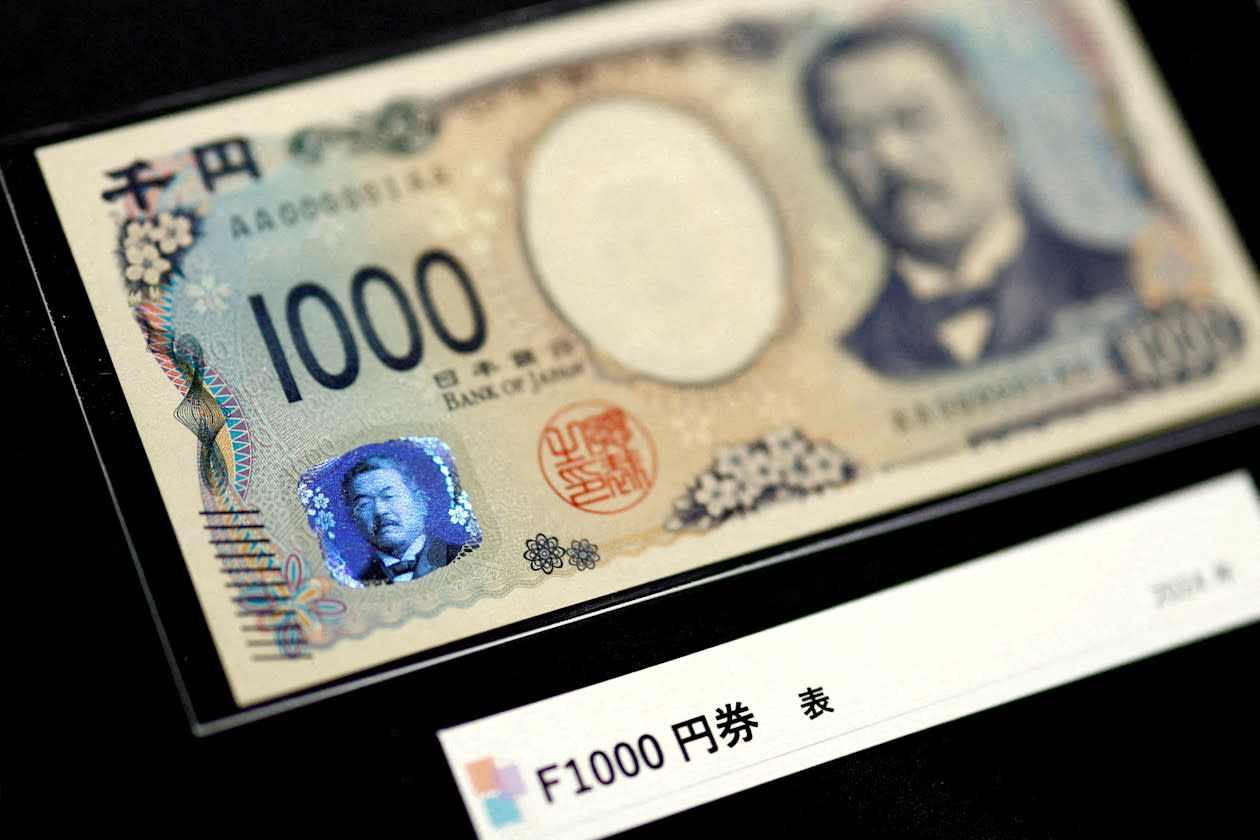

The Japanese yen is surging, reviving an uncomfortable memory for investors: the carry-trade turmoil of the summer of 2024.
The yen's surge is reviving memories of the market-rattling carry-trade unwind of summer 2024.
AI winners like Nvidia and AMD could get sold if the yen's rise forces investors to unwind bets.
A stronger yen could squeeze Japanese companies like Toyota and Sony that rely heavily on overseas sales.
Early on Wednesday, a dollar bought about 153 yen, about 4% fewer than at the start of the month and 2% fewer than at the start of the year as the Japanese currency strengthened. The currency pair had surged to a four-decade high near 164 in late July.
The rally matters well beyond the currency market. For years, investors have borrowed cheaply in yen and put the money into higher-yielding currencies and riskier assets around the world.
A rapidly strengthening yen can make those trades unprofitable and prompt investors to unwind positions, potentially triggering selling across stocks and bonds.
"When investors have to sell in a hurry to cover a currency bet gone wrong, they sell whatever they hold, and that can mean stocks, bonds and funds that ordinary savers are invested in too, often through their pension or their workplace retirement plan," said Nigel Green, CEO of deVere Group, a financial advisory firm, on Tuesday.
That is how a sharp move in the yen can ripple into the portfolios of investors who have never traded the currency.
5 ways the yen rally could hit your portfolio
1. AI winners could become a source of cash
One place the fallout could show up is in some of the market's biggest AI winners.
Nvidia, Broadcom, AMD, and TSMC, along with memory makers such as Micron, could be vulnerable if the yen's rally triggers forced deleveraging, Charu Chanana, Saxo's chief investment strategist, wrote in a note Tuesday.
The issue isn't necessarily their fundamentals, but their strong performance and crowded ownership, which make them an obvious source of cash when leveraged investors need to sell quickly, Chanana wrote.
2. Bonds and rate-sensitive stocks could face a less obvious squeeze
Bonds and rate-sensitive stocks could come under pressure
Bonds are another channel through which the yen's rally could ripple through portfolios.
Japanese bonds have already been selling off, pushing the benchmark 10-year yield their highest level in three decades. Higher yields at home, coupled with a stronger yen, could give Japanese investors more incentive to bring money back from overseas.
That could mean selling foreign bonds, potentially pushing global long-term yields higher and putting pressure on rate-sensitive stocks such as REITs, utilities, and infrastructure companies, Chanana wrote.
A decisive break below 152 yen per dollar could accelerate the yen's rally and force more traders to cover short positions, Adam Turnquist, chief technical strategist at LPL Financial, wrote on Tuesday.
That could "reignite the yen carry trade unwind risk," with ripple effects across global assets, including US Treasurys, Turnquist added.
3. High-priced software and momentum stocks could get squeezed
Expensive software and momentum stocks are another potential pressure point.
Palantir and Snowflake are among the names that could be vulnerable if the yen's rally triggers broader deleveraging, Chanana wrote.
The greatest risk is among businesses that combine high valuations with weak free cash flow or recurring financing needs, she added.
4. Small caps and leveraged companies could feel tighter financial conditions
Smaller, more leveraged companies are another potential pressure point.
The Russell 2000, along with smaller regional banks, retailers, airlines, and lower-quality industrial companies, could be vulnerable if the yen rally triggers broader deleveraging, Chanana wrote.
These companies tend to have thinner liquidity and greater refinancing needs, which can amplify losses when financial conditions tighten, she added.
5. Japanese exporters could take an earnings hit
Japan's major exporters are another potential pressure point — and many are heavyweight stocks in the country's equity market.
A stronger yen reduces the value of their overseas earnings when translated back into yen and can make Japanese-made goods less competitive abroad.
Toyota, Honda, Sony, Tokyo Electron, and Advantest are among the companies that could be vulnerable, Chanana wrote.
Weakness in such large Japanese stocks could also weigh on Japan-focused ETFs and international funds that hold them.
The ugly echo of 2024
The memory of summer 2024 is what makes the latest move unnerving.
On August 5, 2024, the Nikkei 225 plunged 12.4% in its biggest one-day rout since the 1987 Black Monday crash, as a stronger yen and rapid carry-trade unwinding compounded fears over the US economy following a Bank of Japan rate hike days earlier.
This time, the policy backdrop is different. The US and Japan jointly intervened in the currency market on July 31 to support the yen, while markets are also pricing further BOJ tightening.
Still, this isn't August 2024 redux — at least not yet.
The yen's recent move has been driven mainly by domestic Japanese factors, while emerging-market assets and carry trades have remained resilient, Michael Wan, a senior currency analyst at MUFG, wrote Wednesday.
But the risk of a broader unwind hasn't disappeared.
"Despite short-term fundamentals suggesting the move is overdone, it remains risky to stand in its way, particularly given the scope for further carry trade unwinding," strategists at ING wrote Tuesday.
This article was written by Huileng Tan from Business Insider and was legally licensed through the DiveMarketplace by Industry Dive. Please direct all licensing questions to legal@industrydive.com.