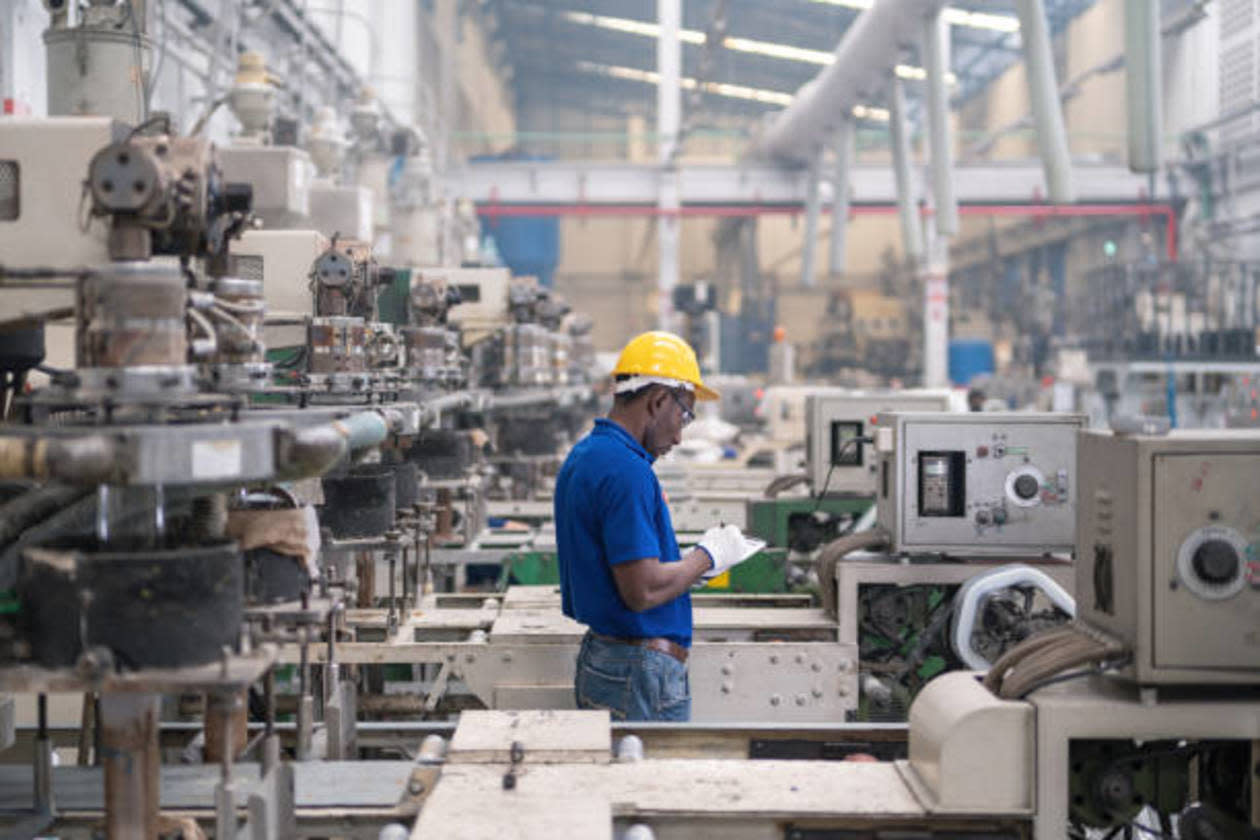

U.S. manufacturing activity slowed in June after surging in the prior month, likely as some of the lift from businesses front-loading orders to avoid shortages and higher prices caused by the Middle East conflict faded.
The Institute for Supply Management said on Wednesday its manufacturing PMI slipped to 53.3 last month from 54.0 in May, which was the highest reading since May 2022. A reading above 50 indicates expansion in manufacturing, which accounts for 9.4% of the economy. Economists polled by Reuters had forecast the PMI unchanged at 54.0.
Despite June's pullback in activity, manufacturing has grown for six consecutive months, also supported by an artificial intelligence investment boom, which has helped to blunt the hit on factories from the U.S.-Israel war with Iran.
The ISM survey's new orders measure fell to a still-lofty 56.0 last month from 56.8 in May. Order backlogs also decreased after rising in the prior month, while exports contracted.
Factory inventories, however, rebounded after a prolonged period of contraction. Supply chains improved somewhat, likely because of a fragile ceasefire in the conflict. The survey's supplier deliveries index eased to 57.4 from 60.6 in May, with a reading above 50 indicating slower deliveries.
The slight improvement slowed the pace of increase in inflation at the factory gate.
The survey's prices paid for inputs measure dropped to a still-elevated 73.0 from 82.1 in May. The shaky truce has pushed oil prices back to pre-war levels. But prices are likely to remain high as the AI spending spree raises the cost of technology goods like semiconductors and electronics.
Financial markets expect the Federal Reserve to raise interest rates this year because of inflation. The U.S. central bank this month left its benchmark overnight interest rate in the 3.50%-3.75% range, but updated quarterly projections showed policymakers expected to raise borrowing costs this year.
Factory employment remained depressed in May. Since January 2023, the ISM's manufacturing employment index has contracted in 40 of the 41 months.
(Reporting By Lucia Mutikani; Editing by Chizu Nomiyama)
Copyright (2026) Thomson Reuters.
This article was from Reuters and was legally licensed through the DiveMarketplace by Industry Dive. Please direct all licensing questions to legal@industrydive.com.