inheritance tax changes
Inheritance tax on pensions: what’s changing in 2027
From 6 April 2027, most unused pension funds will be included in the value of your estate for inheritance tax (IHT) purposes.
Although more people will pay IHT as a result, not everyone will face a bill.
If you’re likely to be affected, now could be a good time to revisit your plans and make sure that you’ve got your ducks in a row.
Important information: tax rules and inheritance tax planning can be complicated. Rules change and affect people in different ways. This isn’t personal advice. If you’re not sure what’s right for you, think about taking financial advice or speaking to a tax specialist.

Important information: tax rules and inheritance tax planning can be complicated. Rules change and affect people in different ways. This isn’t personal advice. If you’re not sure what’s right for you, think about taking financial advice or speaking to a tax specialist.
What is inheritance tax, and who pays it?
Inheritance tax (IHT) is a UK tax on the estate (property, money, possessions and certain gifts) of someone who has passed away.
IHT is usually paid at 40% on the value of your estate, over the £325,000 allowance (the normal nil rate band). You get an additional allowance of up to £175,000 if you pass on your family home to children or grandchildren.
Anything left to a spouse or civil partner is usually exempt, and their unused allowance carries over to the survivor. This is why married couples can often shelter up to £1 million combined.
Below that combined threshold, you don’t pay IHT. Most UK estates currently fall under the threshold.

What are the pension rule changes, and why do they matter?
At the moment, pensions typically sit outside all of this.
A Self-Invested Personal Pension can pass to your beneficiaries free of IHT, regardless of size. This is because defined contribution pension pots aren’t counted as part of the estate.
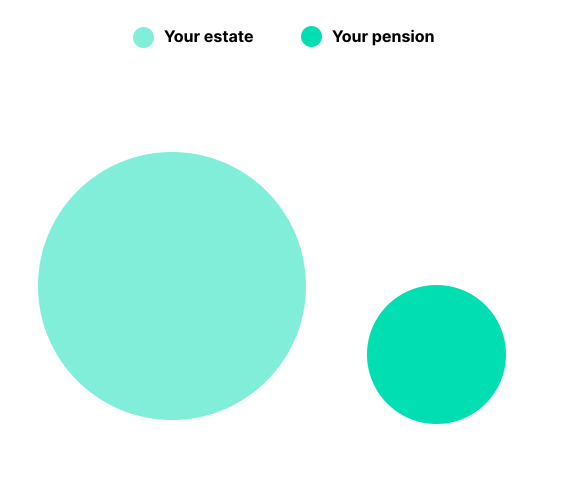
But from 6 April 2027, that is changing. Unused pension funds and death benefits will be counted as part of your estate for the first time.
This is a big change. Where pensions might previously have been used as an IHT-efficient way to pass on wealth, this strategy will need to be adapted. More UK families are expected to be subject to inheritance tax as a result.
How to get ready for IHT changes
If you think that you’re likely to be affected by the proposed inheritance tax changes, it’s probably a good idea to think ahead and adapt your plans if you need to. But there’s no need to rush – take your time to make sure that you get things right.
Think ahead
Think about how and when you might want to pass on wealth. Do the changes affect your plans?
Talk it through
Speak to people you trust or get an expert view from our advice team.
Adapt your plan
You don't need to wait until 6 April to start making changes. Adapt your plan now if you need to.
Inheritance tax rule changes: latest news and views
Get ahead of the changes with tips and analysis from our experts.
Ways to reduce inheritance tax
5 min read
5 min read
We're here if you need us
Inheritance tax planning can be complicated.
If you want to create or revise a plan for gifting wealth, our advice team can help.
IHT on pensions FAQs
Common questions about the inheritance tax rule changes
Our advice team can help you to create or revise a financial plan that takes inheritance tax into account. They can help you to understand your inheritance tax position, secure your own future, then use surplus wealth deliberately.
Each plan is personal to each individual. But they’ll follow some consistent principles:
Work out what your estate could be worth and the inheritance tax that you might face. Then separate what you need from what you’re unlikely to need.
Start with simple actions, such as gifting surplus income and capital you can afford to give away, rather than waiting until death.
Use pensions to fund retirement, keep your plans and paperwork up-to-date, and move to more complex solutions only where they add real value.
For any deaths that occur after 6 April 2027, your pension provider won't pay it automatically, but they can help. Your representatives can ask the provider to hold back part of the pension – up to 50% for up to 15 months – and to pay some or all of the tax to HMRC directly from the pension. That means that they don't have to find the money from elsewhere in the estate while they wait for the pension to be released.
For most people, the impact is limited. Pensions paid to a spouse, civil partner or dependants, and death in service benefits from a registered scheme aren't affected. But some lump sum death benefits from defined benefit schemes will now count towards your estate, and so will any defined contribution savings that you hold alongside a defined benefit pension. Check your scheme's death benefit rules or speak to an adviser.
Trusted by 2 million people
Again and again clients choose us to look after their savings and investments.
45 years of experience
We've been helping Britain invest through it all since 1981.
Award-winning customer service
We've won 200+ awards, including 'Best for Customer Service' in 2026.
We've won over 200 awards for our services