Markets entered 2026 with geopolitical risk back on investors’ radar.
Over the previous quarter we’ve seen alliances shift, renewed trade frictions and ongoing conflict risks, all of which have once again influenced sentiment and prices. While markets have broadly remained resilient and posted strong gains overall, periods of volatility have been more frequent and remind investors that political uncertainty still matters.
Last year’s winners continue to shape today’s landscape. Artificial intelligence (AI) stocks drove much of the gains in global markets while gold benefited from demand for ‘safe haven’ assets.
Both delivered strong returns, but recent price swings highlight how quickly things can change.
This article isn’t personal advice. Remember, investments rise and fall in value, so you could get back less than you invest. If you’re not sure if an investment’s right for you, ask for financial advice.
Looking back
AI was the dominant theme for much of 2025, but gold was not far behind. Prices reached record levels in early 2026 before pulling back as some geopolitical risks eased. This prompted renewed debate over whether other precious metals could share in this success and if parts of the market had become overheated.

We have seen several conversations around bubbles that have yet to burst. At the same time, many investors have become aware of how currency movements can influence returns, particularly where overseas assets make up a significant part of a portfolio. The S&P 500 for example delivered more than 17% in gains last year, in dollar terms. But from a sterling point of view, this was under 10%.
With a new year underway, it’s a good time to reflect on market behaviour and revisit portfolio positioning. I discussed this very topic with two of my colleagues in Hargreaves Lansdown Fund Managers.
The economic landscape – a strategist’s view
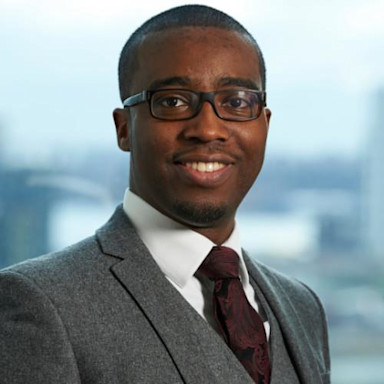
I first spoke with our investment strategist Andrew Birt for his thoughts on the macroeconomic landscape.
Andrew sees the current environment driven more by uncertainty than by any single dominant theme which is a point I resonate with. He highlights that geopolitical developments remain important, but they sit alongside inflation, interest rates, economic growth and policy decisions as key influences on the markets.
He shared a few tips and his thoughts on assessing these factors:
Inflation appears to be cooling globally, and this should enable interest rates to remain lower or even fall further. However, if economic growth is too strong, or a shock causes food or commodity prices to rise, inflation could start rising again.
Interest rates are unlikely to fall as low as they were from 2009 to 2022. Here in the UK, we could expect a target to mostly be within a 2% to 5% range. Lower interest rates are generally good for financial markets but can be harmful longer term if they help to drive inflation higher.
Global economic growth is looking positive, supported by lower interest rates, government spending and business investment. Look at consumer confidence and spending and how businesses are coping to gauge progress from here.
Government policy decisions matter in terms of their impact on confidence and how easy it is to do business. A government with a clear strategy, the ability to implement it and the conviction to stick with it, is generally positive for the economy and financial markets.
Managing Uncertainty
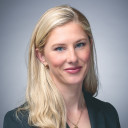
Reflecting with Ziad Gergi, our Head of Multi-Manager Funds, I am reminded of the importance of disciplined asset allocation instead of reactive decision-making. He says political events can move markets quickly, but they’re rarely predictable. In addition to that, gold has shown how quickly sentiment can turn.
Gold can be a useful hedge in periods of stress, but sharp pullbacks remind investors that defensive assets can still be volatile.
From Ziad’s view, the starting point is the same, with a long-term strategic asset allocation providing the foundation for risk and returns over time. Within that framework, he says positioning is adjusted when market conditions or risk indicators justify it. So, the economic landscape on its own is not a deciding factor but one of many that influence.
What Ziad looks for in a growth fund:
A clear objective as a guide for the long-term asset allocation. Asset classes should be mixed in a way to help the fund achieve its objective in a risk disciplined framework.
Diversification is key across and within the asset classes. It’s important not to have a big bet on a single country or style. Market rotations tend to be quick and sharp so keeping a diversified approach is essential.
It’s important to realise that the best way to navigate market volatility is to a have a balanced portfolio as trying to adjust a portfolio during market turbulence usually proves costly and quite often comes too late.
Staying focused
Sharp market moves and constant news flow makes it tempting to act quickly but history shows that long-term outcomes are rarely improved by short-term reactions.
Returns can be driven by a mix of fundamental and quantitative factors. Earnings growth, interest rates, inflation, valuation levels and investor behaviours all play a role at different times. Geopolitical risk also influences many of these through changes in confidence, trade and capital flows as our markets are quite heavily integrated.
Understanding how these forces interact within your portfolio can help you make informed decisions and reduces the temptation to chase short-term trends. In an environment where uncertainty is likely to remain a feature rather than an exception, combining long-term discipline with thoughtful tactical positioning remains an effective way to navigate markets.
An easy way to start investing
Our fund managers use these same principles when they manage our Ready-Made Investments. These all-in-one investment portfolios are designed to make investing easy.
Simply choose the investment that best aligns with your goals and leave the rest to the experts. You just need to check in from time to time.
Remember, all investments can rise and fall in value, so you could get back less than you invest. Our Ready-Made Investment are managed by our sister company Hargreaves Lansdown Fund Managers.