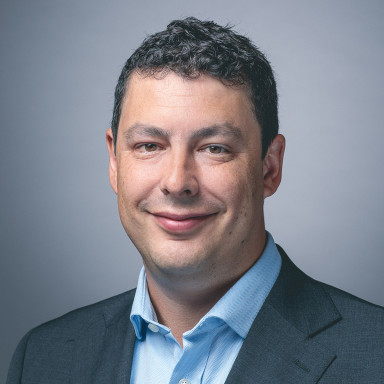
Simon Nichols has built a strong track record in multi-asset investing and took over as lead manager of this fund in 2017
The fund focuses on investing in companies with good long-term prospects from across the globe, with some bonds and cash to act as diversifiers
We think this is a good option for a portfolio in need of a multi-asset fund with a typically high proportion invested in shares
This fund is on our Wealth Shortlist of funds chosen by our analysts for their long-term performance potential
How it fits in a portfolio
The BNY Mellon Multi-Asset Balanced fund aims to achieve a balance between capital growth and income over the long term (at least five years). It uses the IA Mixed Investment 40-85% Shares sector average as a performance comparator.
The fund invests in larger companies, typically in developed markets, with the potential to grow over the long term. The fund also invests in bonds, usually those issued by developed market governments, and cash.
The fund could help diversify an investment portfolio focused on growth. It could also provide some global exposure to a UK focused portfolio or some growth potential to a defensively invested portfolio.
Manager
Simon Nichols has over 25 years’ experience in the industry and joined Newton Investment Management (Newton) in 2001. Newton is now owned by BNY. He began managing funds in the mid-2000s and took over as lead manager on this fund in 2017.
Nichols manages multi-asset funds and a global equity fund. When he finds a company he likes, he tends to invest in it across all his funds. He works closely with the mixed-asset and charities team at Newton. Paul Flood, Head of Multi-Asset and Charities at BNY Investments, and Bhavin Shah are co-managers for this fund. Flood joined the industry and Newton in 2004, while Shah joined the industry in 2004 and Newton in 2011. Both manage a number of other multi-asset funds.
Nichols is the main decision maker in terms of what ends up in this fund, and how much is invested in each idea. He uses the wider analyst teams at BNY to provide investment ideas.
We rate Nichols highly and our conviction in this fund is based on his continued involvement as lead decision maker.
Process
Nichols invests in a combination of shares, bonds and cash, with 70-80% of the fund typically invested in shares.
Nichols favours the shares of large, established companies with competitive advantages, that are cash generative, don’t have lots of debt and that often pay a dividend. While there’s no income target for the fund, Nichols likes companies that pay a dividend because of the discipline that this puts on company management teams.
Company share ideas initially come from BNY’s wider analyst team. The mixed-asset team reviews all recommendations and complete their own analysis on the interesting ideas before deciding whether it should be added to the fund.
The rest of the fund is made up of bonds and cash. The bonds are usually from developed market governments, but Nichols can invest in company bonds too. The bonds and cash act as a diversifier when stock markets fall.
The amount invested in company shares is partly based on valuations (whether the share price fully reflects future potential or not). When Nichols thinks valuations are high, he will reduce the amount in shares and hold more cash and bonds, while the reverse is also true.
At the end of June 2026, the fund held 75.4% in shares, 17.6% in bonds and 7.1% in cash. Around 35% of the fund is invested in US company shares, and around 33% in the UK and Europe. The three largest sector exposures are Technology, Industrials and Financials at 17.2%, 14.0% and 12.8% respectively. The bond section is mainly made up of UK government bonds, with some overseas government bonds.
Nichols has added ASML and Texas Instruments, both of which are expected to continue to benefit from the growth in the use of Artificial Intelligence (AI). He’s also invested in CRH, a building materials provider and Schneider Electric the French energy technology company. Both have potential to benefit from the building and use of data centres.
Nichols has sold software companies Wolters Kluwer and SAP following weak performance and concerns about the impact of AI on their business models and future profitability.
The fund’s universe of potential investments is large and includes emerging markets, high yield bonds and derivatives, which add risk if used. While Nichols can invest in these areas, he prefers to invest in large companies from developed markets, government bonds and cash.
Culture
BNY is a large, US-based firm so the managers have a lot of resources at their disposal. Until mid-2019 the team was part of the Newton brand, but even though the name has now changed to that of the parent company, the way Nichols runs the fund remains the same.
In September 2021, Mellon Investments merged its equity and multi-asset teams into Newton. While this has not impacted the way Nichols invests for this fund, it has given the team access to a larger pool of research analysts that help with idea generation.
The managers are incentivised in a way that aligns their interests with those of long-term investors, which we like. However there have been some significant fund manager departures from the wider Newton business in recent years.
ESG Integration
The team at BNY believes responsibly managed companies are better placed to achieve a sustainable competitive advantage and provide strong long-term growth. While they’ve invested a significant amount of time and resource into their Responsible Investment proposition in recent years, we’re disappointed to note the departure of Therese Niklasson in 2025, someone we’ve long held in high regard.
A dedicated Responsible Investment team exercises the firm’s voting rights, coordinates engagement with investee companies and contributes to public debate on ESG matters. The team reports on their engagement progress in their annual Sustainability and Stewardship report, and their ‘Responsible Investment Quarterly Activities’ report (both available on the Newton website). They also offer a voting dashboard, which provides fund-by-fund search functionality and detailed rationales for votes against management and abstentions.
Investment teams have access to a range of internal tools that consolidate third-party and proprietary ESG research, assess net zero transition credibility and track engagement objectives and outcomes.
The firm also runs a responsible range of funds which take ESG analysis further. They utilise the firm’s thematic research framework to identify and exploit responsible investment themes
Overall we think ESG risks are considered in a meaningful way by the investment team for this fund. However, this fund isn’t part of their Sustainable range and may invest in companies that some would consider to be ‘sin stocks’, including those involved in tobacco, alcohol and gambling.
Cost
This fund is available at an annual ongoing fund charge of 0.68%, but HL clients benefit from an ongoing saving of 0.13%. This means you pay a net ongoing charge of 0.55%. Part of the fund discount is achieved through a loyalty bonus, which could be subject to tax if held outside of an ISA or SIPP.
The HL platform fee of up to 0.35% per year also applies, except in the HL Junior ISA, where no platform fee applies.
The fund takes its charges from capital which can increase the yield, but reduces the potential for capital growth.
Performance
Nichols has performed well as a multi-asset investor over the long term. Since taking over responsibility for this fund at the end of November 2017, it’s returned 102.44%* to the end of June, better than the IA Mixed Investment 40-85% Shares sector average return of 64.29%. Past performance is not a guide to future returns.
Nichols is a naturally conservative investor, which typically leads his multi-asset funds to fare better than peers when the market falls. Since he’s taken over managing this fund its kept pace with a rising market, but it’s reasonable to expect it to lag a strongly rising market due to the cash and bond investments that provide balance. Nichols’ multi-asset funds have typically experienced lower volatility than the global stock market and multi-asset peers over time, although this hasn’t always been the case.
Over the 12 months to the end of June, the fund returned 15.74% compared to the IA Mixed Investment 40-85% Shares sector average return of 17.06%. The fund’s investment in company shares added the most value, which is expected given the large amount invested in them.
Underperformance compared to peers has been driven by the sell-off in software companies caused by the potential disruption of AI in future. Examples include RELX, the UK provider of data and analytics to businesses, and Wolters Kluwer, the Dutch company that provides software solutions. Investments in Healthcare companies have also been challenging, with Zoetis, an animal healthcare specialist, performing particularly poorly for the fund.
While the potential for AI disruption was challenging for some of the investments in the fund, others benefited from the AI boom. Applied Materials, the US company that supplies makers of semiconductors performed strongly. As did GE Vernova, an electricity company in the US that is benefiting from the increased electricity demand required to run datacentres for use in AI. Texas Instruments, a US semiconductor company also had a strong year.
Investments in government bonds delivered positive returns for the fund over the year.
At the end of May 2026, the fund had a historic yield of 1.93%. Please note that yields are not guaranteed and could fall as well as rise over time.
Annual Percentage Growth:
30/06/2021 To 30/06/2022 | 30/06/2022 To 30/06/2023 | 30/06/2023 To 30/06/2024 | 30/06/2024 To 30/06/2025 | 30/06/2025 To 30/06/2026 | |
|---|---|---|---|---|---|
BNY Mellon Multi-Asset Balanced | 1.07% | 8.51%** | 13.01%** | 6.32%** | 15.74%** |
IA Mixed Investment 40-85% | -7.13% | 3.37% | 11.81% | 5.54% | 17.06% |
**These figures show performance of the T share class, which is available to HL clients. This share class was launched in November 2021 and so only has a four year history for the table above. The remaining figures reflect performance of the W share class, which has a higher ongoing charges figure.