The fund has been managed by four experienced investors since launch in June 2015
The fund invests in undervalued companies - this is when a company’s share price doesn’t reflect what the managers believe is its true value
Its investment style and some stock selection mistakes has hurt the fund’s recent performance but we have conviction in the longer-term outlook
The fund is on our Wealth Shortlist of funds chosen by our analysts for their long-term performance potential
How it fits in a portfolio
The Lazard Global Equity Franchise fund aims to deliver long-term growth by investing in companies across the global with predictable earnings and competitive advantages. The managers focus on companies they believe are undervalued – this means their share prices don’t yet reflect their growth potential. This style means the fund could work well alongside a more growth-focused fund or add diversification to a global investment portfolio. Overall, we believe this fund offers something different from other global funds.
Managers
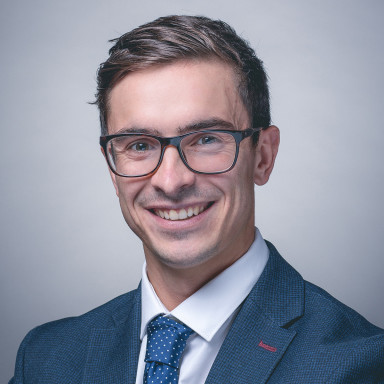
Four co-managers have managed this fund since launch in June 2015.
Matthew Landy is based in New York, while John Mulquiney is based in Sydney. They have over 30 and 25 years of investment experience, respectively. Before joining Lazard in 2005, they both worked as equity analysts for Tyndall Investment Management.
Warryn Robertson is also based in Sydney and has over 30 years of industry experience. Robertson joined Lazard in 2001 and previously worked at PricewaterhouseCoopers Corporate Finance. Bertrand Cliquet is based in London and has over 25 years of industry experience. Prior to joining Lazard in 2004 Cliquet worked at Goldman Sachs.
While the managers are based in different locations and time zones, they still work as a close-knit team when analysing companies and making decisions. They communicate regularly and have managed the fund this way over many years. This set-up also makes it easier for them to meet more companies, no matter where they’re based. They’re also supported by two analysts – Gary Yan who’s based in New York and Anthony Rohrlach based in Sydney.
All four co-managers also run the Lazard Global Listed Infrastructure fund since launch in October 2005. The fund uses a similar investment process and style, but focuses only on infrastructure-related companies. Given the resource and overlap in style, we believe they can manage the workload of both funds. We like the challenge and support gained by working as a team, and we think this enhances their analysis.
Process
The managers aim to invest in unloved companies from across the globe, and where the share price doesn’t yet reflect their true value. If they’re right and more investors recognise this potential over time, the share price could rise.
The managers start by looking for businesses they believe meet their “franchise” model. These are companies that have strong balance sheets, competitive advantages, and earnings they can more easily forecast.
The managers avoid parts of the market that don’t meet this quality criteria. They don’t invest in areas such as tobacco, defence, and oil and gas companies. They also don’t typically invest in banks. The team thinks these areas are too reliant on unpredictable external factors such as regulation, government defence spending, and commodity prices. This makes their earnings difficult to forecast and can put their finances under pressure.
This helps whittle down the universe of companies they can invest in. Potential candidates are then analysed by the team to find their true value.
If a company is taken further, it enters the team’s ‘value rank.’ This ranks companies based on their current share prices and against their true value. The managers then pick the best opportunities from this model – the companies at the top of the value rank make up more of the fund, and those at the bottom are smaller. The model helps the managers to apply the investment process consistently.
The fund invests in 25-50 companies. Currently they own 27 companies as they believe there aren’t as many undervalued opportunities available. This is a relatively small portfolio and means each investment can contribute significantly to returns, although this approach increases risk.
This approach also means the fund can be invested heavily in a few sectors and countries. For example, the fund currently invests 19.2% in financial companies, and 38.0% in Europe. The fund can therefore look and perform very differently to the benchmark (the broader global stock market). Given the focus on finding undervalued opportunities the fund is unlikely to invest as much as the benchmark in areas that are performing strongly at the time, which currently includes the US and technology sector. It also invests in smaller companies and emerging markets, which adds risk.
The managers have stayed true to their philosophy during tougher periods, but the fund can change quickly depending on market conditions. With markets over the past few years becoming increasingly more concentrated, this fund is positioned very differently to peers and can offer important diversification.
Over the past year, the managers added an investment in German healthcare company Carl Zeiss, UK drinks company Diageo and US healthcare company Kenvue. They also sold US payments company Visa after a period of strong performance. Spanish industrial company Ferrovial and US healthcare company Becton Dickinson have also been sold.
Culture
Lazard is a well-established asset manager with offices all over the world. The company’s history in banking and foreign exchange dates to 1851. In 1953 the company launched the asset management side of its business in London. The company now operates in 26 countries across the world.
We think Lazard enables a culture of allowing fund managers to invest as they see fit. The managers of this fund used some of their own money to launch it. We think this personal investment demonstrates their commitment and means their interests are more likely to be aligned with investors and focus on long-term performance.
ESG Integration
Lazard doesn’t require its fund managers to integrate analysis of environmental, social or governance (ESG) factors into their security selection or asset allocation processes, but a significant portion choose to do so. Portfolio managers receive a monthly report containing ESG insights drawn from MSCI and Sustainalytics. Companies with the lowest ESG ratings, and those thought to be in breach of a UNGC principle are ‘flagged’ within the report, but there is no requirement for the managers to sell the investment. Managers also have access to a proprietary materiality map, which helps them identify the main ESG risks relevant to companies in each major sector.
Votes are exercised in alignment with the firm’s voting policy, though it provides less voting disclosure than some peers.
While ESG is integrated into this fund, it’s not a specialist responsible or sustainably invested fund and the manager can invest in some sectors not seen to rank highly based on ESG credentials.
Cost
The fund is available for an annual ongoing charge of 0.82%. The HL annual account charge of up to 0.45% also applies except in the HL Junior ISA, where no annual account charge applies.
Performance
Since the fund launched in June 2015 the fund has returned 154.35% compared to 178.13% for the average fund in the IA Global sector. As always, past performance isn’t a guide to future returns.
The fund also hasn’t performed as well as its benchmark, the MSCI World Index. This is largely because the fund’s value investment style has been out of favour for much of this time. Funds with a growth focus, which have tended to invest more in US and technology companies over the last decade, have done better. The fund has invested less in these areas because share price valuations have been higher and haven’t offered as much future performance potential, in the managers’ view.
Importantly, this fund offers diversification from a lot of other global funds that have increased their exposure to areas like the US and tech in recent years. While there’s nothing to say these areas won’t keep performing well, it’s unlikely for any sector, theme, or country to outperform indefinitely, as different investing styles come in and out of favour.
Over the longer term, we expect the fund to do better when value investing is in favour, and the reverse is also true. A good example of this is in 2022 when the fund did much better than the market when value companies outperformed. The focus on business quality also means we expect the fund to hold up better than some other funds during down markets but may not rise as quickly during rising periods.
Over the last 12 months, the fund has lost 8.87% compared to a gain of 8.56% for IA Global sector
Not only has the fund’s value style of investing been out of favour but the managers’ stock selection has also detracted, especially in the US and the technology sector.
Over the last 12 months, financial service company Fiserv was a key detractor. Its share price fell because of a lawsuit against the company. The team have reviewed the company - they believe this is a temporary issue and that the company still meets their quality framework. Healthcare company Omnicom also struggled due to concerns that AI could hurt its business model. The team remain comfortable as Omnicom has previously been able to successfully navigate technological changes such as the rise of the internet, search engines and social media. They believe the company can do this again and its shares are attractively valued.
On the other hand, European satellite company SES was a positive contributor to performance. It made notable operational achievements over the last 12 months as it expanded its satellite capabilities. Italian energy company Snam SpA and German healthcare company Fresenius Medical Care AG also performed well.
The fund’s performance over this year has disappointed and we don’t usually expect it to perform this way. We have met the fund’s managers several times over the last year to discuss performance in detail, their reflections, and what we can expect in future. We believe the managers have remained true to their investment process, which has served them well for over 10 years, and that they remain focused on delivering for investors over the long term. There’s also a lot of potential pent up value in the fund, which could prove rewarding if and when broader investor sentiment turns towards the types of companies the managers invest in.
Overall, we think the team has the experience, skill, and support to deliver good long-term returns to patient investors, although there are no guarantees. Investments fall as well as rise in value, so investors could get back less than they invest.
Annual percentage growth
30/11/2020 To 30/11/2021 | 30/11/2021 To 30/11/2022 | 30/11/2022 To 30/11/2023 | 30/11/2023 To 30/11/2024 | 30/11/2024 To 30/11/2025 | |
|---|---|---|---|---|---|
Lazard Global Equity Franchise Fund | 18.22% | 18.45% | 1.16% | 9.41% | -8.87% |
IA Global | 19.18% | -7.65% | 4.65% | 20.57% | 8.56% |
MSCI World | 22.89% | -0.97% | 6.29% | 27.32% | 12.23% |