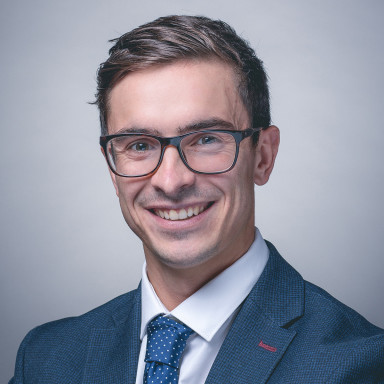

Imran Sattar became sole manager of the fund in November 2023
The manager looks to invest in growing companies with strong economic moats that help protect them from the competition
The fund’s focus on quality means it could work well alongside other funds investing in unloved UK companies with recovery potential
This fund does not feature on the Wealth Shortlist of funds chosen by our analysts for their long-term performance potential
How it fits in a portfolio
The Liontrust UK Equity fund aims to deliver a combination of capital growth and income over the long term. The manager primarily hunts in the FTSE 100 and FTSE 250 but also has the flexibility to invest in higher-risk smaller companies. This could be an option for the UK section of a broader global investment portfolio. The fund’s focus on quality means it could work well alongside other funds investing in unloved UK companies with recovery potential.
Manager
Imran Sattar began his career at Mercury Asset Management in 1997, before joining BlackRock to manage UK equity funds. In 2018, he joined Majedie Asset Management to continue running UK equity funds and in April 2022 joined Liontrust when the business acquired Majedie.
Following the retirement of experienced managers James de Uphaugh and Chris Field, Imran Sattar became sole manager of the fund in November 2023.
He’s supported in managing the fund by the rest of the Global Fundamental Investment team at Liontrust. This includes UK specialists Emily Barnard who is deputy manager of the fund and analysts Tom Gilbey and Gabriel Lever Grecu.
Process
The manager looks to invest in growing companies with strong economic moats that help protect them from the competition. These are often companies where the manager believes that the market has underestimated the duration and rate at which the company is likely to grow.
Meeting with company management teams is an important part of the investment process. The meetings allow the fund manager to probe management and glean insights that aren't available through the report and accounts. The manager also uses the insights from these meetings to inform his macroeconomic view on how economic changes could impact the companies he invests in.
The fund is mostly invested in larger companies, with 79.0% invested in businesses that feature in the FTSE 100. There is also a small amount invested in businesses listed on overseas stock markets. This was just 2.0% of the fund on the 31 April but in the past there has been more than this. Industrials is the largest sector allocation in the fund at 17.6% of its assets, followed by financial companies at 17.1%.
Over the last 12 months, new additions to the fund include financials companies Lloyds, the UK bank, and asset manager Ashmore. Also added were technology company Softcat and materials company Ibstock.
On the other hand, Sattar sold sport supplement company Applied Nutrition, American life science company Thermo Fisher and real estate investment trust (REIT) Segro. All were sold due to Sattar now having lower conviction in the companies going forward.
Culture
Liontrust give managers the freedom to manage their funds according to their own investment and market views. The company simply asks managers not to deviate from their investment processes. Each manager's funds are regularly checked by other senior managers at Liontrust to ensure they're staying true to their investment processes.
We like that all Liontrust fund managers invest a significant amount of their own money into the funds they run, and their incentivisation is tied to the performance of the funds they manage. We think these factors help to align their interests with those of investors.
ESG Integration
Liontrust give fund managers the freedom to run their portfolios according to their own investment and market views. It simply asks managers not to deviate from their investment processes. The quality of ESG integration therefore varies across Liontrust’s investment teams.
The firm’s Sustainable Future range of equity and fixed income funds do incorporate ESG analysis and invest to achieve positive change. Every team member is responsible for all aspects of financial and ESG analysis – ESG analysis is not farmed out to a separate team. The team produces regular insight articles, available via the Liontrust website. They also produce a Stewardship report, which explores the firm’s engagement and voting activities.
The firm publicly discloses all voting decisions on a quarterly basis, although no rationales are provided.
Cost
This fund has an ongoing annual charge of 0.65%, but we've secured HL clients an ongoing saving of 0.10%. This means you pay a net ongoing charge of 0.55%. The fund discount is achieved through a loyalty bonus, which could be subject to tax if held outside of an ISA or SIPP.
Our platform charge of up to 0.35% per year also applies, except in the HL Junior ISA, where no platform charge applies.
Please note the fund takes charges from capital, which could boost the income, but reduces the potential for capital growth.
Performance
Sattar was previously one of four managers named on the fund from July 2019. However, at that time the fund used a different process. It was run using a sleeved approach, blending managers with different styles into an overall portfolio. Therefore, we believe Sattar’s track record should be assessed from November 2023, when he became the sole manager and the fund adopted its current process.
Since then, Sattar has delivered returns of 26.79%*, underperforming the FTSE All Share return of 55.60% and the IA UK All Companies sector which returned 42.99%. Investors should be aware that this is a short timeframe to consider performance over, and past performance isn’t a guide to the future.
Over the last 12 months to the end of May 2026, the fund has delivered a return of -0.12%, lagging the 21.64% return from the FTSE All Share index and the 13.40% of the IA UK All Companies sector.
Our analysis suggests that the main cause of the fund’s underperformance compared to the FTSE All-Share is due to stock selection. For example, not being invested in defence and aerospace company Rolls-Royce and having less invested in HSBC than the benchmark has hurt relative performance. Investments in online property lister Rightmove and consumer healthcare company Haleon also detracted from performance over the period.
On the other hand, pest-control company Rentokil Initial was the largest contributor to returns. The company reported stronger than expected results due to their improvement in its North American business. US life science company Thermo Fisher and sport supplement company Applied Nutrition also performed well and both have since been sold.
The fund has a historical yield of 2.26% as at 30 April 2026, compared with the FTSE All Share yield of 3.12%. Income isn’t guaranteed, and yields aren’t a reliable indicator of future income.
Annual percentage growth
31/05/2021 To 31/05/2022 | 31/05/2022 To 31/05/2023 | 31/05/2023 To 31/05/2024 | 31/05/2024 To 31/05/2025 | 31/05/2025 To 31/05/2026 | |
|---|---|---|---|---|---|
Liontrust UK Equity Fund | -1.12% | 3.55% | 13.80% | 7.49% | -0.12% |
IA UK All Companies | -1.51% | -1.43% | 13.49% | 6.01% | 13.40% |
FTSE All-Share | 8.27% | 0.44% | 15.44% | 9.35% | 21.64% |