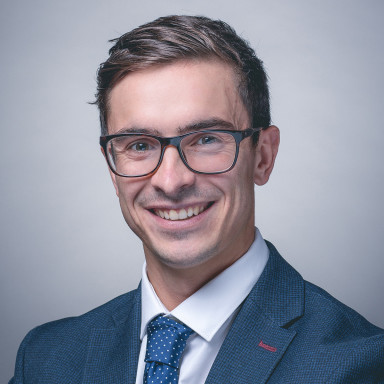

Blake Hutchins took over as manager of the fund at the end of September 2024, following Hugo Ure’s departure from Troy
The manager looks for resilient and high-quality companies that can withstand times of stock market stress
The fund doesn’t invest in companies with significant exposure to areas deemed unethical, such as tobacco and oil & gas
This fund does not feature on our Wealth Shortlist of funds chosen by our analysts for their long-term performance potential
How it fits in a portfolio
The Troy Trojan Ethical Income fund aims to provide a rising income and the potential for capital growth, while minimising losses in a falling market. The fund’s ethical approach makes it different to many other income funds.
The manager doesn’t invest in companies with significant exposure to areas deemed unethical, such as tobacco and fossil fuels. Some of these areas are often well-represented in traditional income funds without an ethical tilt, so we think this fund could bring diversification to an income-focused portfolio. It could also be a conservative addition to a responsible investment portfolio built to provide income.
Manager
Blake Hutchins took over as the fund’s manager at the end of September 2024, following Hugo Ure’s departure from Troy. The fund was removed from the Wealth Shortlist following this change.
Hutchins joined Troy in 2019 from Investec Asset Management where he was lead manager on the UK Equity Income fund and co-manager on the Global Quality Equity Income Fund. Prior to that, Hutchins managed UK equity funds at Columbia Threadneedle.
Hutchins has learnt from a number of excellent fund managers over his career to hone his approach to investing in quality companies for income. Hutchins is supported by assistant fund manager Fergus McCorkell who joined the business in 2017. He also has the support of Troy’s wider investment team. The team works collaboratively with a common approach to investment.
Process
Hutchins looks for high quality, resilient companies that can generate sustainable and growing cash flows. This supports the dividends paid to shareholders and could help the business reinvest for future growth. He also looks for companies with a sustainable competitive advantage over peers – known as ‘economic moats’. These companies are often market leaders within their field and enjoy barriers to entry which are likely to deter potential competitors from entering the industry.
High-quality companies and sheltering capital is a firmwide focus at Troy. It’s what makes their approach different to many others, and as a result performance will also be different at times. The approach aims to provide a growing income and shield investors from the worst of market falls, though this is not guaranteed and the fund may fail to keep pace with rapidly rising markets.
The fund uses an exclusions-based investment process when it comes to Environmental, Social and Governance (ESG). This means they exclude a number of companies who have exposure to certain themes. Below is a more detailed list of the type of companies that the fund won’t invest in:
Fossil fuels – Companies where more than 10% of their turnover comes from selling the extraction, refinement or generation of fossil fuels
Tobacco - companies where more than 10% of their turnover comes from selling tobacco products
Gambling - companies where more than 10% of their turnover comes from gambling
High interest rate lending - companies where more than 10% of their turnover comes from high interest rate lending
Alcohol - companies where more than 10% of their turnover comes from selling alcohol products
Pornography - companies where more than 3% of their turnover comes from pornography or adult entertainment
Armaments - companies where more than 10% of their turnover comes from selling strategic military supplies. This includes no exposure to companies involved in nuclear weapons manufacturing or with convention breaches relating to cluster munitions and anti-personnel mines
In recent months there have been some changes to the fund, Hutchins has added UK insurance company Hiscox and US insurance company Chubb. He also added UK online car marketplace Autotrader. A number of companies were also sold including drinks manufacturer Fevertree, self-storage company Big Yellow Group and ice cream company Magnum Ice Cream.
The fund tends to be concentrated with between 35 and 50 investments, which means each one can have a meaningful effect on performance, though this approach increases risk. There are currently 34 holdings in the fund. Whilst this is below the typical range, we’re comfortable this isn’t a shift in philosophy. The fund can also invest in smaller companies and make use of derivatives which adds risk.
Culture
Troy is a privately owned company, set up in 2000 by fund manager Sebastian Lyon with the backing of Lord Weinstock. We like that Troy's fund managers are dedicated to the same investment philosophy that was established two decades ago. The group has always been clear about the way its range of funds are managed, and the managers don't stray into overly complicated areas of investment markets. Wealth preservation is key, and each manager adheres to this mantra.
While Troy is home to a small, close-knit team of investors, the group has recruited more junior members over the years to boost resource and ensure the funds are left in good hands as and when more senior members retire. Despite the team’s growth, we think Troy has remained a very collegiate unit with all members able to have input.
ESG Integration
Troy integrates using a materiality-based approach, meaning the managers focus on the issues they deem to be most material to the company’s investment prospects. They also have access to third-party ESG data and research. How analysts and fund managers engage with ESG, and the overall quality of their research, is considered when calculating their incentivisation packages.
Engagement and voting are the responsibility of the investment team. All votes are discharged, and usually cast in favour of management proposals unless the team believes investors’ interests are better represented by abstaining or voting against management. Their preferred course of action is to have dialogue with management ahead of casting votes against their recommendations. The firm provides a proxy voting portal where investors can see every vote exercised, although no rationales are provided. That said, Troy publishes a summary of its ‘significant’ votes in its annual ‘Engagement and Voting Disclosure’ report, along with rationales for voting both in favour and against proposals. The firm also produces a quarterly Responsible Investment report, which includes voting and engagement updates and case studies, alongside other responsible investment-related research.
Cost
The fund has an annual ongoing charge of 1.02%, but through Hargreaves Lansdown you can secure an ongoing saving of 0.15%. This means you’ll pay a net ongoing charge of 0.87%. The fund discount is achieved through a loyalty bonus, which could be subject to tax if held outside of an ISA or SIPP. The HL platform fee of up to 0.35% per year also applies, except in a Junior ISA where no platform fee applies.
Please note the fund takes charges from capital, which could boost the income paid, but reduce the potential for capital growth.
Performance
Since Blake Hutchins took over from Hugo Ure in September 2024, the fund’s grown 5.22%*, underperforming the FTSE All Share index return of 32.51% over the same period. This is a short timeframe though, and past performance isn’t a guide to future returns.
The fund’s relatively defensive style means we expect it to hold up better when stock markets fall sharply but lag a rapidly rising stock market. Stock markets have generally performed well since the fund’s launch in January 2016, so it hasn’t kept pace.
Given part of the fund invests overseas, we also expect the fund to perform differently to its UK-focused benchmark at times. The fund’s ethical exclusions will also cause performance to differ from the index. When the excluded areas are out of favour and their share prices fall, the fund could do well. When they perform well, the fund will miss out. This has been the case more recently where areas such as Defence, Mining and Tobacco have performed well off the back of a number of governments committing to increase spending on defence, alongside higher commodity prices.
Over the last 12 months the fund has delivered a return of 2.79%, lagging the FTSE All Share index return of 21.89%. Our analysis suggests the fund’s investments in a number of software companies detracted from performance. Software companies have generally performed poorly as many investors scrutinise their business models and whether they could be displaced by advancements in artificial intelligence. This includes the likes of London Stock Exchange Group (LSEG), Sage, Experian and RELX. Not owning defence company Rolls Royce and tobacco company British American Tobacco has also hurt returns compared to the benchmark.
Hutchins’ investments in healthcare companies were positive for performance though. This includes UK pharmaceutical company GlaxoSmithKline and Swiss pharmaceutical companies Novartis and Roche. Also performing well was hotel group InterContinental Hotels and industrial company Diploma.
Given the additional challenge of managing a fund with ethical exclusions and the manager’s relatively defensive investment philosophy, we expect the fund to pay a lower yield than some other income funds. At the time of writing, the fund has a historical yield of 2.88% compared to 3.10% of the FTSE All Share. Income isn’t guaranteed, and yields aren’t a reliable indicator of future income.
Annual percentage growth
30/06/2021 To 30/06/2022 | 30/06/2022 To 30/06/2023 | 30/06/2023 To 30/06/2024 | 30/06/2024 To 30/06/2025 | 30/06/2025 To 30/06/2026 | |
|---|---|---|---|---|---|
Trojan Ethical Income | -7.98% | 4.96% | 8.90% | 7.21% | 2.79% |
FTSE All-Share | 1.64% | 7.89% | 12.98% | 11.16% | 21.89% |