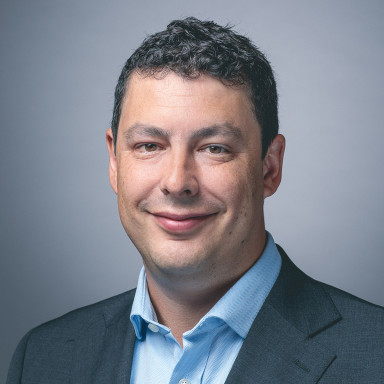
Co-manager Sebastian Lyon is part-owner of Troy Asset Management, so we think he's incentivised to perform
We like the simple philosophy behind this fund, with the potential for long-term growth and a focus on limiting losses in weaker markets
The fund has outpaced inflation since it launched in May 2001
This fund is on the Wealth Shortlist of funds chosen by our analysts for their long-term performance potential
How it fits in a portfolio
Troy Trojan aims to grow investors' money steadily over the long run, while limiting losses when markets fall, rather than trying to shoot the lights out and perform strongly at all times.
The fund tries to experience fewer ups and downs than the broader global stock market or a portfolio that's mainly invested in shares. As a result, it could form the foundation of a broad investment portfolio, bring some stability to a more adventurous portfolio, or provide some long-term growth potential to a more conservative portfolio.
Manager
Sebastian Lyon has managed this fund with the same investment philosophy since its launch in 2001, when Lyon helped to set up Troy Asset Management. He has also managed the Personal Assets Trust since 2009 – this is an investment trust that’s invested similarly to Troy Trojan.
Lyon was previously also CIO (Chief Investment Officer) of Troy Asset Management; however, he stepped back from this role in May 2026. This gives him more time to focus on investing, which we view positively.
Lyon also has support from Charlotte Yonge, who was appointed as co-manager of the fund in April 2025. She joined Troy in 2013 and has worked with Lyon on the fund for a number of years. As co-manager, she’s jointly responsible for making investment decisions for the fund.
Overall, we think that the team at Troy is strong, capable and stable.
Process
Lyon and Yonge like to keep things simple, a quality we like. They aim to shelter investors' wealth just as much as grow it.
To do this, the fund is constructed around four 'pillars'.
The first contains large, established companies that the managers think can grow sustainably over the long run and endure tough economic conditions. They’ve tended to focus on companies based in developed markets, such as the UK and US. This includes some of the world's best-known companies with highly recognisable brands, such as Unilever and Visa. The managers also have the freedom to invest in higher-risk smaller companies.
The managers have kept the amount in shares broadly similar recently, with 38% invested at the end of June 2026, though there has been some turnover in individual names. They sold LVMH and American Express in the last 12 months and have bought the London Stock Exchange Group (LSEG), Alcon and Markel.
The rest of the fund is made up of investments that could bring some stability during more difficult markets.
The second pillar is made from bonds. 16% of the fund is currently invested in US index-linked bonds (TIPS), which could shelter investors if inflation remains higher than the long-term US central bank targets. The fund also invests 15% in UK inflation-linked gilts, taking the total for this bucket to 31%. The total amount invested in inflation-linked securities has stayed similar in the last 12 months; however, the managers have moved some money from US TIPS to inflation-linked gilts.
The third pillar consists of gold-related investments, including physical gold, and accounts for 8% of the fund. This is lower than the 11% the fund held in gold 12 months ago, as the managers reduced exposure after gold’s very strong run. Gold can act as a safe haven during times of uncertainty or perform well when inflation rises or if key global currencies weaken.
The final pillar is cash and short-dated government bonds, where 23% of the fund is held. Again, this amount is broadly similar to 12 months ago and includes around 10% in Japanese government bonds – a touch higher than this time last year.
Although the fund contains a diverse range of investments, it’s concentrated. This approach means that each investment can contribute significantly to overall returns, but it can increase risk.
Culture
We like that Troy's fund managers are dedicated to the same investment philosophy that was established two decades ago. The group has always been clear about the way its range of funds are managed, and the managers don't stray into overly complicated areas of investment markets. Wealth preservation is key, and each manager adheres to this mantra.
Lyon is a part-owner of Troy Asset Management, so we believe that he's incentivised to perform and for his funds and the business to do well over the long term. Other senior members of the group also own a part of the business, and we think that this contributes to the stability and loyalty of the team.
Although Troy is home to a small, close-knit team of investors, the group has recruited more junior members over the years to boost resource and ensure that the funds are left in good hands as and when more senior members retire. Despite the team’s growth, we think that Troy has remained a very collegiate unit, with all members able to have input.
ESG Integration
Troy Asset Management has been formally incorporating environmental, social and governance analysis (ESG) into its investment processes for a number of years, and it came from a strong starting point. It’s always been focused on the sustainability of returns, and the fund managers are long-term investors.
In recent years, Troy’s investment team has formalised the way they incorporate ESG and the way they talk to investors about it. ESG is integrated using a materiality-based approach, meaning that the managers focus on the issues they deem to be most material. They also have access to third-party ESG research.
Engagement and voting are the responsibility of the investment team. All votes are discharged and usually cast in favour of management proposals unless the team believes investors’ interests are better represented by abstaining or voting against management. Their preferred course of action is to have dialogue with management ahead of casting a vote against. The firm publishes a summary of its ‘significant’ votes in its annual ‘Engagement and Voting Disclosure’ report, along with rationales for voting both in favour and against proposals. They also produce a quarterly Responsible Investment report, which includes voting and engagement statistics and case studies.
We believe that ESG risks are comprehensively considered for all investments held in this fund and that the ESG-related processes are robust. That said, this isn’t an exclusions-based or responsible investing fund, which means that it can invest in any sector.
Cost
This fund has an ongoing annual charge of 0.86%, but we've secured HL clients an ongoing saving of 0.25%. This means you pay a net ongoing charge of 0.61%.
The fund discount is achieved through a loyalty bonus, which could be subject to tax if held outside of an ISA or SIPP. The HL platform fee of up to 0.35% per year also applies, except in the HL Junior ISA, where no platform fee applies.
Performance
The fund aims to achieve growth ahead of inflation (as measured by the UK consumer price index) over the long run, which it’s done successfully since it launched in May 2001. It has also performed better than the broader UK stock market, which we think is impressive for a more conservative fund. Over this period, the fund has risen 396.8%* compared with 381.6% for the FTSE All-Share.
It has also achieved this with less volatility than the market. But remember, past performance isn't a guide to future returns.
Avoiding large losses has been an important characteristic of the fund, and it has tended to come into its own and hold up well in weaker markets, such as the bursting of the tech bubble in 2001-2002 and the global financial crisis in 2008. We saw this again in the first part of 2020, when global markets stumbled amid the coronavirus outbreak. The fund isn’t likely to keep up when stock markets are performing strongly, but we expect this given its cautious approach. Importantly, we expect it to provide some shelter when markets fall.
The fund lagged the broader UK stock market over the past 12 months, returning 6.3% compared with 21.9% for the FTSE All-Share. It outperformed inflation, though, with the UK Consumer Price Index (CPI) rising 2.7%. Given the primary aim of preserving the value of their investments, it’s not a surprise to see the fund lag behind such a strongly rising stock market in the UK.
Despite falls since the onset of the Iran war, Gold was one of the biggest positives for the fund over the 12 months to end June 2026. Shares also provided positive returns, with an investment in Alphabet (parent company of Google) performing particularly well for the fund, although these gains were partly offset by losses from investments in Adobe, Experian and Microsoft. The bonds held in the fund have continued to provide ballast as well as small positive returns over the last 12 months.
Overall performance has been reasonable given the amount invested in shares, gold, bonds and cash. Having lagged during the post-Covid period of heightened inflation, the fund has now outperformed inflation for three years in a row, while losing less than stock markets during wobbles such as Liberation Day in 2025 or the onset of the Iran war in 2026.
Annual percentage growth:
30/06/2021 To 30/06/2022 | 30/06/2022 To 30/06/2023 | 30/06/2023 To 30/06/2024 | 30/06/2024 To 30/06/2025 | 30/06/2025 To 30/06/2026 | |
|---|---|---|---|---|---|
Troy Trojan | 1.63% | 0.93% | 6.19% | 5.27% | 6.30% |
UK Consumer Price Index | 9.41% | 7.95% | 1.98% | 3.58% | 2.65% |
FTSE All Share | 1.64% | 7.89% | 12.98% | 11.16% | 21.89% |