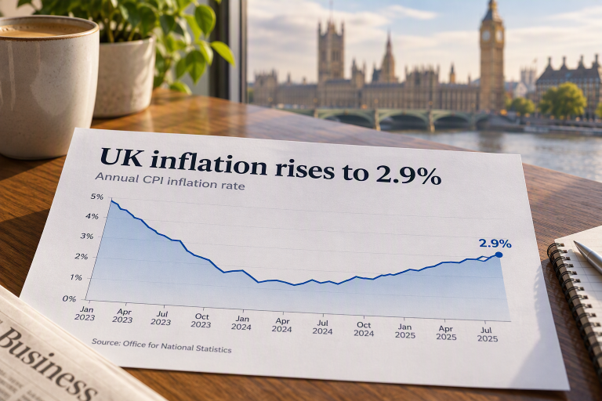
Inflation rose from June’s 2.6%, but the latest print may ease pressure on the Bank of England to raise rates again.
Households still face pressure from food, fuel, energy and mortgage costs, even if inflation remains well below the 2022 peak.
Savers and retirees need to focus on real returns, tax efficiency and protecting income from inflation.
The ONS has published the latest UK inflation data: Consumer price inflation, UK: July 2026.
Hal Cook, senior investment analyst, Hargreaves Lansdown:
“This morning’s inflation print came in at 2.9%, up from June’s 2.6%, with the core reading (excluding food and fuel) slightly higher than expected at 2.6%. While inflation remains ahead of the Bank of England’s 2% target, the case for rate rises is tempered by the wider economic picture. Unemployment has edged higher, payroll numbers are falling and vacancies have continued to decline, all pointing to a softer labour market.
Markets had been pricing a relatively high chance of rates reaching 4% by the end of 2026. The Bank’s latest decision was split 6-3 in favour of holding rates, with three members voting for a hike. Governor Andrew Bailey’s press conference had already tempered expectations of a September move.
This is not simply a UK issue - bond yields have been increasing across the globe in recent days. The US-Iran conflict has led to nearly six months of oil price volatility, and higher inflation expectations on top of high levels of government debt have increased yields to levels not seen since the financial crisis in several major economies.”
Alice Haine, head of personal finance, Hargreaves Lansdown:
“Families may not be facing the extreme pressure seen during the cost-of-living crisis, but food, fuel, energy and housing costs continue to absorb a large share of monthly budgets. Any renewed rise in inflation will be unwelcome for households still adjusting after several years of higher prices.
The latest increase was driven largely by higher gas and electricity bills for households, with the increase in the Ofgem Energy Price Cap (EPC) from July 1 reflecting geopolitical tensions. Energy bills could add further pressure later in the year. The EPC is expected to rise further from 1 October, although the temporary removal of VAT on electricity bills should cushion some of the impact.
For mortgage holders, the concern is that stickier inflation limits the scope for interest rate cuts. Two- and five-year swap rates have moved higher, which can feed into mortgage pricing, although competition among lenders hasl led to some rate cuts this week.
Those coming off shorter fixed-rate deals taken out when borrowing costs were higher may still find better options. But homeowners rolling off ultra-low five-year fixes could face a significant jump in repayments, making early planning essential.
Inflation is never good news for savers. Even if it slows the fall in cash rates, rising prices still erode the real value of interest earned and reduce spending power over time.
Savers should review whether their cash is sitting in a competitive account, because money left in low-paying products is more likely to lose value after inflation. HL Active Savings can help savers compare competitive rates from a range of banks and building societies in one place. Tax efficiency also matters. ISAs and pensions can shelter income and returns from tax, while couples may benefit from making full use of both partners’ allowances and, where appropriate, interspousal transfers.”
Helen Morrissey, head of retirement analysis, Hargreaves Lansdown:
“Inflation is a particular challenge in retirement because income may need to last for decades. The state pension and final salary pensions offer some protection through annual increases, but many retirees with defined contribution pensions need to make more active choices.
Drawdown, where people keep their pension invested while taking an income from it, gives people flexibility and the potential for investment growth, but it also exposes them to market volatility. Selling investments after markets have fallen can damage a pension’s long-term sustainability, so retirees should think carefully about how they fund withdrawals.
We recommend keeping at least one year’s worth of essential expenses in an easy-access account, so income does not have to be drawn from investments during weaker markets. Annuities can also play a valuable role by providing guaranteed income for life, but the inflation trade-off is significant.
HL’s latest annuity search data shows a 65-year-old with a £100,000 pension can receive up to £7,906 a year from a single-life level annuity with a five-year guarantee. That compares with an initial £5,585 a year from an annuity rising annually in line with RPI. The trade-off is between more income upfront and a lower starting income that offers protection against rising prices. For many retirees, a blended approach may work best, using an inflation-linked annuity to help cover essential spending while keeping the rest in drawdown for flexibility.”
Notes to Editors
HL is the UK’s largest investment and savings platform for private investors and more than 2.2 million clients trust us with £205 billion (as of June 2026).
We help Britain build wealth, with confidence. Our promise is simple: to provide the best products, the best support and the best value. Founded in 1981, we’ve been helping people save and invest for a better financial future for more than four decades. We offer a lifelong, secure home for our clients’ investments and savings, combining great value with outstanding service, to make managing your money easier at every stage of life.
Our award-winning Savings & Resilience Barometer measures the nation’s financial resilience across our 5 to Thrive pillars, equipping people with the tools they need to strengthen their financial futures.
Saving and investing is for the whole family, and to support intergenerational wealth transfer, we’ve removed all platform charges and share dealing fees on our Junior ISA, meaning kids go free, and we’ve reduced the platform fee on our Lifetime ISA to 0.25%, supporting those savings for their first home or for retirement.
Regular saving into all funds, FTSE 350 shares, and selected investment trusts and ETFs is free.
Our clients also have access to the most comprehensive pension and retirement solution, including SIPP accounts, SIPP Income Drawdown, UFPLS payments and annuities, as well as over 14,000 investment options across funds, shares, ETFs, investment trusts, bonds and gilts.
HL Active Savings is the UK's largest retail cash savings platform that lets savers easily make more of their money and the HL Cash ISA allows savers to manage their Cash ISA portfolio across multiple banks, all within one account.