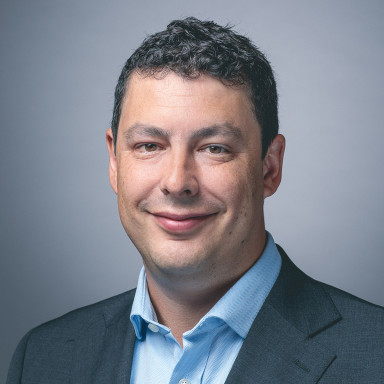
Bob Michele and Iain Stealey are experienced fixed income (bond) investors
This fund represents the best of JPMorgan’s global fixed income capabilities
We think this is a great option for investors who want broad and highly diversified exposure to global bond markets in a single fund
This fund is on our Wealth Shortlist of funds chosen by our analysts for their long-term performance potential
How it fits in a portfolio
The JPMorgan Global Bond Opportunities fund aims to achieve a balance between income and capital growth over the long term (at least five years). To do this, it invests in lots of different bonds issued by companies and governments all over the world. This gives investors highly diversified bond investments within a single fund.
The fund could act as a core holding for a bond-focused investment portfolio or diversify a portfolio focused on growth.
Manager
Bob Michele, Global Chief Investment Officer (CIO) and Head of Global Fixed Income, Currency & Commodities (GFICC), has over 40 years’ industry experience and joined JPMorgan in 2008. Prior to JPMorgan, he worked at a number of companies including Schroders and BlackRock. He’s based in New York, has managed this fund since launch in 2015 and another version of the fund for US investors since launch in 2012.
Michele’s one of five managers of the fund. Iain Stealey, International CIO within the GFICC, is based in London and works closely with Michele on choosing how much of the fund to invest in different parts of the global bond market. He has over 20 years’ industry experience, having joined JPMorgan in 2002.
Michele and Stealey are supported by three other managers who have a greater focus on individual bond selection. Jeffrey Hutz is based in Indianapolis and is responsible for bond selection within high yield. He joined JPMorgan in 2004. Andrew Headley is based in New York and has responsibility for bond selection within the securitised part of the fund. He joined JPMorgan in 2005.
Andreas Michalitsianos, Head of Global Credit, became a manager of this fund in April 2025, taking over from Lisa Coleman ahead of her retirement in early 2026. He’s based in London, has over 20 years’ experience in the industry and worked closely with Coleman for over 16 years. We think he’s well placed to take over her responsibilities.
Each of the five fund managers are supported by a larger team. There are also other teams within JPMorgan that help with other areas of bond selection, such as the Emerging Market Debt team and the Global Rates team. This reflects the fund’s aim to represent the best ideas of the JPMorgan global bond investment teams.
While key person risk is low, we view Michele and Stealey as particularly important to the success of the fund. They bring together the knowledge and information from the wider bond teams, managing the risks being taken in the fund and choosing what areas of the bond market to invest in.
Process
The managers start by deciding how much to invest in the different areas of the global bond market. This is based on a quarterly meeting, where key people from various teams across the world discuss and debate which areas have the most potential and which should be avoided.
This meeting results in a high-level view of the world and gives Michele and Stealey a starting point for deciding how much each of the other fund managers should have to invest. Michalitsianos, Hutz and Headley then invest in individual bonds in their areas, as do specialist teams in emerging market and government bonds – though there are no named managers in these areas.
The result is an extremely diversified bond fund that typically has more than 1,000 individual bonds from over 50 different countries. Investing in that many bonds reduces the impact each individual investment has on overall returns, positively or negatively, while still allowing investors to benefit from each team’s best ideas and bond selection ability.
There are few limits on how much can be invested in different areas of the bond market. One limit though relates to ‘duration’. Duration is measured in years and reflects how sensitive the fund is to changes in interest rates and bond yields. The higher the level of duration, the more sensitive it is. The fund can go as low as -2 years or as high as 8 years. At the end of July 2026, the fund had a duration of 4.76 years.
The managers can also invest in currencies to generate returns. This tends to be a small part of the fund because currencies have the potential to be volatile and the managers don’t want these investments to dominate returns.
At the end of July 2026, the fund mainly invested in investment grade corporate bonds, emerging market debt and high yield corporate bonds, with 32.8%, 19.7% and 16.8% invested in each area respectively. In terms of regions, the largest was 44.5% invested in bonds issued in the United States with Luxembourg a distant second at 8.5%.
Investments in high yield bonds, emerging markets, currencies and the use of derivatives all add risk.
Culture
JPMorgan is one of the world's largest asset managers. It has investment professionals based all over the world, and the team behind this fund can tap into that experience and local knowledge.
Michele and Stealey, and the other fund managers, have worked at JPMorgan for decades. This means they understand how to get the most out of the resources available to them. It also gives us comfort that the culture across the various teams is good and the long-term incentivisation of managers is a further positive.
ESG Integration
JPMorgan committed to integrate Environmental, Social and Governance (ESG) factors into their investment processes for active funds in 2016 and ESG is now a foundation for investment decisions across the firm. JPMorgan funds take a variety of approaches, from quantitatively scoring companies on a variety of ESG measures to help with portfolio construction, to more qualitative analysis achieved through fundamental research and company meetings. All fund managers have access to the central Sustainable Investing team, as well as thematic research and analytics, which focus on climate change and carbon transition.
The firm has detailed voting policies which are specific to each region they invest in and account for local customs. Investment teams and investment stewardship specialists in the relevant region are responsible for implementing those policies, based on their deep knowledge and experience of the country, sector and company. A detailed fund-by-fund and company-by-company voting record is available on the JPMorgan website, although voting rationale isn’t provided. Fund managers also regularly engage with the companies they invest in, and there are a number of case studies on their website and in their annual Investment Stewardship report.
While ESG is integrated across the firm, with suitable attention given to any potential investment risk for every bond held within this fund, this fund isn’t a responsible or sustainably invested fund.
Cost
This fund’s available at an annual ongoing fund charge of 0.65%, but through Hargreaves Lansdown you can secure an ongoing saving of 0.15%. This means you’ll pay an ongoing charge of 0.50%. Part of this reduction is paid as a loyalty bonus, which could be taxable if held outside of an ISA or SIPP wrapper. The annual charge of 0.50% makes the fund one of the cheaper actively managed options in the sector.
The HL platform fee of up to 0.35% per year also applies, except in the HL Junior ISA, where no platform fee applies.
Both a buy and sell instruction will be subject to HL dealing charges. Find out more about our charges.
Performance
Since launch on 31 January 2015 to the end of August 2026, the fund’s performed better than the IA £ Strategic Bond sector, returning 42.4%* compared to 38.2%. Past performance is not a guide to future returns.
Because of the high number of bonds in the fund, we expect performance to be driven by the allocations to different areas of the bond market over time.
The fund has broad exposure to different global bond markets so we expect the fund to typically provide a return that reflects global bond markets overall. It’s unlikely the fund will have short-term periods of performing much better, or worse, than its peers. The aim is to provide returns consistent with the wider bond market and to add value over the long term. This is one of the reasons we like the fund – it provides investors with broad exposure to bond markets without big surprises in performance.
Over the 12 months to the end of August, the fund underperformed the IA £ Strategic Bond sector, returning 3.3% compared to 3.8%. Currencies were a detractor for the fund, as were investments in government bonds so far in 2026. Losses from these areas were offset by positive returns from higher-risk high-yield and emerging market bonds. March was a particularly challenging month for the fund following the onset of the conflict between the US and Iran, because of a shift in expectations around future interest rates and inflation.
At the end of July 2026, the fund had a yield to maturity of 6.16%. Please note that yields aren’t guaranteed and could fall as well as rise over time. The yield can be taken by investors seeking income, or reinvested to boost future growth potential.
Annual Percentage Growth:
August 21 – August 22 | August 22 – August 23 | August 23 – August 24 | August 24 – August 25 | August 25 – August 26 | |
|---|---|---|---|---|---|
JPM Global Bond Opportunities | -7.69% | 2.66% | 8.03% | 6.73% | 3.26% |
IA £ Strategic Bond | -11.12% | 0.36% | 10.76% | 5.16% | 3.77% |