

The economic advantage team have a robust investment process which has served investors well over the years
We think the team have a range of skills and expertise and are well resourced for the task at hand
The fund has outperformed the IA UK All Companies sector average since the Economic Advantage process began being applied in March 2009
The fund currently features on our Wealth Shortlist of funds chosen by our analysts for their long-term performance potential
How it fits in a portfolio
The Liontrust UK Growth fund aims to grow an investment over the long run by investing in companies with unique advantages over the competition.
We think it could be a good option for the UK section of a broader global investment portfolio. A focus on high-quality companies means the fund could work well alongside other funds investing in unloved UK companies with recovery potential. The fund has the flexibility to invest in smaller companies and derivatives which if used, adds risk.
Manager
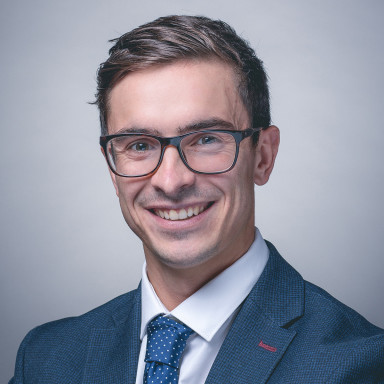
The fund is co-managed by Anthony Cross, Victoria Stevens and Matthew Tonge.
Cross started his career at Schroders before joining Liontrust in 1997. He, along with Julian Fosh, are the architects of the economic advantage investment process.
Cross also manages a few other funds, which focus on different parts of the UK market but share the same investment process as this one. Given the similarities in the way the funds are managed, we think this is a reasonable workload.
Stevens and Tonge were promoted to co-managers in 2023. Stevens joined Liontrust from broking and advisory firm finnCap in 2015. She then became part of the economic advantage team, focusing on analysing smaller companies. Tonge moved to Liontrust from Barclays in 2003 to work on the trading desk, before moving to the economic advantage team in 2015 to focus on analysing smaller companies.
In January 2025, longstanding manager of the fund Julian Fosh retired from the industry after a four decade long career. We’re of course disappointed to see Fosh retire after a long successful career of investing in UK companies. However, we’re satisfied that the team have a range of skills and expertise and are well resourced for the task at hand.
Process
The managers think the secret to successful investing is to find the few companies with an 'economic advantage' – a sustainable edge over the competition that will allow them to earn above-average profits for the long term.
The managers believe the hardest economic advantages to copy are intellectual property, such as patents and trademarks, strong distribution channels and significant repeat business. A company must have at least one of these attributes before it's considered for the fund. Other less powerful but nonetheless important strengths include franchises and licenses, good customer relationships and a great company culture.
Once companies with a strong competitive edge have been identified, the managers look for proof that it's led to superior financial returns in the past. They also look for evidence of pricing power – the ability to increase prices without affecting demand for the company's product or service.
Finally, they consider the company's valuation. They compare each company's valuation on a variety of measures to try and avoid overpaying for their shares. Each investment is made with the long term in mind though, so the managers believe the initial price paid is less important to overall returns than the company's ability to grow earnings and profits over the long term.
The fund mostly invests in larger companies, with 67.5% of the fund invested in companies in the FTSE100 and the rest invested in medium-sized and smaller companies. Companies in the Industrial sector account for 25.2% of the fund, followed by 18.9% invested in healthcare companies.
Over the last year, the managers have made some changes to the fund. This includes investing in financial company IntegraFin, data company GlobalData and food producer and supplier Carnswick. The managers also sold a number of companies. These include, chemical company Synthomer, pharmaceutical company Indivior and technology company RWS holdings.
Culture
In recent years, Liontrust has acquired several smaller asset management companies. In March this year, Liontrust announced their latest acquisition, River Global PLC. Acquisitions and other corporate changes can impact the culture of a business and unsettle the firm’s existing investment teams. We will continue to monitor the situation closely and keep investors informed if our views change.
Liontrust gives managers the freedom to manage their funds according to their own investment and market views. The company simply asks managers not to deviate from their investment processes. Each manager's funds are regularly checked by other senior managers at Liontrust to ensure they're staying true to their investment processes.
We like that all Liontrust fund managers invest a significant amount of their own money into the funds they run. This helps to align their interests with those of investors.
ESG
The quality of Environmental Social and Governance (ESG) integration varies across Liontrust. The firm gives fund managers the freedom to run their portfolios according to their own investment and market views. It simply asks managers not to deviate from their investment processes. The quality of ESG integration therefore varies across Liontrust’s investment teams.
The firm’s Sustainable Future team produce a Stewardship report, which explores the firm’s engagement and voting activities. The firm publicly discloses all voting decisions on a quarterly basis, although no rationales are provided.
The managers of this fund integrate ESG considerations into their company research. They particularly look at the risks associated with companies that have poor ESG scores and how these could impact share prices in the future.
Cost
The fund has an ongoing annual charge of 0.83%, but we’ve secured a discount for HL clients of 0.17%. This means you will pay a net ongoing charge of 0.66%.
Our platform charge of up to 0.35% per year also applies, except in the HL Junior ISA, where no platform charge applies.
We recently made some changes to the amount clients pay to invest with us. Find out more about these changes
Performance
The fund launched in March 1993 but Cross and Fosh took control and started applying the Economic Advantage investment process in March 2009. Since March 2009, the fund has delivered returns of 362.91%*, compared with 401.87% for the FTSE All Share index, representing the broader UK market over the same period. That said, the fund has outperformed the IA UK All companies sector average which returned 348.89%. Past performance is not a guide to the future.
The fund has performed better than its benchmark index in the past, but the last two years have been challenging for many UK funds, particularly for those that invest in a similar way.
The managers’ quality-driven process means they avoid certain parts of the UK market, such as mining companies and banks, which don’t meet their quality requirements.
But these types of more economically sensitive companies have driven much of the recent returns in the UK market. Banks have benefited from higher UK interest rates and miners have benefited from higher commodity prices. We don’t expect the fund to keep pace with the market in this environment.
More growth-oriented areas across the market have been weaker. Software, where the fund has several investments, in particular has come under pressure as developments in AI raise questions about the durability of existing business models. While AI presents long-term opportunities, the pace and scale of disruption remain uncertain, which has weighed on sentiment.
Our analysis also suggests that stock selection has recently been weak. For example, investment in technology companies RELX and Auction Technology Group have been weak. However, investments in healthcare companies have done well over the past year, such as GlaxoSmithKline, as have investments in industrial company BAE Systems and Spectris, which was acquired by KKR.
The fund’s performance over the year has disappointed and we don’t usually expect it to perform this way. That said, we expect the fund to not lose as much money when the market falls (providing an element of shelter), which is what occurred in March during the height of the US/Iran conflict.
We met the fund’s managers recently to discuss performance in detail, their reflections, and what we can expect in future. We believe the managers have remained true to their investment process, which has served them well over the longer term, and that they remain focused on delivering for investors over the long term.
Overall, we think the team has the experience, skill, and support to deliver good long-term returns to patient investors, although there are no guarantees. Investments fall as well as rise in value, so investors could get back less than they invest.
Annual percentage growth
31/03/2021 To 31/03/2022 | 31/03/2022 To 31/03/2023 | 31/03/2023 To 31/03/2024 | 31/03/2024 To 31/03/2025 | 31/03/2025 To 31/03/2026 | |
|---|---|---|---|---|---|
Liontrust UK Growth | 12.33% | 2.39% | 6.50% | 0.14% | 1.26% |
IA UK All Companies | 5.25% | -2.07% | 7.60% | 5.10% | 12.83% |
FTSE All-Share | 13.03% | 2.92% | 8.43% | 10.46% | 21.54% |