

The fund is backed by a well-resourced team with plenty of experience in the technology sector.
The managers invest in companies they believe can benefit from some of the biggest technology trends globally and over the last few years the trust has pivoted to focus heavily on the Artificial Intelligence (AI) theme.
Their focus on high-quality companies has delivered impressive long-term returns, although past performance is not a guide to the future.
This fund does not feature on the Wealth Shortlist of funds chosen by our analysts for their long-term performance potential
How it fits in a portfolio
The Polar Capital Global Technology fund aims to grow investors’ money over time by investing in companies exposed to the key technological innovations changing the world today. The managers invest around the world, including in higher-risk emerging markets.
Investing in a single sector like technology is a higher-risk approach. We think funds and investment trusts investing in a specific sector should usually only form a small part of a well-diversified investment portfolio.
Manager
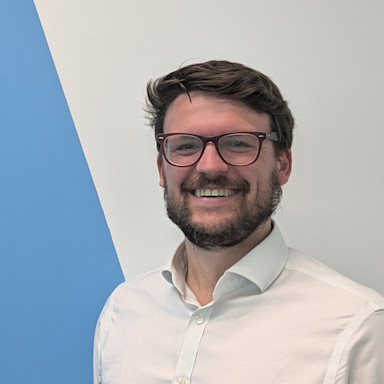
Nick Evans has been a technology specialist for 28 years and became lead manager on the technology fund in 2008. Over this time, he’s helped build the technology team to 12 members and one of the largest technology investment teams in Europe.
Although Evans is the ultimate decision maker about what ends up in the fund, he is closely supported by Fatima Iu. Iu joined Polar Capital’s technology team in 2006 and has worked closely with Evans since, becoming a named manager on the Global Technology fund in 2011.
When it comes to idea generation Evans and Iu can call upon the experience of the wider technology team. Each member of the team has an area of expertise, collectively providing access to a vast pool of knowledge spanning the technology sector. There is a weekly meeting of the whole team, while the managers sit down with each analyst once a month to discuss their ideas.
The team recently hired a dedicated Data Analyst to improve the use of AI within the investment process. Unsurprisingly, given the team’s tech focus, they now make extensive use of AI throughout the investment process, including in idea generation as well as administrative tasks. The team are among the most advanced in this regard that we have seen.
Alongside the Global Technology Fund, Evans also supports the Polar Capital Technology Trust and Polar Capital Artificial Intelligence funds – though both are overseen by others on a day-to-day basis. We are comfortable he has the time and resources to manage his commitments, with the Global Technology fund his primary focus.
Process
The fund runs a smaller portfolio than its sister, the Polar Capital Technology Trust, and is moderately more volatile. However, there is still significant overlap, with 98.3% of stocks in the fund also held in the trust, and investment decisions are driven by the same team wide philosophy.
The managers avoid early-stage or blue-sky companies. Instead, they’re looking for companies with proven technologies, but where adoption is set to increase dramatically. They want to invest in companies that are in strong financial positions, and which are run by experienced management teams.
Over the last few years the team has become increasingly excited about the opportunities that generative AI offers, and AI is now the dominant theme in the portfolio. The managers believe that AI is the next general purpose technology, meaning that it will change the way companies work and everything else will revolve around it.
The fund’s AI investments encompass companies that enable AI technology (such as those making semiconductor chips or providing cloud computing services), as well as AI beneficiaries (mainly technology companies) and AI adopters.
The team expect the transformative potential of AI to result in significant volatility, and the managers have made a number of changes to the portfolio and process as a result.
All companies are subject to an “AI lens”, with analysts considering how each and every stock is impacted by the AI revolution. This has led to the sale of software investments and smaller positions in the largest tech names, companies like Meta, Nvidia and Broadcom. That has reduced overall fund concentration.
Instead, the team has shifted focus towards companies that provide the hardware, infrastructure and power necessary for AI to function. This includes some non-traditional technology companies like turbine manufacturer Vernova and fibre manufacturer Furukawa Electrical.
The managers can invest in some higher-risk small and medium-sized companies, as well as companies in more volatile emerging economies. They also make significant use of options, a type of derivative, to manage exposure to large tech names. That can magnify any gains or losses and increases risk.
Culture
Polar Capital was founded in 2001 and prides itself on its collegiate culture. Each manager and investment team is afforded autonomy, allowing them to develop and apply their own investment process and philosophy.
Polar Capital also promotes a strong focus on investors’ interests and ensures they align with those of fund managers. The managers see themselves as part owners of the fund and they may receive a bonus that can be deferred into the fund over 3 years. This helps make sure the fund is run in a way that benefits all investors.
ESG Integration
Each investment team at Polar Capital has autonomy over its investment strategy. This means they each take slightly different approaches to ESG integration, and some are more advanced than others. That said, the firm also makes third party ESG data and research available for all managers and all Polar Capital funds exclude companies involved in the production or marketing of controversial weapons.
In 2020, Alexander Macdonald was appointed Head of Sustainability. He coordinates the firm’s sustainability-related initiatives and helps the investment teams frame their thinking around ESG and incorporate ESG analysis in a robust way.
Polar Capital fund managers engage with the companies they invest in where they feel it will have a positive impact on company performance and enhance shareholder value. Fund managers are also responsible for voting, but their views are informed by third party proxy voting specialist Institutional Shareholder Services. A summary voting record is provided annually, including for the trust on a standalone basis. However, the full voting record is not provided. Overall, Polar Capital is less transparent on its ESG-related activities than some peers.
Cost
The fund has an ongoing annual fund charge of 1.09%. Our platform charge of up to 0.35% per year also applies, except in the HL Junior ISA where no platform fee applies. Both a buy and sell instruction will be subject to HL dealing charges. Find out more about our charges.
Performance
Since Nick Evans took over as lead manager of the fund in January 2008 the fund has returned 2699.6%, significantly ahead of the 1285.3% achieved by the IA Technology & Technology Innovation sector. Remember past performance is not a guide to the future. Investments can go down as well as up in value, so you could get back less than you invest.
More recently the fund returned 71.7% in the twelve months to the end of July, ahead of its benchmark and the IA Technology & Technology Innovation sector which returned 27.6%. This performance reflects the fund’s “AI Maximalist” position in a year when AI has been the driving force behind public markets.
The team is increasingly nervous of hyperscaler spending, with the largest tech companies becoming more capital intensive at the same time as returns on AI investment are becoming more uncertain. Instead, they are expanding their exposure into the wider AI supply chain, including positions in fibre cabling and turbine manufacturing – old tech where the team expects bottlenecks and improved pricing to drive performance.
This view proved a major tailwind in the last twelve months. A large underweight position in Microsoft was among the largest contributors to performance, while investments in storage, optical networking, and electronic components also delivered strong returns as did the underweight to software. That was partially offset by the fund’s NASDAQ options, which dragged on performance in the period.
Investors should note that as the trust is heavily focused on AI, any setbacks for this technology could have a negative impact on performance. The team themselves has also acknowledged the increasing volatility of the market given the rapid change going on in the tech sector. They are trying to manage this through, among other things, increased use of options – though this in itself can increase risk.
Annual percentage growth
July 2021 to July 2022 | July 2022 to July 2023 | July 2023 to July 2024 | July 2024 to July 2025 | July 2025 to July 2026 | |
|---|---|---|---|---|---|
IA Technology & Technology Innovation | -14.09 | 13.68 | 20.15 | 18.62 | 27.57 |
Polar Capital Global Technology | -15.72 | 13.22 | 26.55 | 34.74 | 71.70 |