

When James Watt’s steam engine began powering factories in the late 18th century, it did more than increase output. It rewired economies, reshaped societies, and created entirely new industries. A century later, electricity transformed not just production but daily life, from lightbulbs to assembly lines.
The internet, more recently, compressed distance and time, enabling global commerce and communication at a scale unimaginable to earlier generations.
Artificial intelligence (AI) now sits in that same league of transformative technologies. The difference is speed.
Where steam and electricity took decades to diffuse, AI is scaling in years. Opinions differ on exactly how much extra output AI will deliver, but a growing consensus suggests its impact on global GDP, productivity, and labour markets will be deep and far-reaching.
For investors, this is not a distant prospect – it’s knocking on the door.
Investing in an individual company isn’t right for everyone because if that company fails, you could lose your whole investment. If you cannot afford this, investing in a single company might not be right for you. You should make sure you understand the companies you’re investing in and their specific risks. You should also make sure any shares you own are part of a diversified portfolio.
This article isn’t personal advice. If you’re not sure an investment is right for you, ask for financial advice. Remember, all investments and any income from them can rise and fall in value, so you could get back less than you invest.
Lessons from history
Each industrial revolution has followed a familiar pattern.
A breakthrough technology emerges, initially expensive and imperfect. Adoption is slow, often limited to a handful of pioneering firms or regions. Then infrastructure builds out – railways for steam, grids for electricity, broadband for the internet. Costs fall, adoption accelerates, and productivity surges.
AI is at the start of this curve.
The technology is powerful but unevenly distributed. Large language models and generative AI systems have captured headlines, but their integration into workflows, supply chains, and consumer products is still in its infancy.
The lesson from history is clear – the real gains come not from the invention itself, but from the process of embedding it into the fabric of the economy.
But what took decades in previous revolutions may now unfold in just a few years.
The pace of AI adoption is unprecedented, with many of the world’s leading tech CEOs describing it as the fastest wave of innovation they’ve ever witnessed. This acceleration compresses the traditional curve of infrastructure buildout and productivity gains, making early strategic positioning even more critical.
The AI buildout – infrastructure as the new battleground
If the steam engine required coal and railways, and electricity required copper and grids, AI requires data centres, chips, and energy.
Data Centres
The evolution of data centres mirrors the broader arc of technological transformation. Traditional computer infrastructure – built around CPUs and general-purpose servers – was designed for transactional workloads and basic storage.
But the rise of AI has upended these foundations.
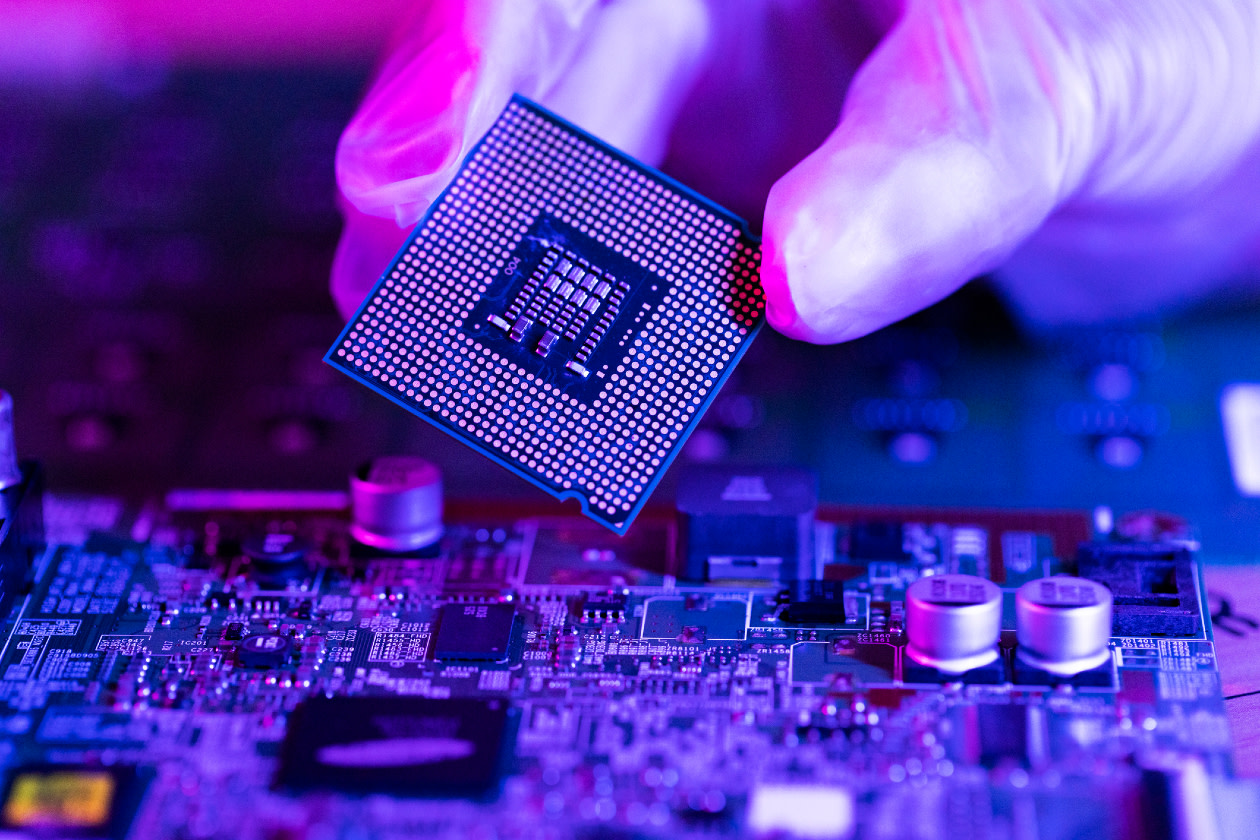
Accelerated computing, powered by GPUs and custom chips, is now the beating heart of modern data centres. This shift is not just about speed, it’s about architecture.
AI workloads demand more power, memory, and far more sophisticated infrastructure. As a result, the big tech giants are unleashing a wave of capital to build out their AI capabilities. This is a tech-charged arms race, and the bigger players have deep enough pockets to take commanding positions.
The transition is capital-intensive and geopolitically charged, with supply chains for advanced chips and energy infrastructure becoming strategic assets. Just as railways once defined industrial power, accelerated data centres are emerging as the infrastructure backbone of the AI age.
Chips
Graphics chips were once built for video games.
Today, they power the most advanced AI systems in the world. Nvidia led this shift, turning its GPUs into the core of modern data centres. But it’s no longer just about the chip.
AI computing now happens at the scale of entire racks, where software, cooling, and networking are just as important as raw processing power. These systems are designed to work together seamlessly, delivering high performance while keeping energy use in check.
As Nvidia CEO Jensen Huang often says, the key measure is “tokens per Watt” – or how much useful AI output you get for the energy consumed.
Nvidia is still the market leader, but competition is growing. Companies like AMD, Broadcom, and others are building strong alternatives, and many data centre operators are starting to diversify their chip suppliers. That makes sense in a market this critical.
Still, building a top-tier AI data centre takes more than just picking the right chip – it’s about creating a full system that works efficiently and scales with demand.
Energy
As AI scales, energy is emerging as its most critical constraint.
The chips are faster, the data centres are larger, and the models are more powerful – but none of it runs without electricity.
Training a single large model can consume as much power as a small city, and inference (using the model) is growing exponentially as AI becomes embedded in everyday applications.
The result is a surge in demand that is straining grids, reshaping infrastructure plans, and prompting tech giants to invest in their own nuclear power stations to secure electrons. As OpenAI’s CEO Sam Altman put it, “The cost of AI will converge to the cost of energy.”
There’s a human angle too, with rising electricity prices and strained grids in regions hosting large data centres. The pressure is mounting, and public sentiment could turn if households begin to feel the cost of innovation without sharing in its benefits.
We think there’s a world where the big tech giants step in, using their own resources to help keep household bills from ballooning. This would be novel, but keeping the lights on affordably might become part of the deal.
Who wins – sectors on the cutting edge
Cloud and Chips
Cloud infrastructure and the chip supply chain represent the most foundational entry points. These are the digital railways and copper grids of the AI age.
The cloud giants (Amazon, Microsoft, Google) are obvious options, but each comes with its own bundle of business lines. Amazon ties cloud to ecommerce, Google to search, and Microsoft to office software. That makes diversification across providers a sensible strategy, especially as smaller players and specialised platforms begin to emerge.
On the hardware side, the chip stack is vast and layered. Designers like Nvidia and AMD are the architects, but they rely on a global ecosystem of manufacturers and foundries (TSMC, Intel, Samsung, and others) to bring chip designs to life.
The complexity of this supply chain creates multiple entry points for investors, from design to fabrication to packaging. With demand surging and competition intensifying, the sector offers breadth – but also concentration risk. As with cloud, a diversified approach may offer the best balance between upside and resilience.
Healthcare
AI’s role in healthcare is often spotlighted through breakthroughs like AlphaFold from Google DeepMind, which predicts the 3D structure of proteins – a leap forward in drug discovery and disease research.
But its influence goes far beyond the lab.
Across the healthcare ecosystem, AI is quietly transforming operations – improving diagnostic accuracy, streamlining administrative tasks, and expanding access to care through virtual assistants and personalised treatment plans.
We were already supportive of the healthcare sector, with several tailwinds from ageing populations to relatively resilient demand profiles. The introduction of AI into the mix increases the sector’s appeal in our view.
Robotics and Automation
It may seem like AI has burst onto the scene, but it’s been quietly powering the robotics industry for years.
While humanoid robots now grab headlines, industrial robotics have long been embedded in sectors from automotive to logistics – think robotic arms on car assembly lines or fleets of warehouse bots at Amazon and Ocado.
The recent leap in language models is pushing the industry into new territory.
For the first time, there’s a credible path toward fully functioning humanoid robots capable of performing a wide range of tasks – whether in homes, factories, construction sites, or mines. We’re entering a phase where single-purpose machines evolve into multifunctional platforms, built for both enterprise and consumer use.
On the automation front, self-driving technology is a prime example. Waymo, Tesla, and Uber are all vying for leadership in what could become a multi-trillion-dollar autonomous vehicle market. The convergence of robotics and AI is no longer theoretical – it’s becoming a commercial reality and the opportunities are massive, but so are the risks of disruption.
Risks
The concentration of power is a real concern.
A handful of firms control the most advanced models and the infrastructure to run them. Regulators in the US, EU, and China are already moving to shape the rules of the game. Ethical concerns, from bias in algorithms to the environmental footprint of data centres, will also shape the trajectory of adoption.
Another emerging risk is the circular nature of AI infrastructure deals.
There’s a messy web of interconnected deals in the space at the minute. When everything aligns, the system works – but a single disruption could cause damage. Businesses overly reliant on one or two key customers face heightened vulnerability, we prefer diversified demand streams.
Valuations have been under the spotlight, but we’re not overly concerned at this stage. This is a major growth opportunity, and some excitement is warranted. Unlike past bubbles, the leading players have strong cash flows to fund the buildout. That said, things rarely go up in a straight line so we would expect bumps along the way.
Conclusion – early innings of a long game
AI is not a passing trend. It is the next industrial revolution, with the potential to reshape economies, industries, and societies.
For investors, the message is twofold.
First, the opportunity is vast – productivity gains, new industries, and long-term growth. Second, the risks are real – concentration of power, regulatory pushback, and social disruption.
The challenge is to allocate capital with both excitement and caution, recognising that we are still in the early innings of the next industrial revolution.
The author holds shares in Nvidia and Tesla.
This article is original Hargreaves Lansdown content, published by Hargreaves Lansdown. It was correct as at the time of writing, and our views may have changed since then. Investments rise and fall in value so investors could make a loss.
This article is not advice or a recommendation to buy, sell or hold any investment. No view is given on the present or future value or price of any investment, and investors should form their own view on any proposed investment.