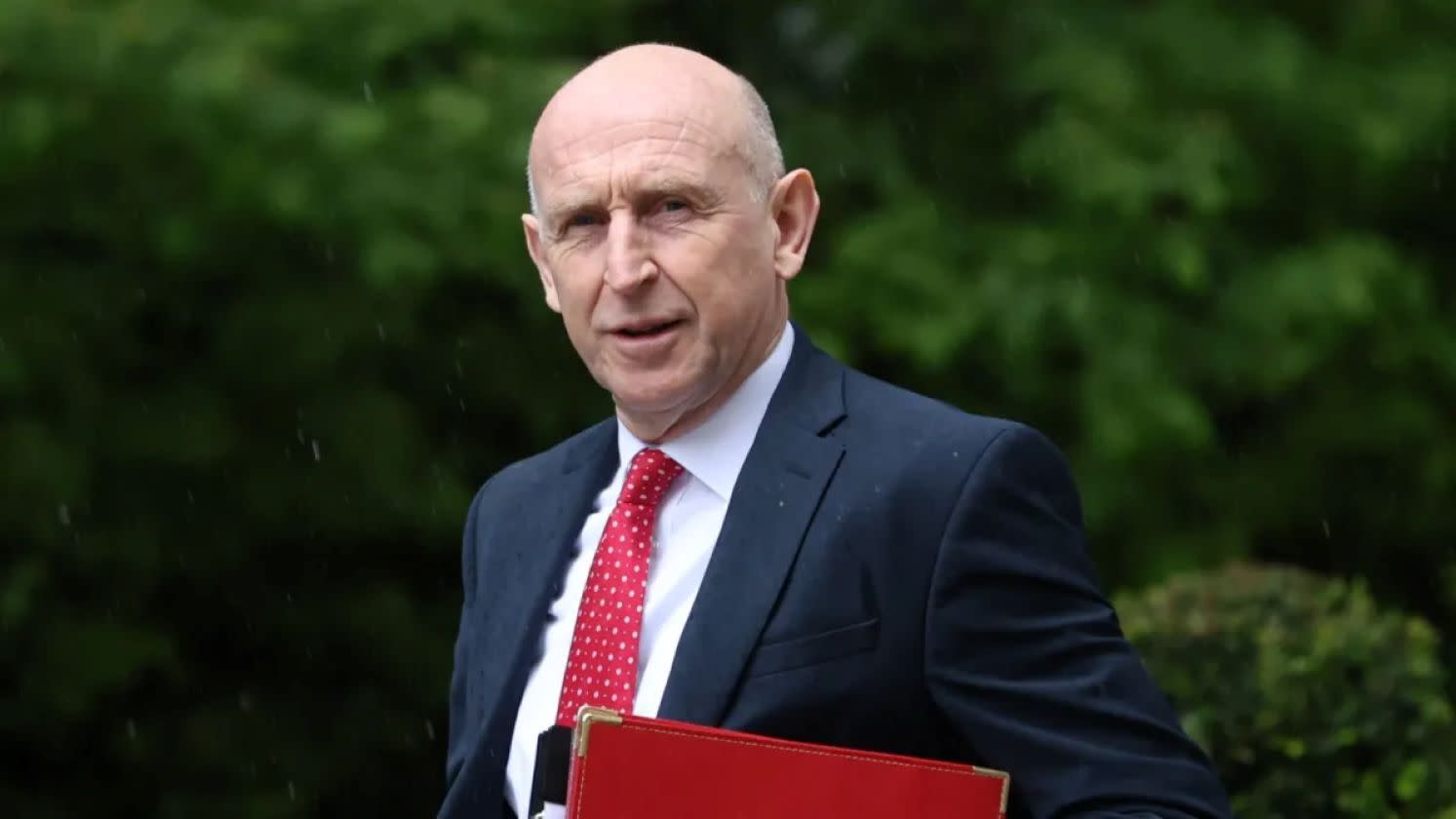


Our new Chancellor of the Exchequer, John Healey, has a difficult job. Last week, it became even harder.
We are less than ten weeks from the Budget. Before he delivers his speech, it is scored by the Office for Budget Responsibility (OBR), and they will start preparing their forecasts on the health of the economy and public finances in less than a month.
Why government borrowing costs are rising
Ten-year gilt yields, the amount investors demand in a return for lending to the government, are back to around 5%. There are many reasons for this, some domestic and some global. So, there are factors that Healey can influence, and those that he can’t.
The global story is really that government debt is high.
The US reached a new milestone last week: the total stock of government borrowing hit $40 trillion. Now, this isn’t itself a problem if one believes that the government can service its debt. However, the mood has changed.
Bond investors are more alert to fiscal risk, and some have moved away from government debt and the dollar towards so-called 'debasement trade', buying assets that are seen as beneficiaries of a weaker dollar, such as gold or even bitcoin.
The US has continued to borrow at an unprecedented rate outside of world wars and recessions. Yields on long-dated borrowing have reached levels not seen since the financial crisis. Why?
Inflation and geopolitical risks are weakening UK growth
Inflation is clearly an issue because it remains above target in most developed economies.
The war in the Middle East, which President Trump said would be over in a few weeks, is now nearing six months. There is no clear end in sight, with an Iran more able to exert its influence in the Strait of Hormuz than it was before the crisis. And Houthi attacks in the Red Sea have raised the stakes even more.
The oil market has remained endlessly adaptable as always, but prices are higher, and the longer they remain so, the more this will feed through into wider costs from fertiliser to jet fuel to food.
The new chair of the Federal Reserve, Kevin Warsh, will speak on Friday at the Jackson Hole Symposium in Wyoming. He is still establishing his credibility with the markets, and watchers will be listening closely. The nub of it is, however, that President Trump’s actions in Iran are probably just as, if not more, consequential.
Why Budget uncertainty risks weakening UK growth
So, gilt yields are not rising in a vacuum.
Britain is borrowing in a world where investors are already more alert to government debt, inflation and geopolitical risk. That means that the Chancellor has less room to unsettle markets further.
The UK’s economy grew faster than any other G7 country so far this year. However, as Simon French at independent investment bank Panmure Liberum pointed out, first-half growth has recently been tempered in the second half, leading to a tepid full-year outcome. Why? Investors and taxpayers wearily look to the Budget, and the constraints the Chancellor is facing, and surmise that taxes are likely to rise.
Andy Haldane, former Bank of England chief economist, chair of the British Chambers of Commerce, and current adviser to the Burnham government, has talked about the chilling effect of this speculation as consumers and businesses hold off on spending decisions.
Being cautious about spending individually may make sense, but it feeds on itself, as growth then slows, and then as growth slows, tax receipts stall. Fiscal spending crowds out the private sector, borrowing increases, and investors demand a greater return for lending to the government.
So, the best thing that can be done is… doing as little as possible.
The case for a ‘do no harm’ budget
Haldane writes about a ‘moratorium on further rises in the tax and regulatory burden on consumers and businesses for the remainder of this parliament’. This would be the equivalent of a fiscal Hippocratic Oath to “do no harm” to private sector sentiment.’
I agree. But where does this leave us?
Partly, it’s a game of confidence. Consumer confidence has lifted since the new PM came into office – call it vibes, call it a long, hot summer – but it is something to celebrate.
Company and household balance sheets are in a good place. However, in the cold light of day, we know that our debt is nearing 100% of GDP, and as interest rates have risen, the cost of servicing that debt is now around £100bn. That makes it one of the biggest calls on public money, behind health and social security.
There are many competing demands on the UK purse. Defence spending is not fully funded. The welfare and pensions bill marches upwards. Spending needs to be controlled and reduced in some areas, and investors will hope that Burnham’s persuasive powers can bring his MPs to vote for cuts.
Hargreaves Lansdown will be making the case on behalf of our clients – uncertainty over taxes and thresholds and allowances are all harmful to investor confidence and the wider economy.
We saw in 2024 and 2025 that rumours about Capital Gains Tax rises and pension changes led to many clients realising investments and withdrawing tax-free cash from their Self-Invested Personal Pensions (SIPPs) ahead of the Budget. Acting on fears is, of course, understandable.
However, in many cases, the eventual outcome can be damaging to one’s personal finances if the change does not actually come about. As always, we advocate taking a long-term approach, staying invested and taking financial advice where appropriate.
This article is for information only and not personal financial advice. Investing can help your money grow, but the value of investments can rise and fall, so you could get back less than you put in. Investing is for the long term, typically 5 years or more.
If you’re not sure whether investing is right for you, a financial adviser can help.
Article image credit: Anadolu