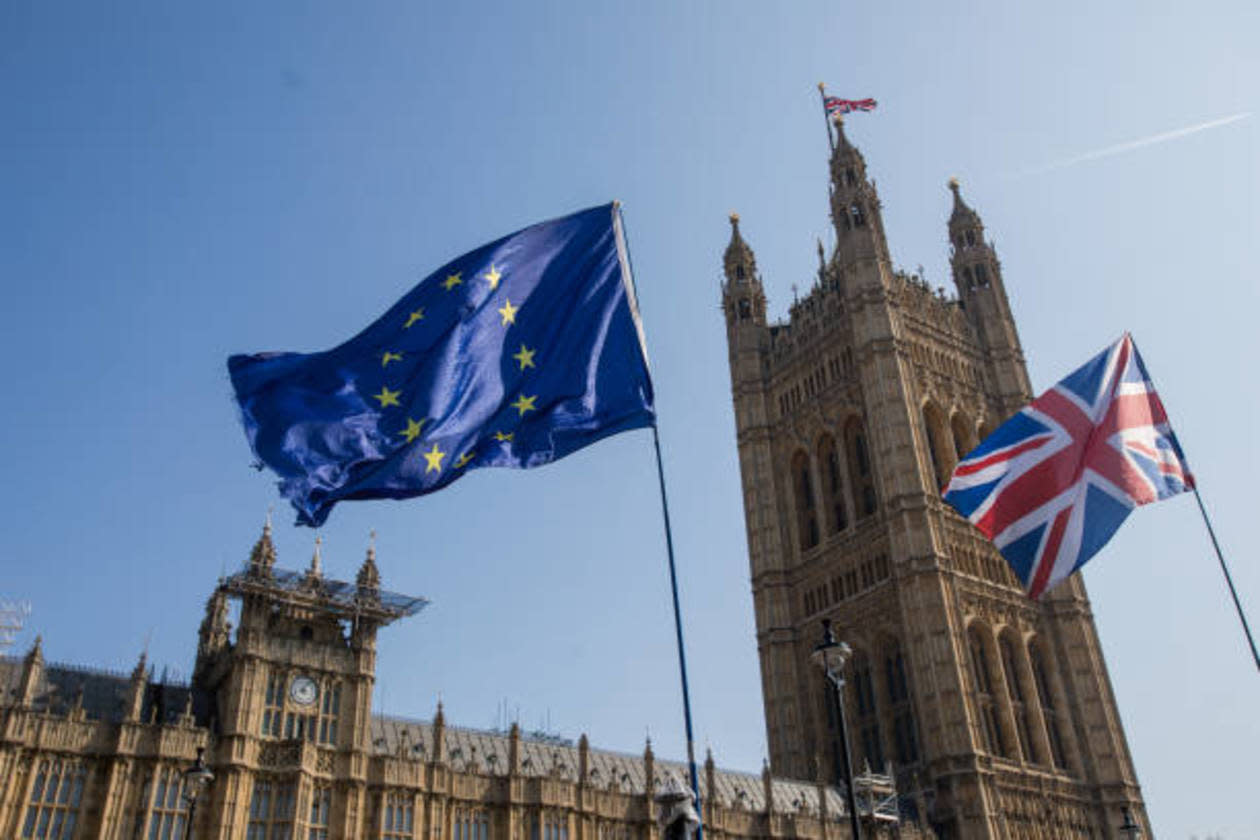


10 years ago, the United Kingdom voted to leave the European Union (EU). Brexit, to this day, remains one of the most impactful economic events in modern British history and a decade on, the question is still, where do we go from here?
The UK stock market continues to trade at a discount to its global peers but some argue this has created an investment opportunity that can’t be ignored.
This article is for information only and not personal financial advice. Investing can help your money grow, but the value of investments can rise and fall, so you could get back less than you put in. Investing is for the long term, typically 5 years or more. If you’re not sure what’s right for you, a financial adviser can help.
What happened
In June 2016, the UK narrowly voted to leave the EU. With no precedent for a country leaving the bloc, much of the debate was based on hypotheticals.
The Leave campaign promised greater freedom over laws and trade, as well as potential financial benefits from savings on the UK’s contributions to the EU, alongside other advantages. Meanwhile, the Remain campaign argued the opposite – that leaving the EU would make the UK poorer, complicate trade deals, and remove the benefits of EU legislation.
Ultimately, the UK voted to leave the EU, leading then Prime Minister David Cameron to resign and leaving Theresa May and eventually Boris Johnson to handle the subsequent negotiations.
The UK officially left the EU on 31 January 2020.
The financial impacts of Brexit
Although at the time the impact was generally unknown, the UK stock market has since been trading at a discount to its global peers.
From a performance perspective it hasn’t kept pace with Europe or the US. Some argue this is due to longer-term headwinds unrelated to Brexit, while others suggest that Brexit has been the catalyst for the underperformance.
31/05/2021 To 31/05/2022 | 31/05/2022 To 31/05/2023 | 31/05/2023 To 31/05/2024 | 31/05/2024 To 31/05/2025 | 31/05/2025 To 31/05/2026 | |
|---|---|---|---|---|---|
FTSE All-Share | 8.27% | 0.44% | 15.44% | 9.35% | 21.64% |
MSCI Europe ex UK | -1.23% | 8.95% | 17.72% | 7.14% | 20.04% |
S&P 500 | 12.45% | 4.66% | 24.78% | 7.18% | 29.84% |
The post-Brexit UK economy
It’s no surprise that the uncertainty surrounding Brexit has had an impact on the UK economy, particularly when compared with its global peers. Many expected an immediate recession, though it never happened.
That said, the UK has experienced weaker growth than peers. According to economists, Brexit has left the UK economy 6-8% smaller than it would have been had the country remained in the EU.
The UK economy has also been affected by a productivity gap, which has slowed growth compared to some of its peers. Labour shortages in sectors like construction and hospitality is one of several factors contributing to weaker productivity. Where EU citizens could previously live and work freely in the UK, Brexit has introduced visa and eligibility requirements, making it more difficult for EU workers to enter the labour market.
As a result, certain sectors have struggled to recruit, constraining output and weighing on overall economic performance.
Trade tensions
Trade has also slowed. Brexit introduced additional barriers with the UK’s largest trading partner, the EU. Exporters who once moved goods with relative ease now face increased bureaucracy and longer border delays.
In 2025 the UK exported 41% of goods and services to the EU while the EU made up 50% of imports. But the UK’s exports to the EU were still 14% lower – taking into account inflation – than in 2019.
As a result, many multinational companies that may previously have chosen to locate to the UK, or further invest in their UK operations, have shifted activity to Europe. This lets them maintain access to the single market and avoid some of the new trade barriers.
There is a silver lining though.
While exports and imports to Europe might have slowed, this has resulted in domestic suppliers picking up some of the slack. The Office for National Statistics reported UK businesses are using more UK suppliers, with nearly 75% of businesses saying they can still get all the goods they need from within the UK.
The UK also has had the freedom to make new trade deals outside of the EU market including with Australia, New Zealand, India and general terms with the US. These trade deals could benefit the UK going forward.
Business investment
The referendum result came as a surprise to many, and even the government had no clear plan for how it would unfold. The subsequent period of political turmoil and uncertainty created significant unknowns around future trade relationships.
As a result, business investment stagnated, with firms hesitant to commit to expansion or hiring decisions. Many chose to delay investment until there was greater clarity around the post-Brexit economic and regulatory environment.
That said, Brexit isn’t the only factor weighing on business investment. Firms have also had to contend with the COVID-19 pandemic, the Russia-Ukraine conflict, high inflation, and rising interest rates, all of which have increased uncertainty and made borrowing more expensive.
There are signs that business investment is beginning to recover and has now surpassed 2016 levels. From a Brexit perspective, this may indicate that firms have adapted to the new environment and are starting to see a clearer path forward.
Outflows in the UK market
Investor behaviour has been far clearer than the debate over whether leaving the EU was the right decision. Flows into UK equity funds came under pressure following the referendum and accelerated after the formal exit. The UK equity market has experienced a decade of outflows, with Brexit acting as one contributing factor.
Both domestic and foreign investors have been overlooking the UK. Historically, UK investors had a ‘home bias’, favouring domestic companies they knew and loved, but this has become less prominent.
Investors have increasingly been drawn to faster-growing and more dynamic markets, particularly the US. The US market has significantly outperformed the UK in recent years, and investors have increased their exposure to these higher-growth opportunities.
Other factors than just Brexit have played a role in this though. Political instability in the UK has weighed on sentiment, though the uncertainty of Brexit may have been the catalyst for investors to start exploring other options.
Remember different investment styles come in and out of favour though. It's important to maintain a diversified portfolio, spread across different geographies and investment styles. For example in 2025 the UK substantially outperformed the US.
The UK also offers more income opportunities and is one of the world’s highest-yielding markets with a record of good dividend growth.
Looking ahead
Given the UK has traded at a discount, you might argue that valuations have become too attractive to ignore – meaning shares can be bought at a cheaper price than global peers. Also, a significant proportion of the FTSE 100 is large, globally diversified companies, with revenue generated overseas. This raises the question of whether these companies have been overly penalised by investors for Brexit-related risks, despite being less directly exposed.
Smaller companies with greater domestic exposure appear even cheaper. While the UK market has lagged its peers, smaller companies have underperformed to an even greater extent, trading at discounts compared with both global peers and their own long-term averages.
One consequence has been a surge in takeover activity for UK companies. Many acquisitions have been led by overseas buyers willing to pay more than the company’s current share price. With UK smaller companies continuing to look cheap, there are few signs that this trend will slow in the near term.
Share buybacks have also increased significantly in recent years, as companies take advantage of their weaker share prices to repurchase their own shares. This can be seen as a vote of confidence in future prospects, as management teams signal their faith in the business.
So, ten years on, Brexit has neither been the economic collapse or the transformative catalyst. Instead, it has reshaped – but not broken – the UK investment landscape. With other markets looking more expensive than the UK, this could provide a good opportunity for investors who believe the UK can turn around.