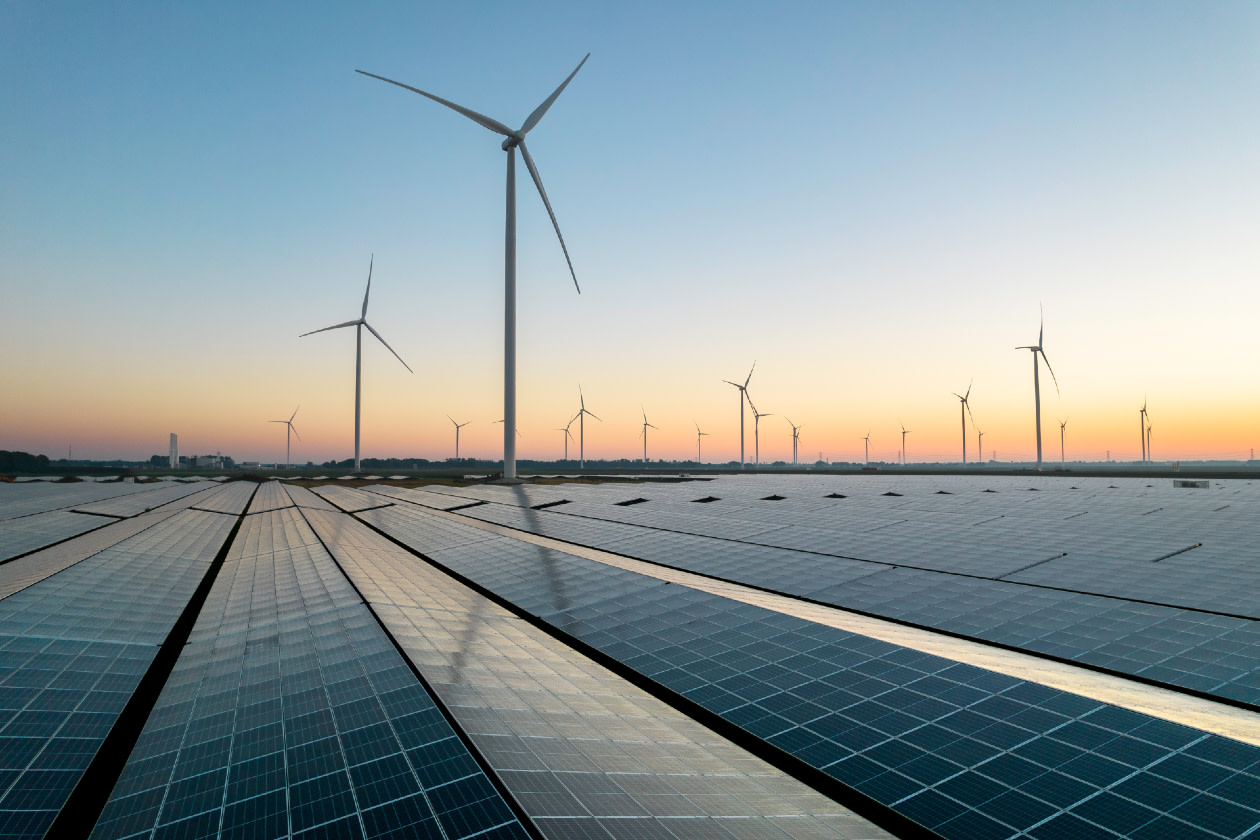


Over the past few decades, renewable energy generation has been deployed globally at an unprecedented rate. In 2025, it accounted for over 85% of global power additions, and almost half of the world’s total electricity capacity.
And with another energy crisis unfolding in real time, we’re looking at the investment case for renewable energy and three ways to invest in it.
This article isn’t personal advice. If you’re not sure an investment is right for you, seek advice. Investments and any income from them will rise and fall in value, so you could get back less than you invest.
What’s driven the surge in renewables?
There have been many contributors to the growth of renewable energy. From policy reactions and the energy shocks of the war in Ukraine, to the structural decline of coal, improving technologies, and economies of scale.
But ultimately, it's supportive policies and lower generation costs that have brought prices down enough to compete with fossil fuels. In fact, some research suggests around 80% of renewable capacity is now cheaper than fossil fuel alternatives.
Beyond the cost of generation
However, there are challenges beyond just generation cost.
Firstly, renewables have a high system cost because our grids are simply not designed for intermittent energy sources. This is a two-pronged challenge as power drops when the sun stops shining or the wind stops blowing, and it can overproduce when the opposite is true. Modernising these systems is one engineering challenge and storing the energy is another.
Secondly, policy is integral to growth. Key industry players, like utilities and energy companies, need to understand government priorities. There’s perhaps no better example than China, whose priority is to rapidly expand renewable capacity. Clean-energy sectors now account for around 11% of its GDP, roughly the size of the economies of Brazil and Canada.
A changing world and energy landscape
The Energy Trilemma is a framework that defines three core dimensions against which policymakers evaluate energy investment decisions:
Energy Security – how reliable is the supply of energy?
Energy Affordability – is the cost accessible?
Energy Sustainability – is the source environmentally sustainable?
While these priorities are constantly shifting, some events move the dial more than others.
The conflict in Iran has caused yet another push towards energy security, reinforcing the risks brought to light by the war in Ukraine.
Fatih Birol, executive director at the International Energy Agency, suggested the conflict in Iran is a more serious event than the energy shocks of 1973, 1979 and 2022 combined. Around 20% of the world’s oil and gas supply flows through the now blockaded Strait of Hormuz, affecting all continents and major economies.
Countries importing energy, or that do not have economically viable reserves, are being forced to reassess how they will meet their energy needs. Renewables promise a domestic supply of electricity, and they’re among the fastest sources to deploy. All of which makes renewables an attractive proposition for policymakers.
For example, solar farms have deployment timelines of around 1-3 years and help insulate energy markets from fossil fuel volatility. Compare this with fracking, which takes 1-5 years, constructing an LNG (liquified natural gas) terminal that takes 2-7 years, or North Sea Oil & Gas supply that takes 3-25 years.
In the case of the North Sea, over 90% of commercially viable reserves have already been extracted, so currently it’s an unreliable long-term strategy. While there are other resources available, they are not yet mature enough for commercial development
LNG has been proposed as a key part of the solution, but it’s exposed to price volatility and does not resolve energy security. The UK would also need significant investment in gas distribution infrastructure, including storage capacity. The solution will no doubt be one of diversification.
Pakistan’s solar boom is a prime example of the speed in which energy systems can transform with fast-deploying renewables. Reports suggest it has avoided $12bn in fossil fuel import costs since 2020 and could save a further $6.3bn by the end of this year if prices remain high. Alongside this, it’s reported that weak grid infrastructure remains a major obstacle.
Investment ideas that could benefit from renewables
So, with the supply shortage still unfolding, here are three investments ideas that contribute to the renewable energy value chain and could benefit from a stronger pivot to greener fuels.
These investment ideas are not a personal recommendation to trade. They won’t be right for everyone. Take the time to understand the specifics of an investment, including the risks, before investing. Make sure any new investment aligns with your long-term goals and forms part of a balanced and diversified portfolio.
National Grid
No matter what clean energy technologies gain traction in the future, National Grid looks set to play a pivotal role. It owns and operates critical electricity and gas infrastructure across the UK and northeast United States.
Energy grids are expensive to build and maintain, making them natural monopolies. Rather than duplicating infrastructure, governments allow one company to manage the system efficiently – and regulate it to protect consumers. This lets National Grid earn stable, inflation-linked revenues, while spreading costs across a wide base of users.
Alongside higher allowed returns in its UK Transmission business, National Grid’s underlying operating profits grew by 9% to £5.7bn last year, ignoring exchange rates.
The group’s not stopping there though. Its infrastructure investment plans were recently upgraded to more than £70bn over the five years to 2031, marking a significant increase over the prior five years. This comes as it seeks to support growing demand from data centres amid the rise of artificial intelligence (AI), and heavy industry in reducing its reliance on directly burning fossil fuels through electrification.
The uptick in investment should see the group’s asset base grow by around 10% annually out to 2031. And with a portion of National Grid’s revenues linked to the value of its asset base, it’s targeting annual earnings growth of between 8-10% over the period, which looks achievable to us.
Despite the rise in investment spending, we have no concerns about balance sheet health thanks to a prior equity raise and reliable revenues. We think the current valuation looks attractive over the long term. However, the sheer scale of the investment plans brings plenty of execution risk, so there’s likely to be some volatility along the way.
SSE
SSE is another name looking to drive the energy transition forward. Unlike National Grid, the group has direct exposure to low-carbon energy generation, with output from its Renewable assets rising 10% to 14.5TWh over the first three quarters of the year as more capacity came online. This helps diversify the group’s revenues and lets it potentially benefit from higher energy prices.
Looking ahead, the group’s set to spend £33bn over the five years to 2030 upgrading its energy infrastructure, marking a 300% uplift in its investment levels over the prior five-year period. Around £6bn of that total is earmarked to further increase Renewable capacity and grid resilience.
Renewables aren’t always a reliable source of energy though, so gas-fired plants are still part of the energy mix. They complement the renewables segment well and are on hand to plug any shortfalls in energy output when adverse weather comes along.
The remainder of the £33bn total will be invested in its regulated UK electricity networks, which should see its asset base grow by around 25% annually. Given that this division’s revenue power is tied to the value of its asset base, it’s expected to help fuel double-digit earnings growth over the coming years. A portion of these revenues are also positively linked to inflation, providing valuable protection if macroeconomic conditions deteriorate.
A recent equity raise means these spending plans shouldn’t put too much pressure on the balance sheet, and we like SSE’s long-term growth outlook. However, the step-up in investment brings execution risks. Markets will want to see it delivered on time and on budget, and any missteps will likely see the valuation punished.
The Renewables Infrastructure Group
The Renewables Infrastructure Group Ltd (TRIG) is an investment trust that aims to provide long-term, stable dividends while preserving the capital value of its investment portfolio. Like all investment trusts, its share price can trade at a discount or a premium to its net asset value (NAV).
TRIG is managed by InfraRed Capital Partners, an international infrastructure specialist with over 25 years’ experience.
It invests in a range of renewable energy assets across the UK and Europe, including wind farms, solar parks and battery storage.
Investing across different types of renewable assets and countries gives the managers flexibility to adapt to changing policies and invest where they see the best opportunities. However, regulatory risk can be higher in this sector, and any changes in regulation could impact returns.
The trust could help diversify an income-focused investment portfolio, as well as provide some shelter against inflation.
Investing in a single sector like renewable infrastructure is a higher-risk approach compared to a more diversified one. While TRIG focuses on this sector, it provides broader diversification than investing directly in individual companies or trusts that invest in just one type of renewable asset. That said, investments in a specific sector should only form a small part of a well-diversified portfolio.
The trust can use gearing (borrowing to invest) and derivatives, which add risk.
Please see the key investor information document for more details on the trust’s objectives, risks and charges.
This article is original Hargreaves Lansdown content, published by Hargreaves Lansdown. It was correct as at the date of publication, and our views may have changed since then. Unless otherwise stated estimates, including prospective yields, are a consensus of analyst forecasts provided by LSEG. These estimates are not a reliable indicator of future performance. Past performance is not a guide to the future. Investments rise and fall in value so investors could make a loss. Yields are variable and not guaranteed.
This article is not advice or a recommendation to buy, sell or hold any investment. No view is given on the present or future value or price of any investment, and investors should form their own view on any proposed investment.