As investors, we seem to live in a world driven by intangible investments – artificial intelligence (AI) hyperscalers, brand values, and research & development successes and failures. But 2026 has seen a shift in market leadership, driven by the “halo effect” – the outperformance of heavy asset, low obsolescence companies.
First, obsolescence fears hit. The launch of the latest iteration of Claude’s AI solution for corporates led investors to derating a number of software and data companies – those whose business models used to be seen as impervious to competition.
Then the Iran War led to the closure of the Strait of Hormuz, limiting the supply of oil and gas and boosting the share price of its producers. And the shortages are wider, from fertilizers to the helium used in the manufacturing of computer chips.
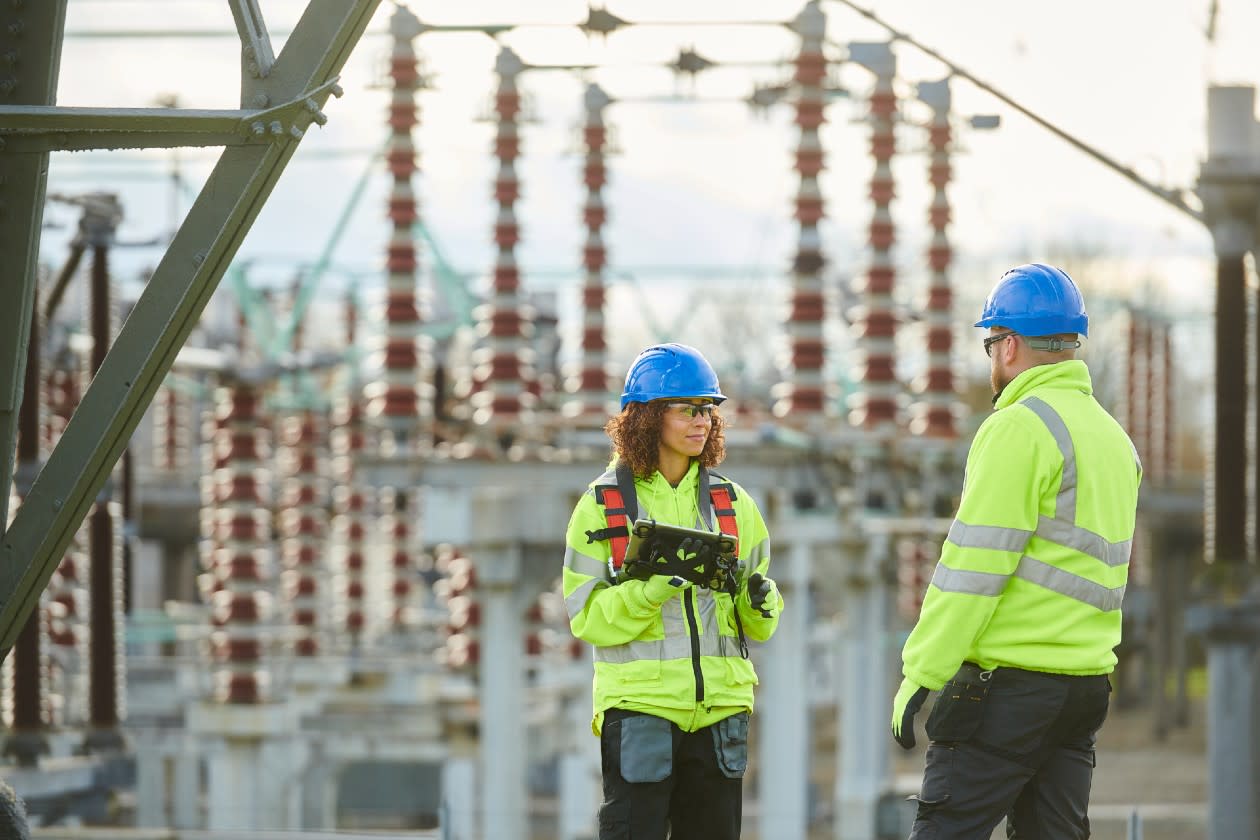
The massive investment in AI capabilities is boosting demand for heavy assets too – the data centres needed to house the chips and the electricity generation plants needed to power them.
This article isn’t personal advice. All investments fall as well as rise in value, so you could get back less than you invest. If you’re not sure what’s right for you, ask for financial advice.
Material World: A Substantial Story of our Past and Future
Back in 2023, I met with Ed Conway, Economics and Data Editor of Sky News, to talk about his book, Material World: A Substantial Story of our Past and Future. In this book, Ed shows that we are uncomfortably reliant on these six materials.
Sand – for glass, concrete and silicon chips
Salt – for fertilisers and pharmaceuticals
Iron – for the steel in just about every structure around us
Copper – for conducting electricity
Oil (and gas) – for power, and
Lithium – the lightest metal, for electric cars and our portable devices
Ed takes us on a fascinating journey, across history and geography, from the earliest users of these materials to the factories making the chips for AI. When you read the book, you will learn about the UK salt factory that predates Stonehenge, the world's flattest mirror – used to make those AI chips – and why the Middle East imports sand from the UK.
In the meantime, here are the six themes that will impact investors over the decade ahead.
Scale
The inspiration for the book was a visit to a Nevada gold mine. Here, trucks are bigger than three-storey buildings, with tyres the size of a double-decker bus. They must shift rocks the weight of ten fully laden Airbus A380s, the world's biggest passenger plane, to produce one bar of gold.
Ernie Berg of (what is now) Chevron discovered Saudi Arabia’s Gharwar oil field in 1940. The field measures 175 by 19 miles and has produced more than 70 billion barrels of oil, with around 50 billion more still underground. Even today, it’s on a different scale to any other oilfield on the planet.
The Middle East is home to 40% of the world's gas reserves. Qatar's North Field alone (stretching into Iran) produces around 4% of the world's total energy from all sources – gas, coal, nuclear, wind etc.
The Chuquicamata copper mine in Chile has created the world's largest manmade hole. It’s longer and wider than New York’s Central Park, and deeper than the height of the Burj Khalifa in Dubai. It has been mined for over 100 years.
“In 2019, we mined, dug and blasted more materials from the earth’s surface than the sum of the total of everything we extracted from the dawn of humanity all the way through to 1950.” And in the coming decades, we are likely to extract more than ever before.
The fifth energy transition
Over the last few hundred years, we have been through four energy transitions – from burning wood, to coal, to oil, and increasingly to gas. Now we’re embarking on a fifth, our shift to renewable energy sources, primarily wind and solar.
In all previous transitions, the new source of energy was more efficient than the old – more energy in a lighter material. The fifth is different. In aiming to eliminate carbon, we are moving to less efficient sources of energy.
Nuclear power is the exception to this rule. This helps explain why 22 countries agreed to target a tripling of nuclear energy capacity by 2050 at the COP28 climate summit.
This transformation represents the biggest project ever undertaken by humanity – with no-one in overall charge.
The global warming paradox
There is a paradox at the heart of this transition. Weaning ourselves off oil and gas is possible. But to get there, we need ever increasing quantities of copper, lithium and plenty of other raw materials. For example, electric cars need two-to-four times the amount of copper of a petrol car. And producing these materials is very energy – and therefore carbon – intensive.
This mining is also environmentally destructive. And a greater focus on environmental issues means that local communities increasingly have a voice in what happens next.
Peak oil?
People have been worrying about running out of resources since at least 1798. Then, Thomas Malthus warned that population growth meant we would run out of food. In practice, technological advances have helped us farm more efficiently, find new mineral reserves, and design alternative materials. We could not feed today's population without the yield-enhancing benefits of the fertilisers we make from natural gas.
The world's known resources remain well above the world's accessible reserves. Price – and environmental protection – are the main barriers to increasing output. We hope that today's forecasts of peak oil prove correct for our planet’s sake. But this will be driven by peak demand.
Embedded technology
Technology is embedded in just about every material we use.
Take iron nails. They have been around since the Old Testament and were a valuable good until the late 1700s. The inflation-adjusted price fell 90% over the next 150-odd years. Since the mid-twentieth century, however, real prices have risen as nails have become more complex and customised – helped by the invention of the nail gun.
If the Titanic had been built using today’s steel, there’s a good chance it would have survived its icy collision. Investors can find companies with a sustainable competitive advantage in even the most basic of industries.
Uncomfortable dependencies
Many of us live in the ethereal world. We mine data, build knowledge and knowhow, and sell ideas. I listened to this book on my phone, wrote this article on an e-writing tablet, and sent it electronically from my home in London to our office in Bristol.
But all these activities could not have happened without physical infrastructure – silicon chips, lithium batteries, fibre optic cables, copper wires and gas-powered electricity. The COVID crisis, Russia’s war in Ukraine and the Iran War have made us aware of our reliance on – and the vulnerabilities of – our global supply chains. Much of the energy and metals we need come from countries we are ideologically at odds with.
And these supply chains are largely invisible. No-one can trace the end-to-end journey of a grain of sand from where it’s mined to the chip in your phone.
What does this mean for investors? This is not a buy list of our favoured six materials. Instead, we will better understand the risks and potential returns in our portfolios if we understand our reliance on these basic building blocks of life.
We can and will develop alternative energy sources. New materials using nanotechnology will reduce our dependence on the stuff we’ve been hooked on since – in iron's case – the iron age.
But today's investors will be better prepared for the decade ahead if they understand how we source and use our materials today. Material World: A Substantial Story of our Past and Future is the ideal start point.