


The Labour Party conference has brought change to the state pension, with the Prime Minister announcing reform of the triple lock if Labour wins the next election in 2029.
From 2030, the state pension will no longer rise by whichever is highest of 2.5%, average earnings or CPI inflation. Instead, it will rise by the highest of inflation and 2.5% though it will also be assessed to ensure it keeps pace with average wages over time.
The new formula will continue to see the state pension rise, but at a slower rate while still keeping track of earnings and wages. Savings made from the reform will go towards setting up a National Care Service aimed at managing the enormous costs families face paying for care as well as reducing pressure on the NHS.
It’s important to say that any changes to how the state pension is uprated are still several years away. The change wouldn’t happen until 2030 so the triple lock will remain in force for the next few years. We expect next year’s State Pension increase to be formally confirmed in the Autumn Budget, but the likelihood is it will rise in line with average earnings for May-July which is 3.9%.

Such an increase would put someone on the full new state pension on course to receive £250.70 per week from next April – up from the current £241.30 per week. Someone on a full basic state pension would receive £192.10 per week – up from £184.90.
How to boost retirement income beyond the State Pension
The state pension forms the foundation of our retirement income, but the reality is it will only provide enough to cover the essentials. If you want more from your retirement, then it’s important to do what you can to boost your pension.
HL’s Savings and Resilience Barometer shows only 43% of households are on track to maintain their lifestyles in retirement, so there’s much more that needs to be done to boost retirement adequacy.
The best thing people can do to ensure they have enough money to fund their retirement is to start paying into a workplace or private pension early and maintain those contributions throughout their working life.
And the difference between doing this in your twenties compared to your thirties can be major.
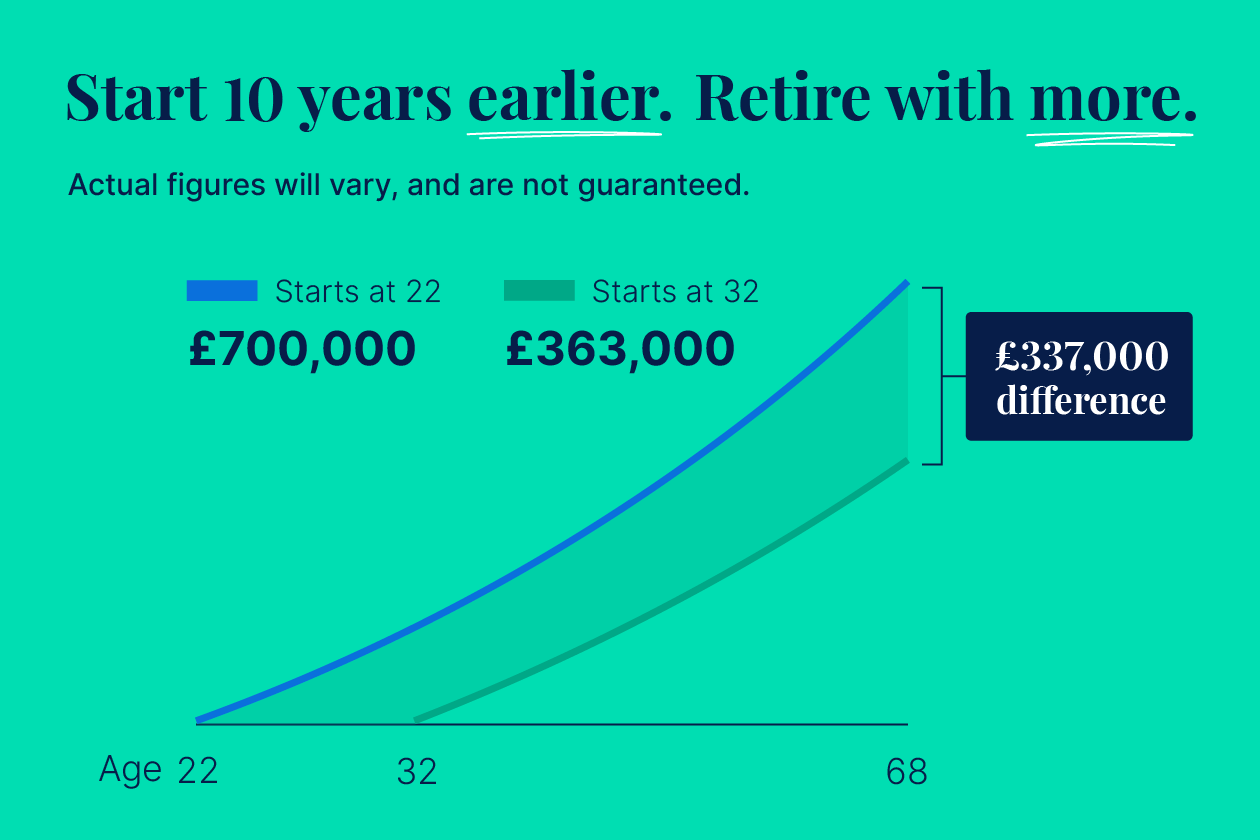
HL calculations show that someone paying £200 per month into a pension between the ages of 22 and 68 could have almost £700,000 at state pension age. This is based on investment growth of 5% pa after charges and increasing the contribution by 3% per year.
Someone starting just ten years later, on the same basis would have only around £363,000 – a difference of as much as £337,000. This is just an example. Investment returns will vary, and depend on the investments you choose. Inflation will impact the future spending power of your money.
Taking steps like boosting your contributions every time you get a pay increase, or promotion will add up over time. If you’re also in a scheme where your employer increases their contribution if you boost yours – known as an employer match – then this can also make a huge difference.
The importance of stable pension and tax rules
Pensions are the ultimate long-term investment, and people need a stable environment in which to plan.
It’s important that the government gives people that stable tax environment while publishing a five-year tax roadmap that sets out its plans on the critical issues that influence how retirement planning – issues like tax-free cash and pensions tax relief.
This lets people plan for their future with confidence without fear of frequent tax changes undermining their hard-earned retirement.
This article is for information only and not financial advice. It’s clear from the above that pension and tax rules can change, but their benefits also depend on personal circumstances.
If you’re not sure what’s right for you, a financial adviser can help.