
Alex Wright's contrarian approach and focus on unloved companies differentiates the trust from some peers
The manager is supported by Jonathan Winton and a large, well-resourced analyst pool at Fidelity
The trust’s performed well under Wright’s tenure as manager, significantly outperforming the FTSE All Share index
How it fits in a portfolio
The Fidelity Special Values trust aims to grow an investment over the long term. The manager's focus on unloved companies differentiates it from many other UK-focused investment trusts, and it could bring diversification to the UK section of a broader investment portfolio. It could sit well alongside other UK trusts that focus on companies capable of growing earnings at a more consistent pace.
Investors in closed-ended funds should be aware the trust can trade at a discount or premium to its net asset value (NAV).
Manager
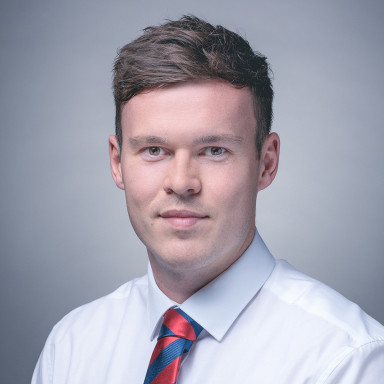
Alex Wright has been at Fidelity since 2001. He started his career analysing European companies and has focused on UK companies since 2008. As an analyst, he worked closely with Anthony Bolton and Sanjeev Shah, the trust’s two previous managers. We think it's positive that he learned his trade from such well-regarded investors.
Wright became a fund manager in 2008, initially focusing on UK smaller companies, but later broadened his remit to include companies of all sizes. He's been lead manager of the Fidelity Special Values investment trust since September 2012 and is also responsible for the Fidelity Special Situations fund, which he’s managed since January 2014. The two portfolios have a high degree of overlap, so we think this is a reasonable workload for an investor of Wright's calibre.
He's supported by co-manager Jonathan Winton and Fidelity's extensive analyst team. We think Wright has the resources required to do his job well.
Process
Wright invests in large, medium-sized and higher-risk smaller companies that often go ignored by other investors. Maybe they've missed a profit target, or the management team made some unpopular decisions. Either way, he must believe the company is on the road to recovery. A company can recover in a variety of ways, such as introducing a new product line, expanding into new areas or hiring a new management team.
Corporate strategy plays an important part in a company's recovery, so the manager spends lots of time meeting company managers. He also meets the clients and suppliers of the companies he invests in to better understand how the company does business.
As the company improves, its share price should rise as other investors begin to recognise the change. As the price rises, Wright gradually takes profits and moves on to the next unloved opportunity. It's an investment style known as 'value' investing. Of course, not every company will recover, and some could fail altogether.
Wright has made some changes to the trust’s investments over the year, selling shares in companies that had performed well and recycling this into businesses with attractive turnaround potential. This included selling in its entirety and trimming investments in banks Barclays and AIB Group respectively and re-distributing this into other banks like Lloyds and Close Brothers. Wright also continues to find attractive opportunities in more defensive parts of the market, adding to investments in medical device company Smith & Nephew and tobacco manufacturer British American Tobacco.
The trust can borrow money to invest with the intention of increasing returns (known as gearing), but this could magnify losses in a falling market and increases risk. The manager can also use derivatives, which if used adds risk. The level of gearing as of the end of August (the end of the trust’s financial year) was 5.4%, lower than the 7.9% level a year earlier. In addition, there may be some investments in smaller companies which, by their nature, can be higher risk and illiquid investments.
Culture
Fidelity was founded in 1969 and is a global investment manager. The company remains privately owned, meaning its managers can focus on the long-term interests of investors rather than short-term shareholder demands. That's helped the firm develop an investment-focused culture, where investment ideas are openly discussed and debated, and information is shared amongst the firm's various teams.
The company's scale means investment teams are well-resourced and fund managers are well-incentivised. We think it's positive that all Fidelity fund managers are incentivised based on the longer-term performance of their funds and investment trusts. We think this aligns their interests with those of investors.
ESG Integration
Fidelity has developed a structured engagement program which allows it to be systematic in its engagement on environmental and social issues. The firm also has a large Environmental, Social and Governance (ESG) team, which writes regular ESG reports on companies held by Fidelity fund managers. The firm votes where it’s possible to do so and quarterly voting reports are posted online, complete with rationales for votes against management and abstentions.
In June 2019, Fidelity launched its own proprietary ESG ratings tool. It scores thousands of companies based on their ESG credentials on a forward-looking basis, with investment analysts tasked with the job of ensuring the ratings are up to date. The ratings system was later updated to include an assessment of each company’s ability to manage negative externalities. Fidelity also developed a climate rating which highlights companies where engagement is most necessary if the firm is to achieve its aim to halve portfolio emissions by 2030 and reach net zero by 2050.
While Fidelity has made strides forward at the firm level, we don’t think this has fully fed through to the fund level. Although there is plenty of ESG information available to all Fidelity fund managers, we’re not yet convinced they all put it to full use.
The trust isn’t run to a sustainable investment mandate.
Cost
The ongoing annual charge over the trust’s financial year to the end of August 2025 was 0.68%. Investors should refer to the latest annual reports and accounts, and Key Information Document for details of the risks and charging structure. If held in a SIPP or ISA, the HL platform fee of 0.45% per annum (capped at £200 per annum for a SIPP and £45 for an ISA) also applies. Our platform fee doesn’t apply if held in a Fund and Share Account or in a Junior ISA.
Performance
The trust's performed well over the long term. Its share price has risen 415.56%* since Wright became manager in September 2012, beating the FTSE All Share index's return of 179.94%. We think this margin of outperformance is an impressive achievement. Past performance is not a guide to the future.
Over the trust's last financial year to the end of August 2025, its net asset value (NAV) rose by 14.3% with the share price rising by 21.8%. This compares with a return of 12.6% for the FTSE All Share index over the same period. A narrowing of the discount the trust traded on over the period explains why the share price return exceeded the NAV return.
Performance of the trust was aided by investing less than the benchmark in pharmaceutical company AstraZeneca, which struggled with concerns about its China operations and US drug pricing reforms. Holdings Standard Chartered, NatWest Group and AIB Group in the banking sector all performed well.
In the trust’s last financial year, the dividend paid to investors increased to 10.2p per share, a rise of 6.6% on the year before, which was fully covered by its revenues. Dividends are variable and not guaranteed.
At the time of writing the trust trades at a discount of 3.31% to its NAV, which compares to a 12 month average discount of 4.79%, and has a dividend yield of 2.62%. Yields are variable and aren’t a reliable indicator of future income.
Annual percentage growth
Oct 20 – Oct 21 | Oct 21 – Oct 22 | Oct 22 – Oct 23 | Oct 23 – Oct 24 | Oct 24 – Oct 25 | |
|---|---|---|---|---|---|
Fidelity Special Values | 78.08% | -11.58% | 0.50% | 24.65% | 33.28% |
FTSE All Share | 35.40% | -2.78% | 5.89% | 16.30% | 22.50% |
AIC UK All Companies | 48.64% | -26.48% | 0.52% | 25.48% | 18.87% |