

First-half sales came in at £15.8bn (£15.7bn expected), reflecting growth of 9% as all divisions contributed positively. Electronic Systems, Platforms & Services, and Air all grew at low double-digit rates.
Underlying operating profit rose 11% to £1.7bn (£1.7bn expected), driven by the top-line growth and improved margins.
Free cash flow improved from an outflow of £0.4bn to an inflow of £1.8bn (£0.0bn expected), reflecting a much higher level of pre-payments from customers. Net debt fell from £3.8bn to £3.2bn.
Full-year guidance has been raised, with sales now expected to grow by 8-10% (previously: 7-9%). Underlying operating profit growth is now expected to be between 10-12% (previously: 9-11%).
An interim dividend of 15.0p per share was announced, up 11%. Around £0.3bn of share buybacks were completed in the period.
The shares rose 1.0% in early trading.
Our view
BAE Systems had a good start to the year, with strong top-line growth and improving margins prompting management to nudge its full-year sales and profit guidance slightly higher. The demand outlook remains favourable, and the prospect of further increases to UK and US defence budgets remains a potential catalyst for future growth.
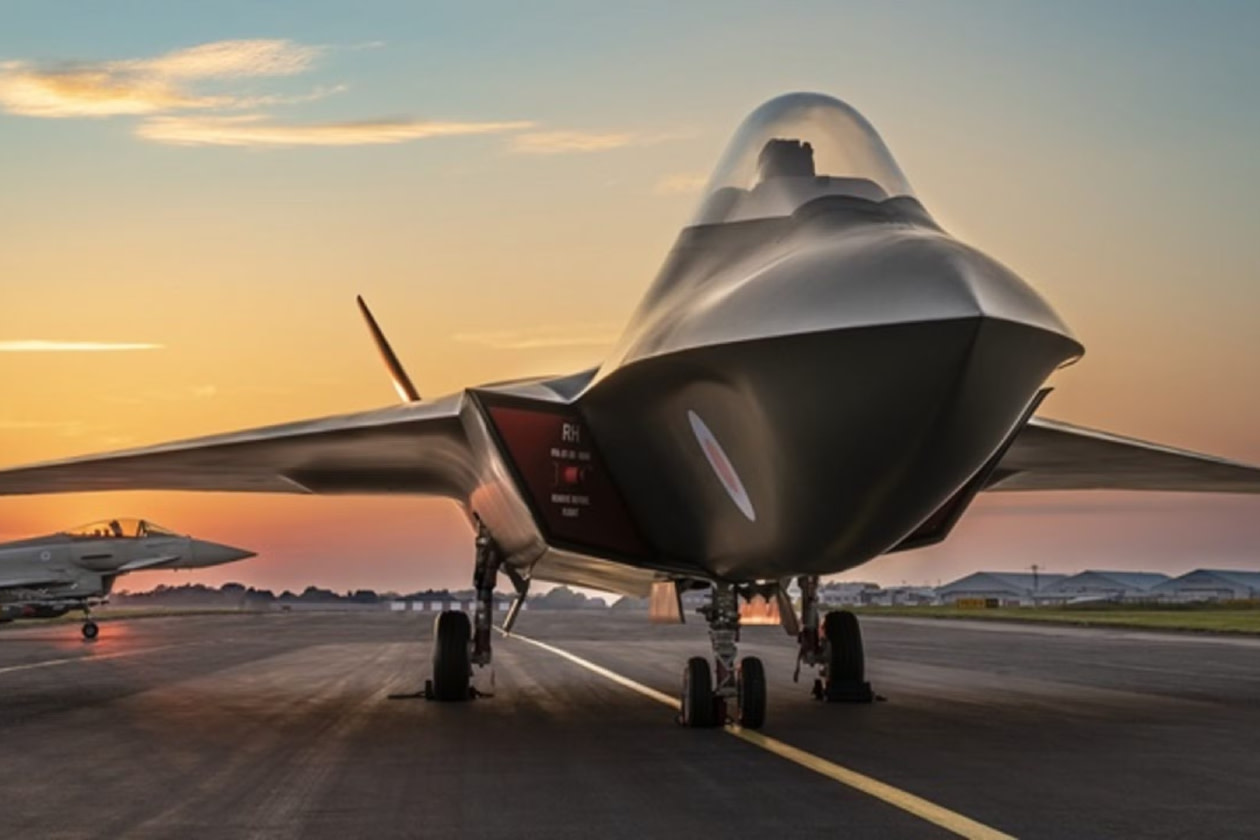
At its core, BAE Systems manufactures heavy-duty military equipment, including fighter jets, aircraft, and submarines. With NATO members committing to boost defence spending from 2% to 5% of GDP by 2035, BAE looks well-placed to benefit from this long tailwind and capture some of this extra spending.
Despite being a UK-based company, around 43% of its sales come from the US, making it the largest single contributing region. On an absolute basis, US military spending trumps any other country in the world, so having large exposure to this market is proving very beneficial.
The recent US-Iran conflict has led the Trump administration to propose an eyewatering 50% increase in its defence budget to $1.5trn for 2027. While we think it’s unlikely that the full amount will be approved by Congress, anything north of $1.2trn would likely be seen as a positive for the defence sector, including BAE Systems.
Demand for the group’s products and services remains strong, with the order book rising to a record £84bn. Because these are typically long-cycle orders with revenues spread over several years, they give BAE multi-year revenue visibility.
Keep in mind that profitability hinges on its ability to estimate future costs. The long-term nature of many contracts means that the related risks and costs can change over time. Currently, potential supply chain issues and production delays have been called out by management as the main trip hazards.
The balance sheet is in good shape, and free cash flows are improving faster than expected. That means the modest 2.1% dividend yield looks well covered, and there could be room to speed up the pace of share buybacks if progress continues. But as always, no shareholder returns are guaranteed.
BAE Systems remains one of our preferred names in the defence sector, given its diverse portfolio and geographic footprint. Despite the rise in valuation over recent years, we don’t think it looks too demanding, especially given the potential for further increases to defence budgets. But operational and supply chain challenges will have to be navigated carefully, and any missteps will likely be punished.
Environmental, social and governance (ESG) risk
The aerospace and defence sector is high-risk in terms of ESG. Product governance and business ethics are key risk drivers. Carbon emissions from products and services, data privacy and security and labour relations are also contributors to ESG risk.
According to Sustainalytics, BAE System’s management of ESG risk is strong.
It has a product safety policy and chain of accountability and assesses safety throughout product development. It has a board-level committee that oversees business ethics risks and has improved disclosure regarding human rights. However, disclosure regarding quality management standards and external certifications are lacking, and BAE should improve reporting on business ethics incident investigations. Employee development programmes are strong and the group has committed to net zero with interim targets in place.
BAE Systems key facts
All ratios are sourced from LSEG Datastream, based on previous day’s closing values. Please remember yields are variable and not a reliable indicator of future income. Keep in mind key figures shouldn’t be looked at on their own – it’s important to understand the big picture.
This article is original Hargreaves Lansdown content, published by Hargreaves Lansdown. It was correct as at the date of publication, and our views may have changed since then. Unless otherwise stated estimates, including prospective yields, are a consensus of analyst forecasts provided by LSEG. These estimates are not a reliable indicator of future performance. Yields are variable and not guaranteed. Investments rise and fall in value so investors could make a loss.
This article is not advice or a recommendation to buy, sell or hold any investment. No view is given on the present or future value or price of any investment, and investors should form their own view on any proposed investment.