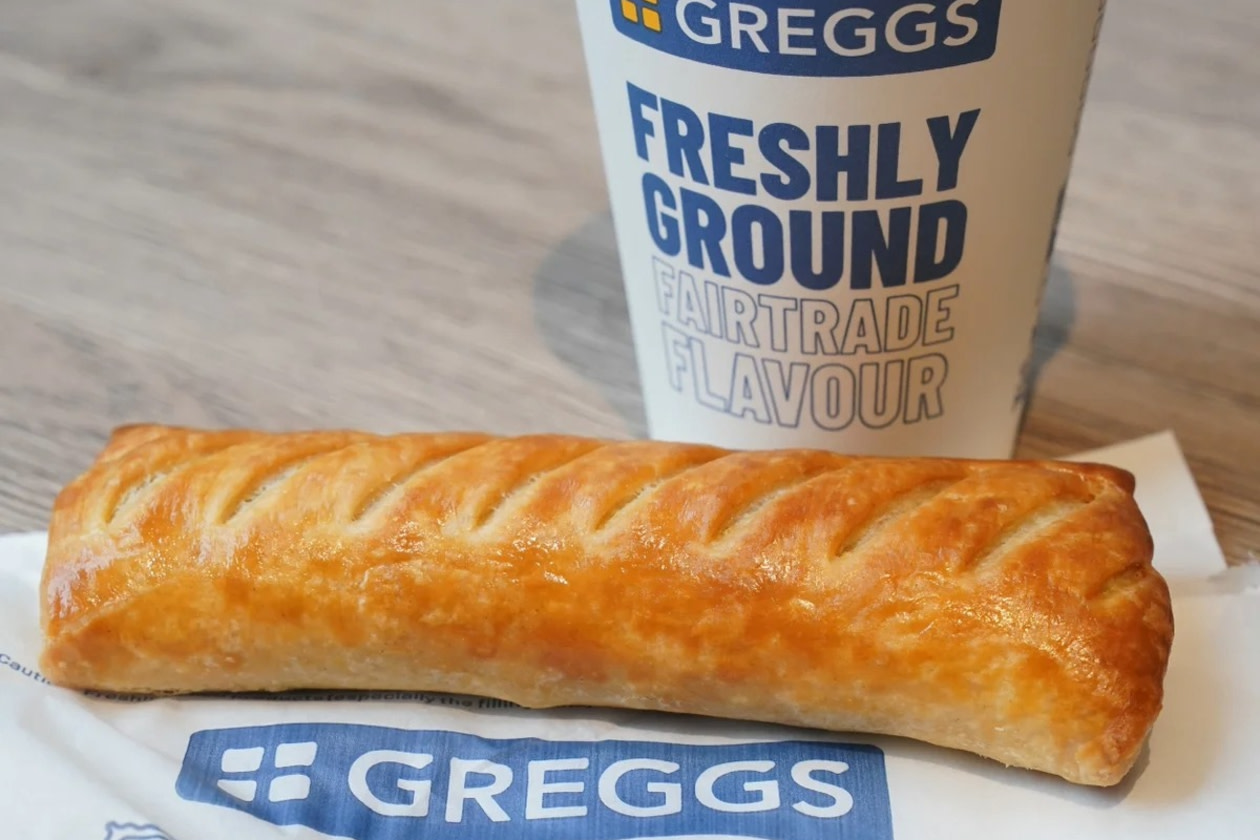


Greggs’ first-half sales increased 7.2% to £1.1bn (£1.1bn expected), driven by 34 net store openings and market share gains. Company-managed shop like-for-like (LFL) sales rose 2.1%, and franchised shops contributed 1.3% LFL growth.
Operating profit rose 22.9% to £87mnn (£82mn expected), helped by lower-than-expected cost inflation, strong cost control, and an easy comparable period.
Free cash flow improved from a £41mn outflow to a £74mn inflow, as capital expenditure moderated. Net cash rose to £16mn at the end of the period.
Full-year operating profit guidance remains unchanged, expected to land around last year’s level of £188mn. Capital expenditure guidance has been lowered by £20mn to around £180mn.
An interim dividend of 19.0p per share was announced, in line with last year.
The shares rose 9.9% in early trading.
Our view
Greggs had a good start to the year, with new store openings and market share gains helping drive the top line higher. Costs are being kept under control too, which saw profits return to growth territory. After years of heavy investment, capital expenditure also looks set to trend lower from here, offering up some fresh options for spare cash.
Still, there’s no escaping the fact that the wider environment remains a challenge. UK economic growth is slim, and consumers are becoming more conscious of their spending.
Despite the challenges, Greggs is working hard to build the foundations for future growth. The number of shops is set to rise to 3,000 over the next few years. Expected net openings of up to 120 stores in 2026, including new Express locations, are broadly in line with last year's run rate, as the bakery chain looks to become more accessible to more people.
Menus are also being adapted to changing customer preferences, and Greggs is opening later to attract more evening customers – the group’s fastest-growing daypart. Greggs has also worked hard over the last few years to increase the number of franchised shops to around 20%. We support this model. These locations avoid day-to-day costs and continue to outperform company-managed sites.
But the store expansion programme and setting up two new distribution centres have been costly. 2025 looks to have been the peak year for these types of investment, but it’s likely to be 2027 before they start driving major benefits.
Although the Middle East conflict has driven a sharp rise in energy prices, Greggs’ cost pressures still look set to ease this year. That’s because the group has already locked in prices for the rest of its energy needs for 2026, alongside most of its food and packaging requirements. But if the conflict drags on, we could see cost inflation pick back up next year.
Having a healthy balance sheet helps, with the group sporting a small net cash position. There’s plenty of liquidity on hand, so we’re not concerned about the group’s financial position. A further reduction in planned investment levels this year also means that the prospective 4.1% dividend yield looks well covered, with scope for improved payouts further down the line. But as always, no shareholder returns are guaranteed.
We still like the underlying business, and a strong start to the year means that full-year guidance looks achievable. Soft performance last year means that an attractive entry point is on offer. But the near-term outlook for consumer spending remains muted, and if higher energy prices persist into next year, it could put pressure on future profit growth.
Environmental, social and governance (ESG) risk
Consumer services companies are medium-risk in terms of ESG, and very few companies are excelling at managing them. That leaves plenty of opportunity for forward-thinking firms. The primary risk driver is product governance. The impact of their products on society, labour relations, and environmental concerns are also key risks to monitor.
According to Sustainalytics, Greggs’ management of material ESG issues is strong.
Greggs’ overall ESG reporting is not up to par with leading reporting standards, though it has appointed a board-level responsibility for overseeing ESG issues. A very strong environmental policy and a decent whistleblower programme are in place. Executive-level compensation could benefit from some elements being explicitly linked to sustainability performance targets.
Greggs key facts
All ratios are sourced from LSEG Datastream, based on previous day’s closing values. Please remember that yields are variable and not a reliable indicator of future income. Keep in mind that key figures shouldn’t be looked at on their own – it’s important to understand the big picture.
This article is original Hargreaves Lansdown content, published by Hargreaves Lansdown. It was correct as at the date of publication, and our views may have changed since then. Unless otherwise stated estimates, including prospective yields, are a consensus of analyst forecasts provided by LSEG. These estimates are not a reliable indicator of future performance. Yields are variable and not guaranteed. Investments rise and fall in value so investors could make a loss.
This article is not advice or a recommendation to buy, sell or hold any investment. No view is given on the present or future value or price of any investment, and investors should form their own view on any proposed investment.