Important information - This isn’t personal advice. If you’re unsure what’s right for you, you should seek financial advice. If you save into a Lifetime ISA instead of a pension, you could miss out on employer contributions, and your entitlement to certain means-tested state benefits could be affected. Investments can go down as well as up in value, so you could get back less than you put in. You can withdraw money free of charge from a Lifetime ISA to make an eligible property purchase, or from age 60. Other withdrawals will usually mean a 25% government charge, so you could get back less than you put in. Tax rules can change and their benefits depend on your circumstances.
Saving for retirement with a Lifetime ISA
Many people think a Lifetime ISA (LISA) is a way to save and invest for your first home, and it is, but it can also be considered along with a pension as a tax-efficient way to invest for retirement.
You can open an account if you’re between 18 and 39 years old. You have the freedom to choose your own investments, and your money can grow free from UK capital gains and income tax.

How much can you pay into a Lifetime ISA?
You can pay in up to £4,000 each tax year, and the government will add a 25% bonus (up to £1,000 every tax year). You need to be aged between 18 and 39 to open a LISA but, once open, you can make contributions and get this bonus until age 50.
The Lifetime ISA allowance of £4,000 forms part of the £20,000 ISA allowance for this tax year. Remember, tax rules can change and their benefits depend on your circumstances.
Try our Lifetime ISA calculator to find out how much your government bonus could be worth.
When can I take money out for retirement?
You decide how much to invest and when to access it but you’ll normally pay a 25% penalty on any money you take out before age 60 (if it’s not put towards buying your first home), so you could get back less than you put in.
You might decide to take money out regardless of the penalty but remember, by making early withdrawals you run the risk of falling short in later life.
Withdrawals after age 60 can be taken completely penalty and tax free.
Lifetime ISA or Pension - which is best?
If you have a workplace pension, that should be your first port of call for retirement savings because your employer will contribute to your pension too.
Once your employer is making pension contributions at the maximum level, or you don’t have a workplace pension, it may be more tax-efficient to make contributions into a LISA. The option you choose will depend on your personal circumstances.

Tax treatment of contributions and withdrawals
If you earn £50,270 or less, then a LISA is likely to be more tax-efficient than personal pension contributions if your employer doesn’t offer salary sacrifice. This is because the bonus you get from the government is effectively the same amount you’d receive as basic-rate tax relief in a pension. The difference is you can take money out of a LISA tax free from age 60. Whereas with a pension, only up to 25% is normally tax free but you can make withdrawals from age 55 (57 from 2028).
If you earn more than £50,270 a pension is likely to be more tax-efficient. Despite pension income being taxable when you withdraw it, you can claim up to an additional 25% in pension tax relief on your pension contributions. Different tax rates and bands apply for Scottish taxpayers.
Example if you are a basic-rate taxpayer:
| Type of account | PENSION (without salary sacrifice*) | LIFETIME ISA |
|---|---|---|
| Amount you pay in | £800 | £800 |
| Tax relief or bonus added by the government | £200 | £200 |
| Amount you pay in + tax relief or government bonus | £1,000 | £1,000 |
| Withdrawal (after tax)† | £850 £250 is tax-free £750 taxed at 20% (basic rate), i.e £150 is paid in tax | £1,000 |
| Profit after tax deductions | £50 Tax relief of £200 – 20% (basic rate) tax on withdrawal of £150 | £200 |
| Overall % uplift to the amount you paid in (profit after tax / amount you paid in) | 6.25% | 25% |
This example assumes that someone is a basic-rate taxpayer now, and will continue to be in retirement.
*Salary sacrifice is an alternative way of saving into a workplace pension. You can choose to reduce your salary and the difference is paid into your pension by your employer. If your employer offers this option and will agree to pay in more, its likely to be more beneficial to save into your workplace pension than a LISA.
†You can access money in your pension from age 55 (rising to 57 in 2028). Money withdrawn from a LISA after age 60 is tax free.
This example does not take into account inflation, charges or investment performance.
Example if you are a higher-rate taxpayer:
| Type of account | PENSION (without salary sacrifice*) | LIFETIME ISA |
|---|---|---|
| Amount you pay in | £800 | £800 |
| Tax relief or bonus added by the government** | £400 | £200 |
| Amount you pay in + tax relief or government bonus | £1,000 | £1,000 |
| Withdrawal (after tax)† | £850 £250 is tax-free £750 taxed at 20% (basic rate), i.e £150 is paid in tax | £1,000 |
| Profit after tax deductions | £250 Tax relief of 40% i.e £400 – 20% (basic rate) tax on withdrawal of £150 | £200 |
| Overall % uplift to the amount you paid in (profit after tax / amount you paid in) | 42% | 25% |
This example assumes that someone is a rest of UK higher-rate (40%) tax payer now, and will be a basic-rate tax payer at retirement.
*Salary sacrifice is an alternative way of saving into a workplace pension. You can choose to reduce your salary and the difference is paid into your pension by your employer. If your employer offers this option and will agree to pay in more, its likely to be more beneficial to save into your workplace pension than a LISA.
** The 25% government bonus for the Lifetime ISA and basic-rate tax relief (in the pension) will normally be added to your account automatically. Any higher-rate tax relief from a pension contribution will need to be claimed back through your tax return. To claim the full amount of higher-rate tax relief you must pay sufficient higher-rate tax.
†You can access money in your pension from age 55 (rising to 57 in 2028). Money withdrawn from a LISA after age 60 is tax free.
This example does not take into account inflation, charges or investment performance.
What are the benefits of a Lifetime ISA with HL?
Award winning
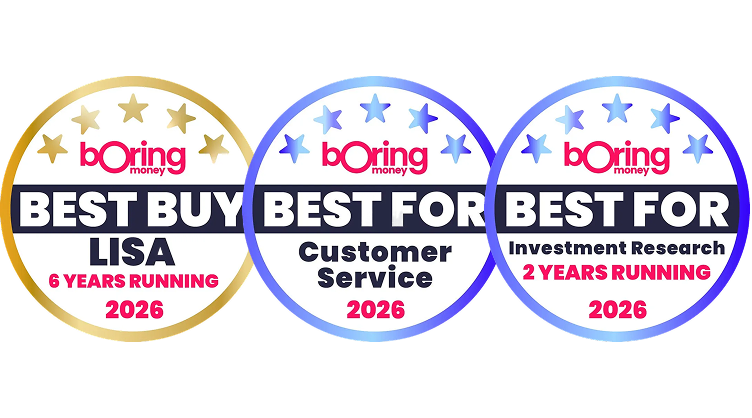
HL have won over 200 awards including Best Buy Lifetime ISA 2026 from the Boring Money Awards.Wide investment choice and expert research
Choose from over two thousand investments. You can get expert research to help you decide where to invest including our latest fund ideas, build your own portfolio, or ask for personal advice if you need it.Easy and simple to manage
Check your LISA on the go, online or with the HL app.Trusted by 2 million clients
HL is a secure company regulated by the Financial Conduct Authority.Free to set up, and a maximum annual fee of 0.25%
There's no charge to open a Lifetime ISA, with an account charge of no more than 0.25%. Investments may have their own charges . View full charges.
Open a Lifetime ISA
You can open an HL Lifetime ISA with a £100 lump sum, or from as little as £25 a month. The quickest way to open an account is online, you’ll just need your debit card and national insurance number to hand once you have read all the important information.
Frequently asked Lifetime ISA questions
There is no set retirement age. You’ll normally pay a 25% penalty on any money you take out before age 60 though (if it’s not put towards buying your first home) so you could get back less than you put in. Withdrawals after age 60 can be taken completely penalty free.
Yes. If you’re using a Lifetime ISA as a way to save for retirement, make sure you don’t take money out until age 60, unless you really need to. If you do take money out early, you’ll usually be charged an early exit penalty of 25%. This means you could get back less than you put in. Any money in a pension will be accessible at age 55 (rising to 57 in 2028).
No, you aren’t able to transfer money directly from a pension into a Lifetime ISA. Any money in a pension isn’t usually accessible until age 55 (rising to 57 in 2028).
Yes. You can use a LISA to save for both your first house purchase and for later life. Any money not used to buy your first house can stay in your LISA for later. Even if you’re already a homeowner you can continue to make contributions and get the government bonus right up until age 50 to boost your retirement savings.
If you’re self-employed and pay a higher rate of tax a pension is likely to be more tax efficient.
If you’re self-employed and a basic rate taxpayer, you should consider saving into a LISA. This is because you won’t have the benefit of any employer pension contributions to help boost your retirement savings.
The 25% LISA bonus you get from the government, is equal to what you’d receive as basic-rate tax relief in a pension on a personal contribution of up to £5,000 (for example, you pay in £4,000 into a pension and the government tops this up with £1,000 in basic rate tax relief). However, if you take money out of a LISA from age 60, it’s tax-free. Whereas if you take benefits from a pension (you’ll usually need to be at least 55, or 57 from 2028, to do this) normally only up to 25% of the amount taken will be tax-free with the rest taxed as income.
Unlike a pension, money in a LISA can be withdrawn – but this will normally incur the 25% government withdrawal charge, so you could get back less than you put in. Anything you withdraw could affect what your retirement plans will look like. A LISA isn’t suitable as the first port of call for emergency savings. But for those with a reasonable level of emergency cash already saved, it could be considered for long-term investing, with access to the money still being possible as a last resort.
No, a LISA won’t change your State Pension entitlement. However it could affect your entitlement to some means-tested benefits.
Money in a LISA will form part of your estate when you die so inheritance tax rules will apply. There’s normally no inheritance tax to pay if the value of your estate is below the current £325,000 threshold or you leave everything above the threshold to your spouse, civil partner, a charity or a community amateur sports club. Where there is inheritance tax to pay, the rate is usually 40%.
An ISA, including a LISA, could be inherited by a surviving spouse or civil partner in the form of an increased ISA allowance for them. This is known as the Additional Permitted Subscription (APS). Find out more about APS.
In contrast, any money in a pension won’t usually form part of your estate so no inheritance tax is payable. If you die under age 75 your loved ones can normally receive any money left in a pension completely tax free. If you die after 75, the money will be taxed as your beneficiaries’ income. You might consider a pension over a LISA if you’re hoping to pass on most of your retirement savings.
Yes, but if you qualify for a workplace pension it’s likely you’ll be better off making pension contributions over LISA contributions at least up until a certain amount. This is because, provided you’re eligible, your employer is legally required to contribute at least 3% of your salary, and some employers will match whatever you pay in up until a certain limit.
The most any employer will contribute varies, so it’s worth checking this with them. Once your employer is contributing the maximum into your pension, then the most tax-efficient account (LISA or a pension) for you to pay extra retirement savings into will depend on your personal circumstances.
Our award-winning Lifetime ISA
Best Buy Lifetime ISA 6 Years Running
- Boring Money Awards 2026
Best for Customer Service
- Boring Money Awards 2026
Best For Investment Research 2 Years Running
- Boring Money Awards 2026
Help and support
If you have any questions about the HL Lifetime ISA, you can speak to one of our UK-based client support experts.