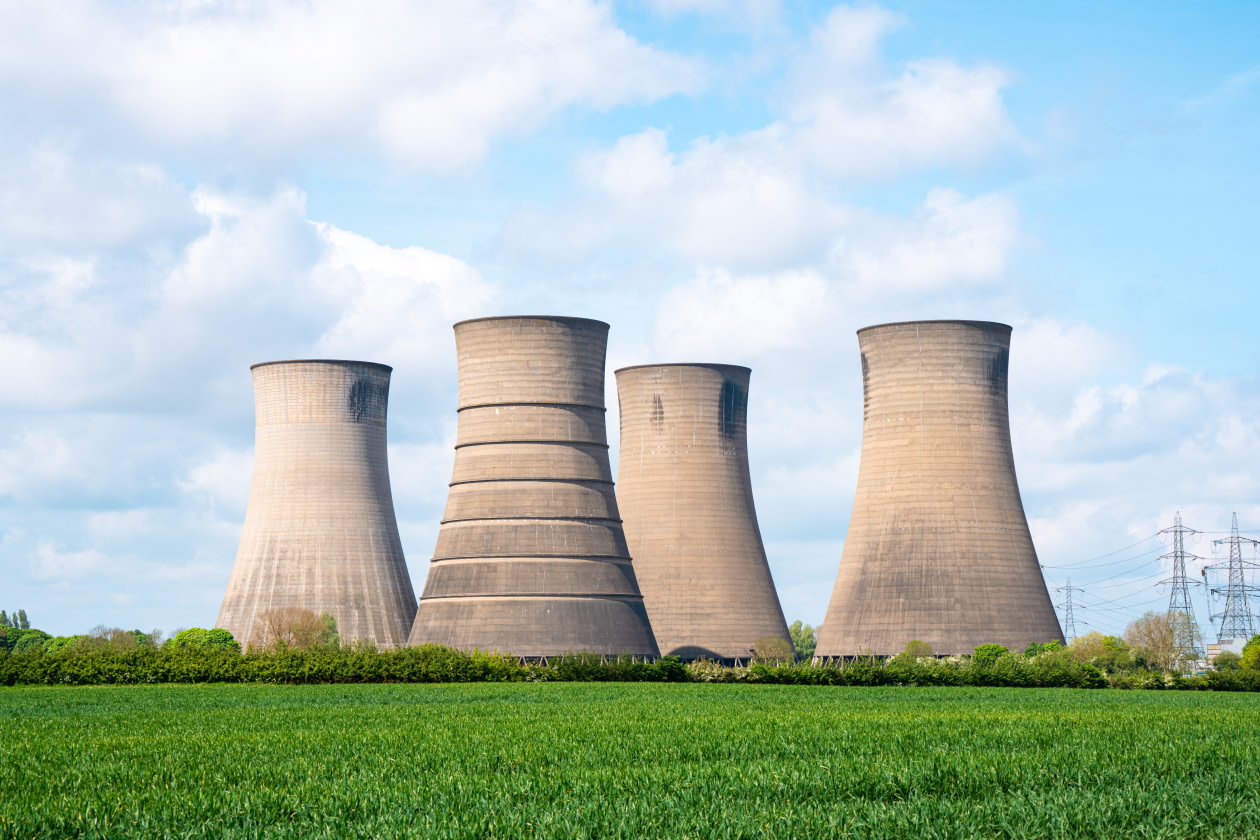


In 1951, nuclear energy generated electricity the first time, producing enough power for four light bulbs. Since then, its place as a significant contributor to the global electricity supply has been volatile.
Before the 1986 Chernobyl disaster, nuclear supplied around 17% of global electricity. But safety concerns like these began to complicate the public’s opinion of the atomic fuel, as well as rising costs. Today, the International Energy Agency (IEA) estimates that nuclear makes up less than 10% of global electricity. And recent conflicts, including the targeting of nuclear facilities in Ukraine, has renewed focus on associated risks.
Despite this, nuclear energy seems to be back in vogue, led this time by artificial intelligence (AI), which is forecast to increase power demand from data centres by more than 160% by 2030 compared to 2023 levels. The demand’s being driven by major technology firms’ energy-intensive facilities, powering large language models. These companies also have some of the most ambitious decarbonisation targets.
Over the past few years, Microsoft, Amazon, Google and Meta have all invested heavily in nuclear power. Perhaps most symbolically, Microsoft signed a 20-year power purchase agreement to support the reopening of a part of the Three Mile Island nuclear plant, the site of the worst nuclear accident in US history.
Are the tech giants right to be turning to nuclear energy?
This article isn’t personal advice. If you’re not sure whether an investment is right for you, seek advice. Investments and any income from them will rise and fall in value, so you could get back less than you invest. Ratios also shouldn’t be looked at on their own.
Is there a nuclear renaissance?
A combination of market, technological and policy conditions has led some to argue that a nuclear renaissance might be underway, setting the stage for growth over the coming decades.
Demand for cleaner electricity has helped lay the foundations for this renaissance. Electricity has been increasing at twice the rate of total energy demand, and the IEA forecast that it will keep growing more quickly in future. At the same time, countries have made unprecedented pledges to reduce emissions, leading to a wave of corporate decarbonisation targets.
Renewables have so far led the charge, making up almost 75% of the overall increase in power generation in 2024. But intermittency issues and a lack of affordable storage options make them an awkward fit for power-hungry data centres in need of reliable supply.
Nuclear energy solves both those problems, having one of the lowest carbon dioxide emission rates of all energy sources and providing a reliable baseload of energy.
These attractive characteristics are leading to heavy investment and policy support from governments. In the latest UK budget, the Chancellor earmarked £30bn to boost nuclear energy, including £2.5bn for a small modular reactor program. Across the pond, the US has committed to quadruple national nuclear capacity to 400 gigawatts.
What’s standing in the way of nuclear energy?
Although nuclear offers lower-carbon baseload power, large-scale data centre operators still need electricity quickly.
Speed to operation is an industry-wide priority and a potential weakness for nuclear. For the US and UK, build time averages somewhere around 7 to 8 years, but lengthy planning and overruns can add to this.
Builds costs can also come with a nasty shock.
In the UK, the cost for Hinkley Point C ballooned to more than double original estimates. A widely cited skills shortage in the industry and broader inflationary pressures both contributed to this.
Strict safety standards also drive up costs (although few will want compromise there). Safety has improved significantly since disasters like Chernobyl and Three Mile Island. Experts now widely consider nuclear a safe means of electricity generation, and accident risks are low and declining. But environmental campaigners also warn of the management and disposal of nuclear waste that can remain hazardous for thousands of years.
Hype is another risk to the industry.
Growing global concerns of an AI bubble should demonstrate that prudent investors will always look beyond a singular theme when assessing a company’s future.
Small modular reactors (SMRs) – smaller sized nuclear reactors that are faster and cheaper to build than their traditional counterparts - have also garnered significant support across public and private spheres. Although they might have a bright future, reports suggest that cost pressures are still weighing on the new technology and they might even produce more waste than bigger versions.
Which companies are positioned to benefit?
Investing in an individual company isn’t right for everyone because if that company fails, you could lose your whole investment. If you cannot afford this, then investing in a single company might not be right for you. You should make sure that you understand the companies you’re investing in and their specific risks. You should also make sure any shares you own are part of a diversified portfolio.
Rolls-Royce
Rolls-Royce is best known for producing aircraft engines. It sells these engines to aircraft manufacturers and then receives servicing revenue based on the number of hours these engines spend in the air.
Business has been booming on this front since the pandemic, with large engine flying hours now sitting at around 109% of 2019 levels. And demand for long-haul travel remains strong: flying hours are set to increase further over the coming years, making the outlook for the core business favourable.
But Rolls-Royce isn’t a one-trick pony.
It has several other divisions which offer routes to growth, including its SMRs. These offer a more flexible and scalable alternative to traditional large nuclear reactors. Around 90% of the plant is made and tested in the production factory before being delivered and assembled on site relatively quickly.
The advantages of these over more traditional nuclear plants include substantially lower costs and supply-chain risk for buyers. Given the small site required to house these reactors relative to traditional nuclear plants, it opens the door to a large target market.
Potential buyers include utility and defence businesses, as well as AI companies seeking a reliable energy source for power-hungry data centres.
For all the potential, there are still risks to be aware of. Rolls’ SMRs aren’t currently profitable, and that’s not expected to change until nearer 2030. In the meantime, there’s plenty of competition with their eyes on the same prize, so Rolls will need to prove that its design can compete on both reliability and efficiency.
All in, we really like the core business, and we’ve been impressed by management’s progress on improving everyday operations. The valuation has risen sharply in recent years, so a lot of the near-term growth potential now looks priced in. If SMRs prove their worth, the potential over the longer term is huge. But there’s a lot of execution risk to navigate to get there, with no guarantee of success.
The author holds shares in Rolls-Royce.
Cameco
Cameco is one of the world’s biggest suppliers of uranium – the fuel used in nuclear reactors.
The group has a controlling stake in the world’s largest high-grade uranium reserves. And as things stand, demand is forecast to massively exceed supply. We expect that to continue, putting upward pressure on uranium prices in the near term, meaning that Cameco sits in a very favourable position.
The Canada-based company isn’t just a mining company, though. The company also offers nuclear fuel processing services and refinery services and manufactures fuel assemblies and reactor components. This vertical integration makes it a key player in the nuclear ecosystem.
Production delays held back performance in the third quarter, but we’re not overly concerned. Demand and prices are holding up well, and other parts of the business are doing their job in offsetting some of this shortfall. As a result, markets are expecting full-year underlying cash profits (EBITDA) to rise 23% to $1.9bn Canadian dollars.
The balance sheet is in good shape, and as operations ramp back up, cash flows are expected to improve. Cameco’s 49%-owned joint venture, Westinghouse, has also partnered with the US government, which has pledged to facilitate and part-fund at least $80bn to construct new reactors using its technology. That’s a major positive for the group, giving it great near-term revenue visibility.
There are some risks to keep in mind, though. Although policymakers are shifting to a more nuclear-friendly stance, sentiment could change in the future. Cameco’s performance will also be closely tied to the price of uranium. Any dips in demand or price will put downward pressure on profitability.
We think that nuclear power will become increasingly important for power generation. Cameco is a well-placed name to capitalise on this trend, and high barriers to entry help keep competitors at bay. The market’s recognised the opportunity too, pushing the valuation relative to earnings well above the long-run average, meaning there’s additional pressure to deliver growth.
This article is original Hargreaves Lansdown content, published by Hargreaves Lansdown. It was correct as at the date of publication, and our views may have changed since then. Unless otherwise stated estimates, including prospective yields, are a consensus of analyst forecasts provided by LSEG. These estimates are not a reliable indicator of future performance. Past performance is not a guide to the future. Investments rise and fall in value so investors could make a loss. Yields are variable and not guaranteed.
This article is not advice or a recommendation to buy, sell or hold any investment. No view is given on the present or future value or price of any investment, and investors should form their own view on any proposed investment.