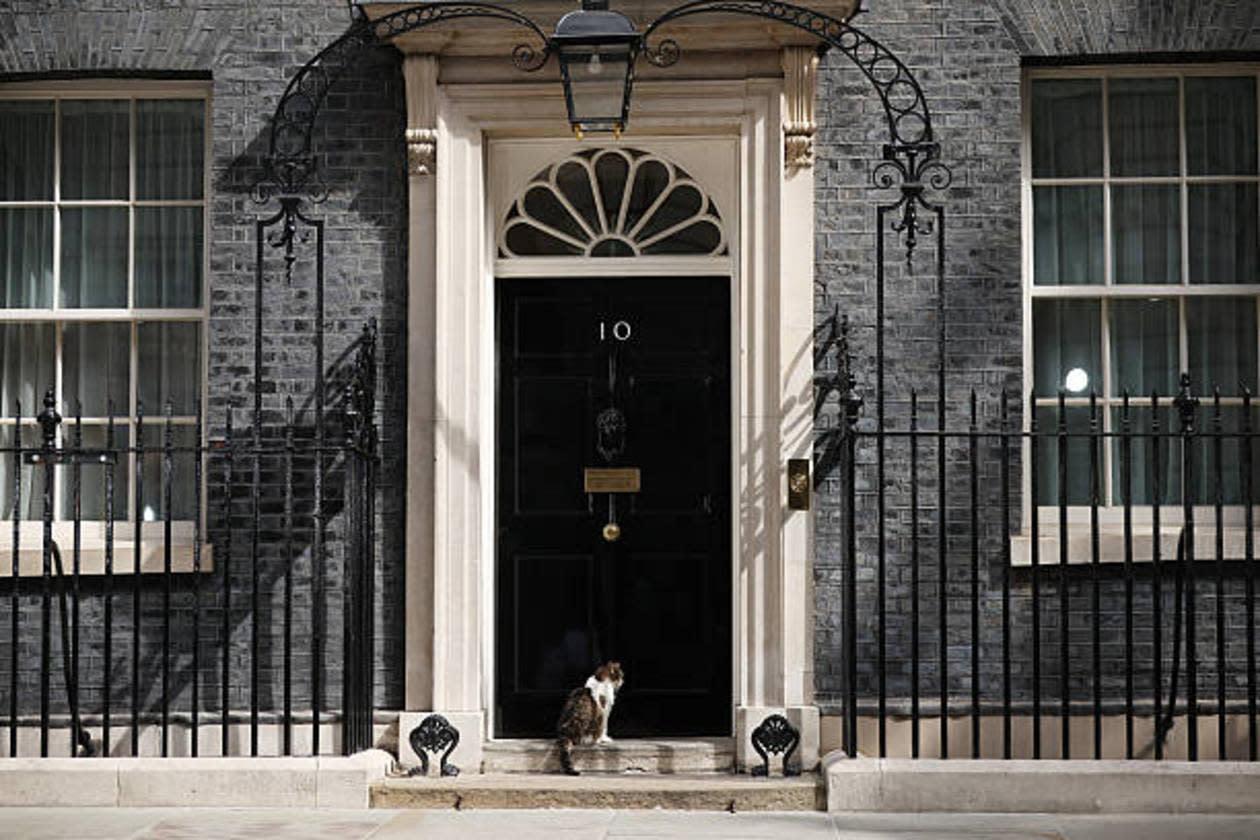

It has been an unusual start to a new government.
Normally a new Prime Minister arrives in Downing Street after weeks of campaigning, a Commons reset and a clear manifesto mandate. This time, the country has a new administration without the usual electoral theatre around it. The cabinet has been announced, policies have been announced, but the democratic rhythm feels slightly out of step.
That does not make the change irrelevant. Politics matters. It affects tax, public spending, regulation, defence, energy policy and confidence. It can influence the pound, gilts and particular sectors of the stock market.
But for investors, the important question is not whether Westminster feels noisy. It is whether that noise should change what you do with your money.
This article is for information only and not personal financial advice. Investing can help your money grow, but the value of investments can rise and fall, so you could get back less than you put in. Investing is for the long term, typically 5 years or more.
If you’re not sure investing is right for you, a financial adviser can help.
Why politics matters to investors
The first few days were always likely to feel strange. Without an election campaign to set expectations, the early announcements are by definition quite small. Ending rough sleeping, cheaper bus fares and establishing Number 10 North are not trivial measures, but they are signals rather than a full economic programme.
They also speak to something focus groups raise again and again: rough sleeping is not just seen as a housing failure, but as a visible sign that the country is not working as it should.
That matters politically because people do not experience the economy only through GDP, inflation prints or gilt yields. They experience it through the state of their high street, the reliability of public services, the cost of the weekly shop and whether the social fabric feels as if it is fraying.
However, the bigger test will come at the budget. That is where warm words meet the arithmetic.
Markets face more than just domestic politics
The fiscal constraints have not disappeared because the nameplates have changed. Debt is high, borrowing is expensive and gilt markets are unlikely to give any government a free pass. John Healey’s appointment as Chancellor is striking partly because he resigned from the previous cabinet over defence funding. He is now the person who has to make the numbers work.
The cabinet also hints at some of the tensions ahead.
Ed Miliband at the Foreign Office means development spending, investment in renewables, and Britain’s wider role in the world will be watched closely. Those choices are not abstract. Every pound committed to defence, aid, tax cuts or public services has to come from somewhere.
To paraphrase the poet John Donne, the UK is not an economic island entire of itself. The backdrop is getting harder, not easier. Renewed tensions in the Middle East will feed through into energy prices, freight costs and inflation expectations.
US short term government bond rates are at their highest level in more than a year, Germany’s are the highest in over a decade.
President Trump’s latest tariff package, announced on 24 July, confirms a continuation of levies for companies with global supply chains. Reports suggest new US duties of 10% to 12.5% on goods from dozens of trading partners, including the UK, replacing temporary global tariffs as they expire.
Markets may not react dramatically to every headline. Sometimes they look through the politics more calmly than politicians do. But companies must still manage the consequences: input costs, disrupted routes, currency moves, labour shortages, regulation and customers whose budgets are already under pressure.
That is why the message for clients should not be to try to trade every cabinet appointment, budget rumour or tariff announcement.
Volatility does not have to change your plan
Politics can create winners and losers. Housebuilders, utilities, banks, defence companies, consumer businesses and infrastructure names can all be pulled around by policy change. But that is different from saying investors should keep jumping in and out of the market.
The most important thing, for most long-term investors, is still to stay invested.
That does not mean ignoring risk. It means recognising that good companies and good fund managers are paid to navigate the world as it is, not as we would like it to be. They will have to deal with artificial intelligence (AI) disruption, higher energy costs, tariffs, political instability and changing consumer behaviour. The best of them will adapt, just as they have adapted to shocks before.
For clients, the practical checklist is more prosaic, but much more useful. Make sure your portfolio is diversified. Check the risk level still fits your time horizon. Keep a sensible cash buffer. Use pensions and ISAs where they are right for your circumstances. And be very careful about making irreversible decisions because of speculation about tax.
What investors should really watch before a budget
As the budget approaches, there will be plenty of rumours. Rumours are not policy.
This is also where HL has an important role. We will be championing the rights of clients to a stable, understandable framework for saving and investing. If people are being asked to take more responsibility for their long-term financial resilience, the rules around ISAs, pensions and other tax wrappers cannot feel as if they are constantly shifting beneath their feet.
Stability is not a niche concern for wealthy investors. It is part of the plumbing that helps people plan. If governments want households to save, invest and retire with confidence, they need to make the system feel worth engaging with. Constant change risks doing the opposite.
The new administration faces a difficult inheritance and a short window to prove it can turn political change into economic credibility.
For investors, that is exactly why discipline matters. Politics will keep changing. Budgets will come and go. Tariffs will be announced, challenged and rewritten. But long-term wealth is usually built by staying invested through uncertainty, not by trying to outguess every twist and turn.