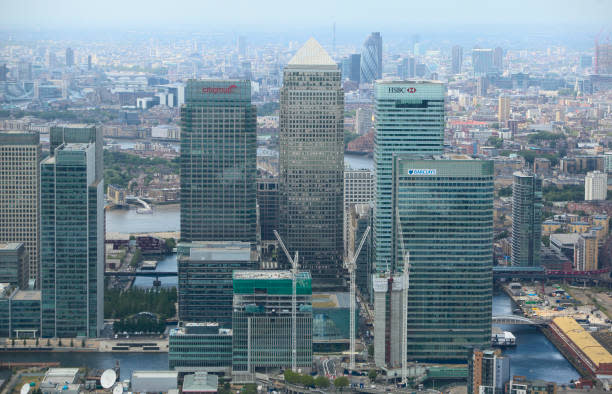


UK-listed banks delivered another strong earnings season.
Income growth was broad-based, costs were generally well controlled and bad debts remained manageable. Across the five banks we cover, second-quarter income rose by an average of almost 10% compared with last year, and pre-tax profit increased by close to 18%. All five also beat market expectations on profit.
That is an encouraging combination. Higher interest rates drove much of the sector's recovery in recent years, but the latest results suggest that banks are becoming less reliant on that single tailwind.
This article isn’t personal advice. If you’re not sure an investment is right for you, seek advice. Investments and any income from them will rise and fall in value, so you could get back less than you invest. Ratios also shouldn’t be looked at on their own.
Investing in an individual company isn’t right for everyone because if that company fails, you could lose your whole investment. If you cannot afford this, investing in a single company might not be right for you. You should make sure that you understand the companies you’re investing in and their specific risks. You should also make sure that any shares you own are part of a diversified portfolio.
A better-quality earnings season for UK banks
Banks entered the reporting season facing a familiar concern: if interest rates keep falling, does the earnings recovery begin to unwind?
The results gave a more reassuring answer.
Interest income remained supportive, but it was not the only part of the story. Lending balances generally moved forward, fee-generating businesses were better than expected, and income rose faster than costs. That left the sector producing stronger profits even without a fresh boost from central banks.
This matters because it changes the shape of the investment case. The first stage of the post-pandemic recovery was largely about higher rates restoring margins. The next stage looks more dependent on customer growth, better use of large deposit bases and continued spending discipline.
That is a healthier mix, but it also raises the importance of execution. Banks now need to prove that the improvement can continue as rate support fades rather than simply benefiting from the economic backdrop.
A structural hedge is when a bank invests part of its customer deposits at fixed rates to help make interest income more stable over time.
Progress on interest income
With rates proving sticky, interest income growth remains strong. Structural hedges are also helping as older, lower-yielding securities mature and are reinvested at higher rates. Deposit pricing stayed manageable, and loan books grew. The result was positive interest income growth across the group despite a less favourable outlook for rates.


The breadth of that growth was encouraging, but Barclays was the surprise. Interest income growth was stronger than expected, helped by momentum across its UK banking businesses and the ongoing benefit from its structural hedge.
The UK-centric banks have more exposure to interest income.
NatWest delivered the fastest year-on-year growth on a growing balance sheet, and Lloyds benefited from improving margins and lending growth. Both results were broadly in line with market expectations.
The bigger takeaway is that banks with large pools of low-cost deposits still have a valuable advantage. Competition in mortgages and savings is still intense, but these banks are managing that pressure without giving back the income gains built over recent years.
How UK banks are diversifying beyond income streams
The best sign of progress came outside traditional interest income. Across the group, fees and other income also grew strongly, which helped broaden the earnings base and reduce reliance on rates.
That diversification matters. Fee income can be more variable from quarter to quarter, but a healthy mix of wealth, payments, corporate activity and markets revenue should make profits more durable over a full cycle.
Barclays was the clearest standout. A strong market and trading performance showed the upside of retaining a large investment bank, and its UK businesses also benefited from loan and deposit growth. The quarter did not remove the execution risk attached to a more complex group, but it showed why Barclays can outgrow domestic peers when markets are supportive.
Wealth was the other clear growth pocket.
HSBC continues to use its Asian customer base and international network to attract deposits and investment assets, and Standard Chartered delivered especially strong growth in wealth and global banking. NatWest is also building a more meaningful wealth presence following the Evelyn Partners acquisition. That gives the sector a route to earn more from existing customers without relying solely on increasing the size of the loan book.
More income is reaching the bottom line
Top-line growth was helped by a second, less eye-catching trend – operating leverage.
In simple terms, income rose faster than costs. Efficiency improved across the peer group despite continued investment in technology, growth initiatives and business simplification.

That provided a powerful tailwind, with profits growing faster than headline income across 4 of the 5 banks. From here, the stronger banks will be those that can keep simplifying their operations without weakening service or slowing growth.
Resilient borrowers
The earnings picture would look very different if customers were falling behind on repayments, but there was little evidence of broad stress. Credit charges remained manageable, and in several cases, the loan loss rate (a measure of loan defaults) improved compared with the first quarter.
Mortgage books continue to perform well, helped by conservative lending practices and positive employment levels.
There are areas to watch. Unsecured lending typically weakens before secured lending, and Barclays carries more exposure to US credit cards than domestic peers, hence the structurally higher loss ratio. We can also see that the UK-focused lenders, Lloyds and NatWest, tend to have more conservative lending books than those with overseas operations.
Standouts from the quarter
NatWest – the strongest all-round domestic performance.
The combination of income growth, high returns, manageable credit losses and an expanding wealth proposition gives it more than one route to grow.
Barclays – the most striking top-line income performance.
Strong markets activity highlighted the benefit of diversification, and improving UK operations added balance. Investors still need to be comfortable with greater earnings volatility and the capital tied up in the investment bank.
Standard Chartered – the international standout.
This wasn’t the fastest-growing of the group, but markets had expected some weakness, and low-single-digit profit growth turned out to be materially better than expected.
What it means for investors
The sector is becoming less dependent on the direction of the next interest-rate decision. That does not make rates irrelevant, but the latest results point to a broader set of earnings drivers – structural hedge benefits, modest lending growth, stronger fee income, better efficiency and still-benign credit losses.
Capital levels also remain strong enough to support dividends and buybacks while banks continue investing – though returns are never guaranteed.
The banks are on strong foundations. Valuations are certainly not as attractive as a couple of years ago, but we remain supportive of the sector from here. Our preference remains for the UK-focused banks, where we think interest income has scope to surprise and selective moves to strengthen fee-based income streams will improve earnings durability.
The next test is durability. Mortgage competition could intensify, deposit customers may continue moving into higher-paying products, and a weaker economy could lift bad debts. Political and regulatory risk also remain areas to watch as we move into the back end of the year.
This article is original Hargreaves Lansdown content, published by Hargreaves Lansdown. It was correct as at the date of publication, and our views may have changed since then. Unless otherwise stated estimates, including prospective yields, are a consensus of analyst forecasts provided by LSEG. These estimates are not a reliable indicator of future performance. Past performance is not a guide to the future. Investments rise and fall in value so investors could make a loss. Yields are variable and not guaranteed.
This article is not advice or a recommendation to buy, sell or hold any investment. No view is given on the present or future value or price of any investment, and investors should form their own view on any proposed investment.