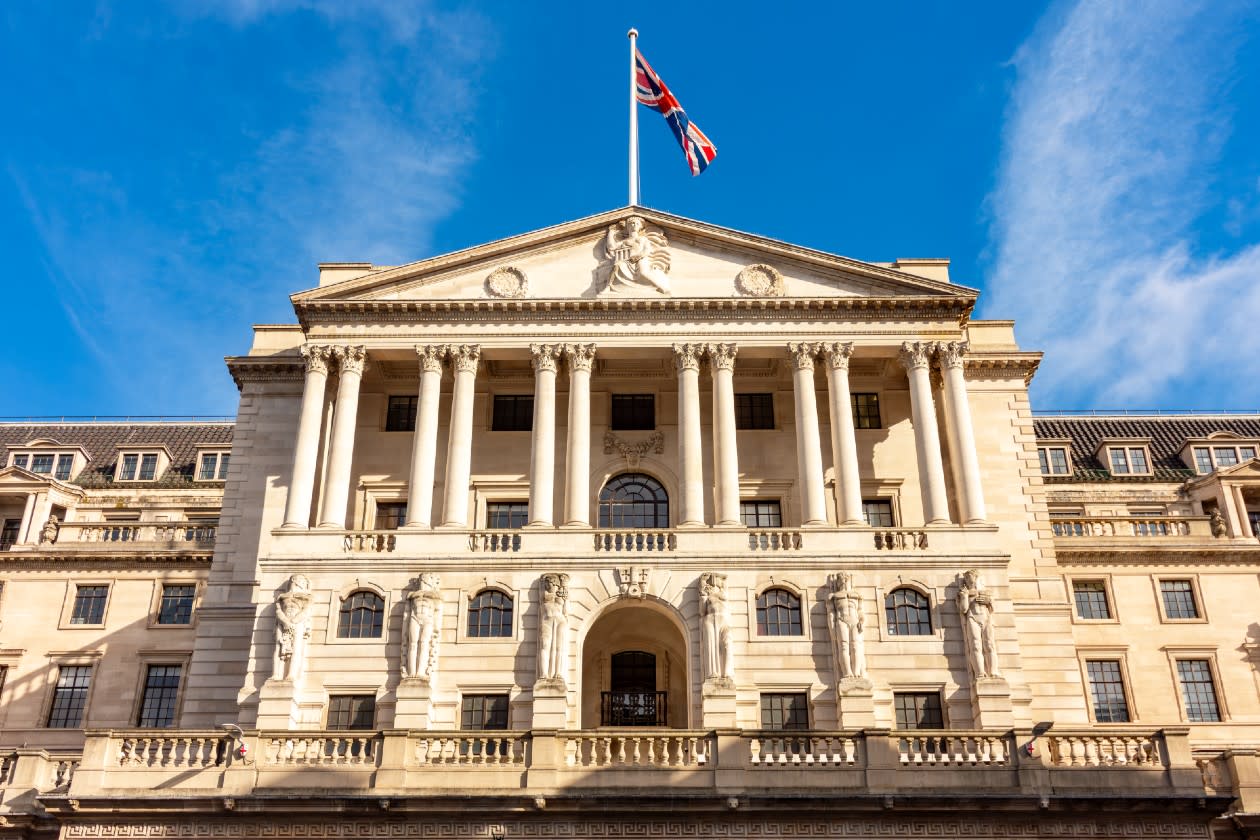


Gilt yields spiked further upwards at the start of September, with 10-year yields hitting 5.2%, the highest they’ve been since the global financial crisis. 30-year yields hit highs not seen since the late 1990s.
This latest spike added to previous increases across all maturities during 2026, which in total have added between 0.6-0.7% to gilt yields.
Why are gilt yields rising?
Shorter-dated gilts have seen bigger increases than longer-dated ones. This matters because it makes current government borrowing more expensive, and if gilt yields don’t fall, then it’ll make future government borrowing more expensive, too.
The cause has largely been higher inflation expectations following the onset of the Iran conflict and increased energy costs. This latest spike is linked to heightened tensions once again. But as time has gone on, other factors are also having an impact.
Geopolitical risk is higher today than it was, increasing uncertainty over the future. It’s also causing louder and more frequent demands for higher spending on defence.
This adds pressure to concerns around the ability of the government to be able to service its borrowing costs, particularly over the longer term. That concern causes investors to want higher levels of interest to lend to the government for a long time. Which causes yields to rise further. Which potentially causes the spiral to continue.
There’s also the massive amount of bonds coming to market from artificial intelligence (AI) hyperscalers, which are being used to help finance the huge spend required to make AI work for the masses. Demand for these bonds has been high, even if it’s reduced in recent months.
It’s likely that some investors have swapped government bonds for these perceived high quality, corporate bonds, reducing demand for government debt.
But the problem isn’t just the UK’s or Andy Burnham’s. Germany’s borrowing costs have increased by 0.4-0.6%, Japan has seen rises of 0.7-0.9% and the US 0.4-0.8%.
These rises have already cost G7 nations an estimated $16bn in interest obligations on debt issued since the onset of the Iran conflict. Should higher yields continue, this figure will increase to around $34bn by the end of the first quarter of 2027.
The US
With US Treasury yields often viewed as the global ‘risk-free’ rate, it’s arguably the increases there which are driving those for other countries.
The US faces the same challenges around long-term government debt sustainability, AI hyperscaler bond issuance, higher inflation and higher defence spending demands going forward.
One difference is that the US economy looks to be in a stronger position than many peers.
Ordinarily that’s a good thing, but a strong economy is likely to add to inflation pressures at a time where inflation’s been above target since May 2021.
This means the Federal Reserve (Fed) is considering whether to increase interest rates to keep inflation under control. It’s partly these considerations that have caused the increases to Treasury yields, as markets anticipate what the Fed will do. But increasing rates doesn’t help solve the problem of rising debt servicing costs for the government.
The leading Republican party are so concerned about the rise in longer dated debt costs that Scott Bessent (Treasury Secretary) has intervened. He’s announced a program to ‘at least double’ purchases of long-term government bonds. With increased demand, prices should rise and yields should fall.
That sounds great, but, that outcome is in direct conflict with the Fed. Interest rates on mortgages tend to move with long-term Treasury yields. And if they come down, this should increase demand for mortgages. An increase in activity in the housing market will increase economic growth, adding further fuel to the inflation fire, and making rate rises from the Fed more likely.
Unusually then, it’s perhaps a good thing the early signs are that the policy isn’t working, with yields on Treasuries back to where they were around the time of the announcement.
What’s the impact for investors?
Although returns on bonds generally are lower this year than were perhaps expected at the start of 2026, higher yields today mean that the asset class remains as appealing as ever.
For UK investors who buy gilts directly with a view to holding them until they mature, there are now higher yields available that could be locked in.
This is even more appealing for those low coupon gilts where most of the return comes from a capital gain, because investors don’t pay capital gains tax on gilts held directly. Remember that this doesn’t matter if investing within a tax efficient wrapper like a Stocks and Shares ISA or Self-invested Personal Pension (SIPP), where all returns are tax exempt.
This article isn’t personal advice. Remember, investments can help you grow your money over the long-term, but their value and income from them can rise and fall, so you could get back less than you invest. Tax rules can change and benefits depend on individual circumstances. Yields are variable and past performance isn’t a guide to the future. If you’re not sure if an investment’s right for you, ask for financial advice.
2 fund ideas for a high yield environment
Professional investment managers potentially have greater returns available to them from bond markets, too. This means that funds like the ones below, with scope to adjust their bond investments to take advantage of those parts of the market offering most value, could be interesting.
Investing in these funds won’t be right for everyone. Investors should invest only if a fund matches their objectives, they understand its risks and charges, and it forms part of a diversified portfolio.
For more detail on each fund, its charges and specific risks, please see the links to their factsheets and key investor information.
Both funds invest in high yield and emerging market bonds and make use of derivatives, all of which adds risk.
Ninety One Diversified Income
The Ninety One Diversified Income fund mainly invests in bonds.
It has a focus on providing income and protecting investors from large market falls. It could be a good addition to a conservatively invested portfolio or provide some diversification and balance to a more adventurously invested one.
John Stopford has managed the fund since 2012, and Jason Borbora-Sheen has been co-manager since 2019. Although the pair invest in bonds from all over the world, they also invest in some shares, too. This means that the fund is more diversified than a pure bond fund, but shares have potential to add risk.
The fund had a yield of 5.3% at the end of July 2026. Yields can go up and down and are not a guarantee of future returns.
The fund takes charges from capital which increases the income paid but reduces the potential for capital growth.
Jupiter Strategic Bond
The Jupiter Strategic Bond fund invests in bonds from all over the world. Ariel Bezalel has managed the fund since launch in 2008, and Harry Richards became co-manager in 2018. The pair not only look for bonds that are attractive but use their view of the world to alter their investments regularly.
For example, they’ve recently sold all their investments in US Treasuries – a big call given that they are the biggest part of global bond markets. Decisions like this can mean that the fund performs differently to peers – if they’re right it could be beneficial to returns, but they’ll likely lag other funds if they’re wrong.
We think that experience is key when managing funds in this way and that Bezalel and Richards have plenty of it. The fund could provide some diversification to a portfolio focused on shares or bring something different to a broader portfolio focused on bonds.
The fund had a yield of 5.3% at the end of July 2026. Yields can go up and down and are not a guarantee of future returns.