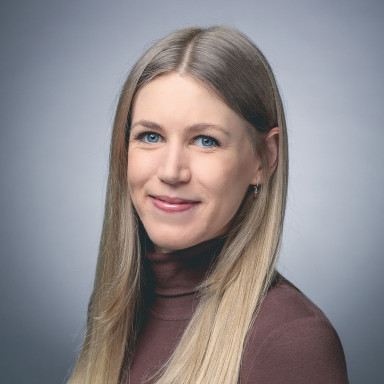
The fund’s manager Evy Hambro is an industry veteran, clocking up three decades of investment experience
The trust aims to provide long-term income and capital growth by investing in mining and metal assets worldwide
Commodities generally performed well in 2025, with precious metals delivering exceptional returns
How it fits in a portfolio
BlackRock World Mining Trust aims to maximise returns to investors through a combination of capital growth and dividends. The managers aim to achieve this by investing in mining and metals assets across the globe. That includes some in higher-risk emerging markets. While the trust mainly invests in publicly traded shares (listed on a stock market), it can also own mining royalties, bonds, stakes in private companies and some physical metals.
Commodity companies, like miners, are generally expected to perform better during periods of high inflation. This could help boost long-term growth when held as part of a well-diversified investment portfolio. However, investments targeting a single sector can be higher risk and should usually only form a small part of your portfolio. Investors in investment trusts should be aware the trust can trade at a discount or a premium to its net asset value (NAV).
Manager
The trust is co-managed by Evy Hambro and Olivia Markham.
Hambro has been in the industry since 1994, spending time with Mercury Asset Management and Merrill Lynch, before they merged with BlackRock in 2006. He’s also Head of Global Thematic and Sector Investing and Head of the Natural Resources Equity Team.
Markham became co-manager in 2015. She’s a member of the Natural Resources team and her coverage spans an array of sectors including gold, mining and the circular economy. Markham started her career at BlackRock in 2011, having previously held the position of Head of the European Mining Team at UBS. She also co-manages the BGF World Mining Fund and the Commodities Income Investment Fund.
Both managers can draw on the broader Natural Resources Team, six of whom are dedicated to the mining and gold sectors.
Process
Hambro and Markham like to think of themselves as building a “virtual mining company”. Rather than only investing in large mining companies that must own and develop assets over many years, they can be more flexible in their approach. They invest across the sector and focus on particular companies when supply and demand in the industry is in their favour.
The team invests in both diversified miners and producers of base metals, precious metals and bulk commodities. Their views on future commodity prices are a crucial part of the investment process, given their importance in miners’ revenues. However, the team spends most of their time focused on individual companies and their investment potential for a given commodity price.
As well as traditional financial modelling the team conduct mine visits, meet management teams and regularly commission third party research projects. Mine visits can be particularly important within this sector because of the impact of things such as health and safety standards.
As at the end of December 2025, the trust invested around 95% in mining and metals shares. That includes both diversified mining groups like Vale and precious metals producers like Barrick Mining – the trust’s first and second largest holding respectively. Investments in gold miners increased over the course of 2025, rising from 22% in December 2024 to nearly 40% at the end of 2025. That reflects both the team’s positive views about demand for gold and the improved outlook for gold miners given the recent rise in the gold price.
The trust can also invest in bonds, debentures (a type of bond or debt instrument), royalties and stakes in private companies. The team uses its network and experience to capitalise on opportunities when they arise. At present 4% of the trust invests in royalty and unquoted investments. That includes 2.1% in securities linked to Vale’s iron ore and copper revenues, and stakes in mining technology company Jetti Resources and copper exploration company MCC Mining. During 2025 the team sold its BHP Brazil Royalty, realising an annualised pre-tax return of 40% - remember that past performance is not a guide to future returns.
Investors should be aware these unquoted assets are higher risk and tend to be more difficult to buy and sell than listed shares. The trust can also borrow money to invest with the intention of increasing returns (known as gearing) and use derivatives. These could magnify losses in a falling market and increase risk. As at 31 December 2025 the trust had gearing of 4.7%.
The trust’s biggest commodity exposure is to gold, which made up 42.3% of its assets as at 31 December 2025. Copper accounted for 25.0% and iron ore 15.0%. There was also a small amount of exposure to steel, platinum, aluminium and other commodities.
Culture
BlackRock is the largest asset manager in the world, with around $14 trillion of assets under management globally as of December 2025. The company was founded in 1988 by eight partners including current CEO Larry Fink and is known for both active and passive strategies. Employees at BlackRock are encouraged to hold shares in the company so that they are engaged with helping the company perform well and grow.
The culture within the teams across BlackRock is also strong. At all levels, debate and challenge is encouraged. Managers make good use of the overlap with other teams, which helps with idea generation but also spurs conversation around industry trends.
ESG integration
BlackRock was an early signatory to the PRI and has offered ESG-focused funds for several years, including through its iShares range of passive products. However, it only made a company-wide commitment to ESG in January 2020. Following that announcement, the company promised to expand its range of ESG-focused ETFs, screen some thermal coal companies from its actively managed funds and require all fund managers to consider ESG risks.
BlackRock’s Investment Stewardship Team aims to vote at 100% of meetings where it has the authority to do so. The Investment Stewardship team engages with companies, in conjunction with fund managers, and the results of proxy votes can be found on the BlackRock website’s ‘proxy voting search’ function, complete with rationales for votes against management. The firm also outlines its work on voting and engagement in an annual ‘Voting Spotlight’ report, and quarterly ‘Engagement Summary’ reports.
BlackRock has faced sustained criticism in recent years for the limited support it has given to shareholder resolutions focused on climate and other environmental and social issues. While the firm has increased transparency around its voting activity and now routinely provides rationales for key votes, its support for environmental and social shareholder proposals has declined sharply, from around 40% in 2021 to less than 2% in 2025. BlackRock argues that many such proposals are overly prescriptive, lack economic merit or do not promote long-term shareholder value, although this position was met with scepticism by some stakeholders.
In 2024, BlackRock’s US arm stepped back from the Climate Action 100+ collective engagement initiative, citing legal considerations, although its international arm remained a member.
The trust managers believe ESG considerations can be particularly important in mining given the long investment cycle and the impact of ESG practices on the ability of a mining company to maintain its social license to operate. ESG is one of the many factors the team assess during site visits and the team continues to engage with investee companies.
Cost
The ongoing charge, over the trust's financial year to 31 December 2025, was 1.05%. This is slightly higher than the previous year’s figure of 0.95%. Investors should refer to the latest annual reports and accounts and Key Information Document for details of the risks and charging structure.
If held in a SIPP or ISA the HL platform fee of 0.35% (capped at £150 p.a.) per annum also applies. Our platform fee doesn't apply if held in a Junior ISA. As investment trusts trade like shares, both a buy and sell instruction will be subject to our share dealing charges within any HL account except online deals in a Junior ISA.
Performance
The trust launched in December 1993 and has delivered good returns for investors over that time. It’s also performed well under Hambro’s tenure. Since he took the helm in September 2000 the trust has returned 2,606%* (May 2026). Past performance isn’t a guide to the future.
Over the trust’s most recent financial year (December 2024 to December 2025), the total returns in NAV and share price terms were 74.2% and 74.1%, respectively. This was ahead of a strong performance from the reference benchmark (the MSCI ACWI Metals and Mining 30% Buffer 10/40 Index), which rose 64.2% over the same period.
2025 was an exceptional year for commodities generally, and precious metals in particular. The gold price rose 64.7% in the year as both central bank and retail investors stepped up demand, while silver rose 149.1%. However, most of those moves were towards the back end of the year, with the earnings and cash flow benefits for miners expected to come through in 2026. If sustained that could result in higher dividends and capital returns in the second half of 2026 – though of course no dividends are guaranteed, and commodity prices can be volatile.
Along with the sale of the BHP Brazil Royalty (detailed above) the standout performer in the year was Hycroft Mining, which rose 212% in 2025. Hycroft was acquired towards the end of the year following high-grade silver drilling at its Vortex deposit in Nevada. Copper miner Ivanhoe Mines was the weakest performer in the trust after flooding at its Kakula mine in the Democratic Republic of Congo hit production.
The team note that supply remains constrained. Miners are maintaining their capital discipline, with expansionary capital expenditure still modest by historic standards and corporate balance sheets in good health. Instead, there has been an increase in acquisition activity. The team see this as a positive, as miners seek to achieve greater scale more cost effectively, often with a merger of equals which achieves meaningful efficiencies. For example, the trust’s seventh largest holding, Anglo American, has announced plans to merge with Canadian group Teck Resources, delivering synergies of $800 million a year.
The manager is optimistic about the outlook for commodities over the medium term. Increased geopolitical tension is driving an increased focus on security of supply for key commodities. Meanwhile demand is being driven by accelerating infrastructure investment, the transition to lower carbon energy sources and increased energy demands from the roll out of AI.
At the time of writing the trust traded at a 1.76% discount to NAV, versus a 4.93% average for the previous 12 months (to May 2026).
Annual percentage growth
May 2021 to May 2022 | May 2022 to May 2023 | May 2023 to May 2024 | May 2024 to May 2025 | May 2025 to May 2026 | |
|---|---|---|---|---|---|
BlackRock World Mining Trust | 18.88% | -13.8% | 7.02% | -11.08% | 105.59% |