The trust is backed by a well-resourced team with plenty of experience in the technology sector.
The managers invest in companies they believe can benefit from some of the biggest technology trends globally and over the last few years the trust has pivoted to focus heavily on the Artificial Intelligence (AI) theme.
Their focus on high-quality companies has delivered impressive long-term returns, although past performance is not a guide to the future.
How it fits in a portfolio
The Polar Capital Technology Trust aims to grow investors’ money over time by investing in companies exposed to the key technological innovations changing the world today. The managers invest around the world, including in higher-risk emerging markets.
Investing in a single sector like technology is a higher-risk approach. We think funds and investment trusts investing in a specific sector should usually only form a small part of a well-diversified investment portfolio.
Investors in closed-ended funds should be aware the trust can trade at a discount or premium to the net asset value (NAV).
Manager
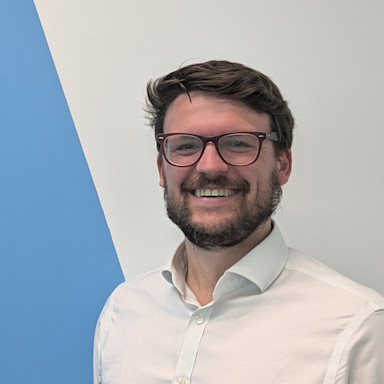
Ben Rogoff has been a technology specialist for 30 years and became lead manager on the technology trust in 2006. Over this time, he’s helped build the technology team to 12 members and it’s one of the largest technology investment teams in Europe.
Although Rogoff is the ultimate decision maker about what ends up in the fund, he is closely supported by Alastair Unwin. Unwin joined Polar Capital’s technology team in 2019 and has worked closely with Rogoff since he joined. He became deputy manager in 2023, providing support with stock selection and challenge.
When it comes to idea generation Rogoff and Unwin can call upon the experience of the wider technology team. Each member of the team has an area of expertise, collectively providing access to a vast pool of knowledge spanning the technology sector. There is a weekly meeting of the whole team, while the managers sit down with each analyst once a month to discuss their ideas.
The team recently hired a dedicated Data Analyst to improve the use of AI within the investment process. Unsurprisingly, given the team’s tech focus, they now make extensive use of AI throughout the investment process, including in idea generation as well as administrative tasks. The team are among the most advanced in this regard that we have seen.
Alongside the technology trust, Rogoff also supports the open-ended Polar Capital Global Technology and Polar Capital Artificial Intelligence funds – though both are overseen by others on a day-to-day basis. We are comfortable he has the time and resources to manage his commitments, with the Technology Trust his primary focus.
Process
The managers avoid early-stage or blue-sky companies. Instead they’re looking for companies with proven technologies, but where adoption is set to increase dramatically. They want to invest in companies that are in strong financial positions, and which are run by experienced management teams.
All companies are subjected to an “AI lens”. The managers believe that AI is the next general purpose technology, meaning that it will change the way companies work and everything else will revolve around it. As part of the research process, analysts must consider how each and every stock is impacted by AI.
Over the last few years the team have become increasingly excited about the opportunities that generative AI offers, and AI is now the dominant theme in the portfolio. AI is a broad category and encompasses companies that enable AI technology (such as those making semiconductor chips or providing cloud computing services), AI beneficiaries (mainly technology companies) and AI adopters.
The team expect the transformative potential of AI to result in significant volatility, and the managers have made a number of changes to the portfolio as a result. They’ve reduced investments in software companies and significantly reduced their position in the so-called Magnificent 7 (Apple, Alphabet, Amazon, Meta, Microsoft, Nvidia and Tesla), reducing overall fund concentration. Instead, they have shifted focus towards companies that provide the hardware, infrastructure and power necessary for AI to function. This has led them to invest in some non-traditional technology companies, like Caterpillar and Shin-etsu Chemical.
Given the nature of how the managers view the sector, they may invest in some higher-risk small and medium-sized companies, as well as companies in more volatile emerging economies. These positions could add risk. They also have the ability to use gearing (borrowing to invest) and derivatives which can magnify any gains or losses and increases risk – though as at the end of June 2026 the trust was ungeared.
Culture
Polar Capital was founded in 2001 and prides itself on its collegiate culture. Each manager and investment team is afforded autonomy, allowing them to develop and apply their own investment process and philosophy.
Polar Capital also promotes a strong focus on shareholders' interests and ensures they align with those of fund managers. The managers see themselves as part owners of the trust and they may receive a bonus that can be deferred into shares of the trust over 3 years. This helps make sure the trust is run in a way that benefits all shareholders.
ESG Integration
Each investment team at Polar Capital has autonomy over its investment strategy. This means they each take slightly different approaches to ESG integration, and some are more advanced than others. That said, the firm also makes third party ESG data and research available for all managers and all Polar Capital funds exclude companies involved in the production or marketing of controversial weapons.
In 2020, Alexander Macdonald was appointed Head of Sustainability. He coordinates the firm’s sustainability-related initiatives and helps the investment teams frame their thinking around ESG and incorporate ESG analysis in a robust way.
Polar Capital fund managers engage with the companies they invest in where they feel it will have a positive impact on company performance and enhance shareholder value. Fund managers are also responsible for voting, but their views are informed by third party proxy voting specialist Institutional Shareholder Services. A summary voting record is provided annually, including for the trust on a standalone basis. However, the full voting record is not provided. Overall, Polar Capital is less transparent on its ESG-related activities than some peers.
Cost
The ongoing annual charge over the trust’s financial year to 30 April 2026 reduced slightly to 0.69% compared to 0.77% the previous year. Investors should refer to the latest annual report and accounts and Key Investor Information for details of the risks and charging structure.
The annual charge to hold investment trusts in the HL ISA, SIPP or Fund & Share Account is 0.35% (capped at £150 p.a. in each account) and 0.25% in the HL Lifetime ISA (capped at £45 p.a.). There are no charges from HL to hold investment trusts within the HL Junior ISA. As investment trusts trade like shares, both a buy and sell instruction will be subject to the HL share dealing charges.
Performance
The trust has outperformed its benchmark significantly since it launched in 1996 and is comfortably ahead since Rogoff took control of the trust in May 2006*. Remember past performance is not a guide to the future. Investments can go down as well as up in value, so you could get back less than you invest.
Over the trust’s most recent financial year (to the end of April 2026), NAV rose 102.2% and while the trust’s share price rose 109.0% - narrowing the discount between the share price and the NAV. That represents a significant outperformance versus its benchmark and the 14.0% achieved by the average fund in the IA Technology and Technology Innovation sector.
This is the trust’s best relative performance year in at least two decades – so should not be considered a guide to future returns. It reflects the Trust “AI Maximalist” position in a year when AI has been the driving force behind public markets.
The team is increasingly nervous of hyperscaler spending, with the largest tech companies becoming more capital intensive at the same time as returns on AI investment are becoming more uncertain. Instead, they are expanding their exposure into the wider AI supply chain, including positions in fibre cabling and chip wafer manufacturing – old tech where the team expects bottlenecks and improved pricing to drive performance.
This view proved a major tailwind in the last financial year. Large underweight positions in Microsoft and Apple were among the largest contributors to performance, while stock selection was positive across every market-cap sector and major geography, there was a particularly strong performance in small and mid-cap stocks.
Investors should note that as the trust is heavily focused on AI, any setbacks for this technology could have a negative impact on performance. The team themselves has also acknowledged the increasing volatility of the market given the rapid change going on in the tech sector. They are trying to manage this through, among other things, increased use of options – though this in itself can increase risk.
Annual percentage growth
30/06/2021 To 30/06/2022 Value | 30/06/2022 To 30/06/2023 Value | 30/06/2023 To 30/06/2024 Value | 30/06/2024 To 30/06/2025 Value | 30/06/2025 To 30/06/2026 Value | |
|---|---|---|---|---|---|
AIC Investment Trust - Technology & Technology Innovation | N/A | 13.39 | 13.04 | 9.95 | 13.05 |
Polar Capital Technology Trust plc | -22.04 | 19.45 | 49.66 | 10.15 | 96.15 |