
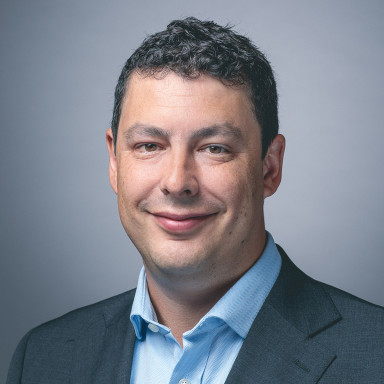

The trust aims to deliver long-term growth with a focus on preserving wealth in weaker markets
Manager Peter Spiller has been running the trust since 1982, alongside co-managers Alastair Laing and Chris Clothier for over 10 years
The team have a strong track record of providing long-term investment returns with lower volatility than shares
How it fits in a portfolio
Rather than trying to shoot the lights out, Capital Gearing Trust’s primary aim is to preserve investors’ capital. While there’s no formal benchmark for the trust, the managers try to grow investors' money by more than inflation – as measured by the Consumer Prices Index (CPI) - over the long run (more than five years).
It could form the foundation of a broad investment portfolio, bring some stability to a more adventurous portfolio, or provide some long-term growth potential to a more conservative portfolio.
Manager
Peter Spiller took over management of Capital Gearing Trust in 1982. He's since managed the trust using broadly the same investment philosophy throughout his tenure. He set up Capital Gearing Asset Management in 2001, having previously worked as a strategy director at Cazenove & Co Capital Management. He’s also Chief Investment Officer at Capital Gearing Asset Management.
Spiller is supported by two co-managers in Alastair Laing and Chris Clothier. Laing joined the team in 2011 and is also Chief Executive Officer at Capital Gearing Asset Management. Clothier joined in 2015 and is also Chief Financial Officer for the business.
The three managers bring different experiences to the table in managing the trust, which helps the team find suitable investment ideas. Another reason for hiring Laing and Clothier was succession planning for the trust and the firm. The managers are supported by a small team that help with investment ideas as well as more administrative tasks.
While the company is run by a small team, we think they’re suitably resourced to run the handful of strategies currently on offer.
Process
Spiller and the team like to keep things simple. They aim to shelter investors' wealth just as much as grow it. To do this, the trust has three ‘buckets’ of assets: Managed Liquidity Reserve, Risk Assets and Index Linked Bonds.
The Managed Liquidity Reserve bucket is made up of cash, treasury bills and short dated bonds. The aim is to hold its value during volatile times or when share and bond prices are falling.
The Risk Assets section is mainly invested in shares. The team don’t invest in companies directly, instead they invest in other trusts or funds. This gives them access to some specialist investments and provides diversification. This section aims for long-term growth.
Index Linked Bonds are the third bucket and the managers usually invest in US Treasury Inflation Protected Securities (TIPS) or UK Index-Linked Gilts. The purpose of this part of the trust is to provide some inflation shelter and for it to perform better when markets are under stress.
The amount invested in these buckets changes over time, depending on how the team feel about markets and where they see opportunities.
Investors should be aware that closed-ended funds can trade at a discount or premium to the net asset value (NAV). Unlike some other trusts, the manager looks to limit the size of the discount or premium and is active in issuing or buying back shares in order to achieve this.
During the 12 months to 31 March 2026 (the end of the trust’s financial year), the managers reduced the amount invested in risk assets from 29% to 23%. They also increased the amount invested in index-linked bonds, from 38% to 46%. This reflects concerns around the potential for inflation to be higher than expected, alongside high stock market valuations.
The manager has the flexibility to use derivatives and gearing (borrowing to invest) which, if used, adds risk. However, the manager hasn’t used gearing in the past and has no intention to do so.
Culture
We like that Capital Gearing’s managers are dedicated to the same investment philosophy that was established a long time ago. The group has always been clear about the way its range of funds are managed, and the managers don't stray into overly complicated areas of investment markets. Wealth preservation is key, and each manager adheres to this mantra.
Capital Gearing Asset Management is owned by its employees, via an employee ownership trust. The managers also invest in the company’s strategies. These factors mean that the trust managers are incentivised to perform well for investors and the company is proud that all of the asset managers they’ve ever employed remain in the business.
ESG Integration
All of Capital Gearing’s funds are run with a medium to long-term investment horizon in mind, with a focus on capital preservation. Assessing whether society will support the business model over the long term, and whether management will act as good stewards of shareholders’ capital is an important part of the investment process.
The team at Capital Gearing is small and they do not have the resource that many larger firms do to consider ESG matters. They support the UK Stewardship Code and consider ESG factors when looking at what to invest in. That said, they’ll invest in assets that aren’t as ESG friendly if the potential reward is worth the risk.
Cost
The trust's ongoing charge for the year to 31 March 2026 was 0.59%. Investors should refer to the latest annual reports and accounts and Key Investor Information for details of the risks and charging structure.
The annual charge to hold investment trusts in the HL ISA, SIPP or Fund & Share Account is 0.35% (capped at £150 p.a. in each account) and 0.25% in the HL Lifetime ISA (capped at £45 p.a.). There are no charges from HL to hold investment trusts within the HL Junior ISA.
As investment trusts trade like shares, both a buy and sell instruction will be subject to the HL share dealing charges.
Performance
Since Spiller founded Capital Gearing Asset Management in 2001, the trust has grown 477.41%* to the end of June 2026, which we think is an attractive return for a more conservative trust. This return is well ahead of CPI and the FTSE All Share index, which have grown by 93.90% and 372.88% respectively over the same period. Remember past performance isn't a guide to future returns.
During the 12-months covered in the latest report and accounts as at 31 March 2026, the trust lagged the FTSE All Share but outperformed CPI. The Net Asset Value (NAV) return of 5.82% was lower than the share price return of 6.40%, as the discount to NAV reduced over the period. The FTSE All Share and CPI returned 21.54% and 3.32% respectively over those 12 months.
The risk assets bucket added the most to performance, including shares, infrastructure, gold, alternatives and property. In particular, investments in BlackRock Energy & Resource Income Trust and Monks investment trust delivered strong returns. Some investments, including North Atlantic Smaller Companies, lost money though.
At the time of writing the trust trades at a discount of 1.37%. This compares to an average discount of 1.82% over the last 12 months. All investments and any income they produce can fall as well as rise in value, so investors could get back less than they invest.
Annual percentage growth
June 21 – June 22 | June 22 – June 23 | June 23 – June 24 | June 24 – June 25 | June 25 – June 26 | |
|---|---|---|---|---|---|
2.87% | -7.67% | 5.61% | 3.87% | 7.74% | |
FTSE All-Share | 1.64% | 7.89% | 12.98% | 11.16% | 21.89% |
UK Consumer Price Index | 9.41% | 7.95% | 1.98% | 3.58% | 2.52%^ |