

Unilever reported full-year revenue of €50.5bn, reflecting underlying sales growth of 3.5%. Performance was driven by its Power Brands, which grew at a faster pace of 4.3%. All business units and regions were in growth territory.
Underlying operating profits dipped 1.1% lower to €10.1bn as sales growth and cost-savings were offset by unfavourable currency moves.
Free cash flow fell by €0.4bn to €5.9bn. Net debt was €23.1bn at year end, down from €24.5bn in the prior year.
In 2026, underlying sales growth is expected to land at the lower end of its 4-6% target level.
On 6 December, it completed the demerger of its ice cream business into The Magnum Ice Cream Company, in which it holds a 19.9% stake.
The shares fell 1.4% in early trading.
Our view
Unilever delivered a strong finish to the year, with sales ramping up in the final quarter from a healthy mix of price and volume growth. But with sales guidance for 2026 on the conservative side, the shares gave up some of their recent strength following the announcement.
Spurring on the next leg of growth won’t be easy amidst the current economic and tariff uncertainty. The demand picture in developed markets is looking fairly soft, so driving sales higher here will require gaining market share. On that front, Unilever is starting to deliver thanks to its recent advertising initiatives – more on that later.
Emerging markets are the real growth lever in our view. Despite some unfavourable tax changes in India, digital initiatives and a shift in focus towards more premium products are helping to grow the top line. And with these end-markets generally improving, we see a long runway of growth ahead if Unilever can execute well.
We’re supportive of the group’s sharper focus, which is concentrated on doing fewer things but doing them better. With the demerger of its Ice Cream business now complete, plans to cut costs remain top of the agenda, and we’re impressed with progress so far.
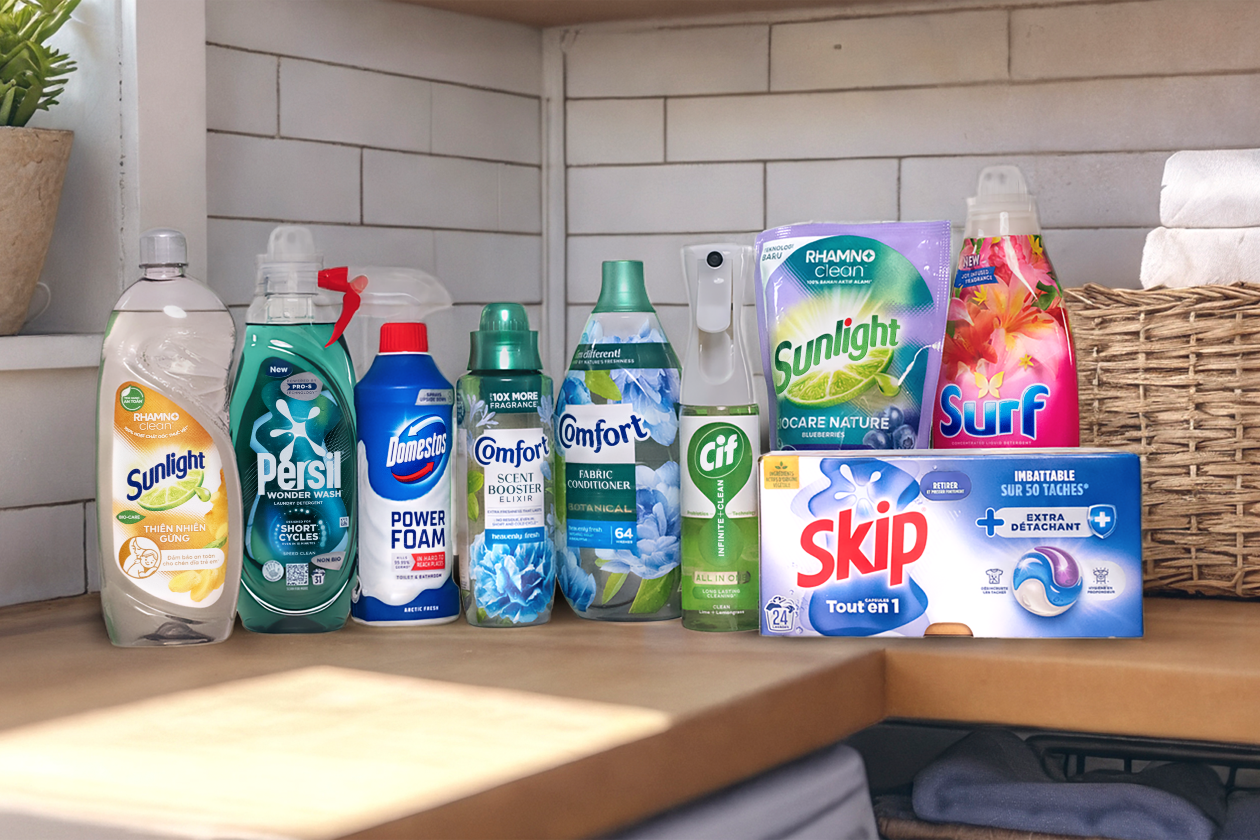
The group’s collection of 30 so-called ‘Power Brands’ is its beating heart. These include names like Dove, Domestos, and Hellmann’s, making up over 75% of total sales. We expect continued investment behind these names, with brand and marketing investment now standing at 16.1% of revenue, its highest in a decade.
Margins have been trending higher for some time, and that’s forecast to continue this year too. This is a clear sign that strategic actions are starting to take effect, despite some unhelpful currency headwinds.
It’s important to consider the indirect effects of tariffs on consumer sentiment and purchasing. We believe Unilever's strong brands and ability to pass on costs should ensure its resilience. The 3.3% prospective forward dividend yield is currently supported by strong free cash flow and a robust balance sheet. But, as ever, potential returns can't be relied on.
All in, there are very clear signs that the new management team are making progress and Unilever remains a quality business with attractive fundamentals. The valuation isn’t too demanding, and we’re cautiously optimistic that the group can edge past its conservative sales guidance for this year. But there is a softer market to contend with, and plenty of execution risk ahead.
Environmental, social and governance (ESG) risk
The retail industry is low/medium in terms of ESG risk but varies by subsector. Online retailers are the most exposed, as are companies based in the Asia-Pacific region. The growing demand for transparency and accountability means human rights and environmental risks within supply chains have become a key risk driver. The quality and safety of products as well as their impact on society and the environment are also important considerations.
According to Sustainalytics, Unilever’s overall management of material ESG issues is strong.
Unilever's latest sustainability efforts followed global reporting standards, with the board overseeing progress and a dedicated committee tracking risks and goals. The company focuses on three main areas: improving planet health, enhancing people’s wellbeing, and fostering social inclusivity, with ambitious targets like 100% recyclable packaging by 2025 and biodegradable ingredients by 2030. However, Unilever faces criticism for its plastic pollution and struggles to meet some of its plastic-related goals, suggesting there's still work to be done.
Unilever key facts
All ratios are sourced from LSEG Datastream, based on previous day’s closing values. Please remember yields are variable and not a reliable indicator of future income. Keep in mind key figures shouldn’t be looked at on their own – it’s important to understand the big picture.
This article is original Hargreaves Lansdown content, published by Hargreaves Lansdown. It was correct as at the date of publication, and our views may have changed since then. Unless otherwise stated estimates, including prospective yields, are a consensus of analyst forecasts provided by LSEG. These estimates are not a reliable indicator of future performance. Yields are variable and not guaranteed. Investments rise and fall in value so investors could make a loss.
This article is not advice or a recommendation to buy, sell or hold any investment. No view is given on the present or future value or price of any investment, and investors should form their own view on any proposed investment.