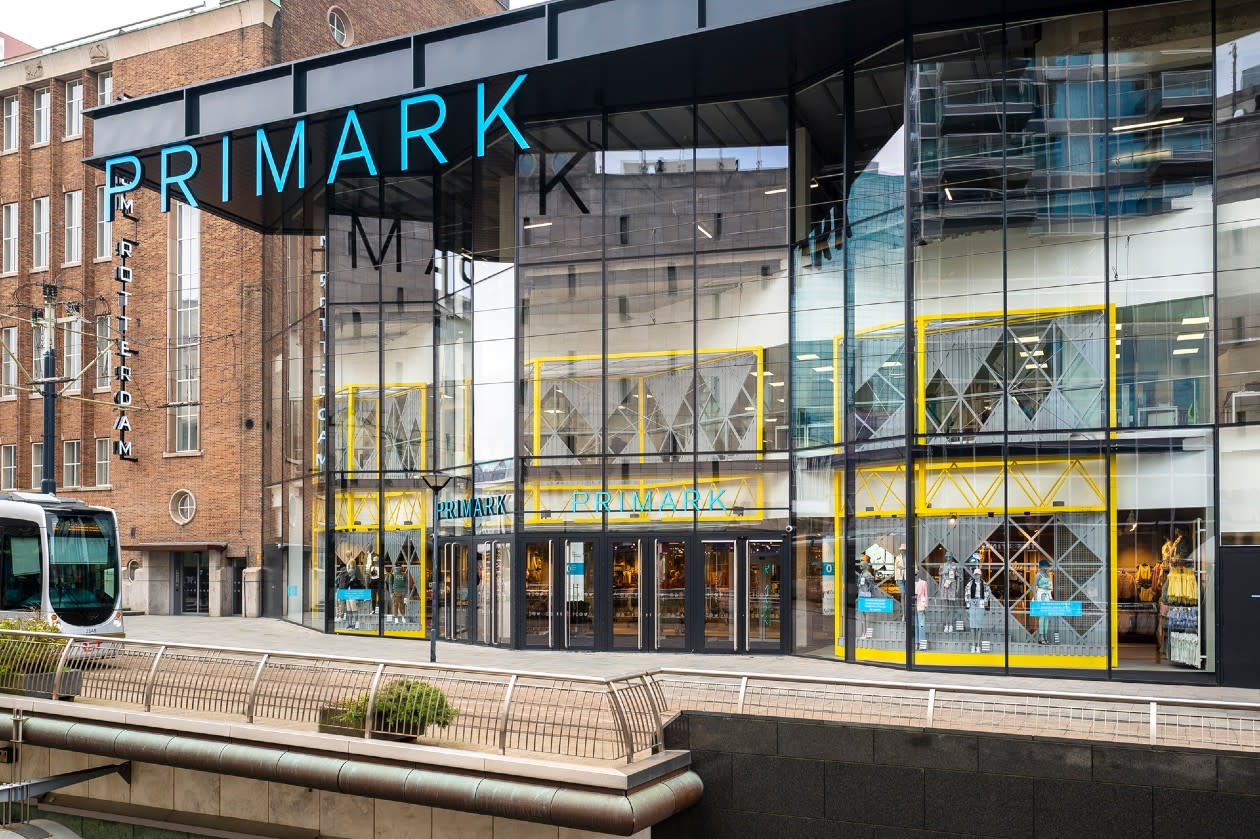


Fourth-quarter sales at Primark are expected to rise 2%, driven by new store openings and franchise agreements. On a like-for-like basis, sales are set to decline by 3%, reflecting broadly flat trading in the UK and Ireland and a 4% decline in Continental Europe.
Grocery sales are expected to grow at a mid-single-digit rate in the fourth quarter, and Ingredients sales are expected to increase by around 10%. The Agriculture and Sugar businesses are expected to deliver further sales declines.
2026 adjusted operating profit guidance has been reiterated at below last year’s level of £1.7bn (£1.5bn expected). In 2027, profits are expected to improve across most divisions, except for Sugar, where adjusted operating losses are forecast to widen from £25-60mn to £70-170mn.
The shares were down 7.8% in early trading.
Our view
Associated British Foods (ABF) saw growth at Primark fall short of market expectations in the fourth quarter. Alongside a mixed performance in its food businesses, 2026 underlying operating profits still look set to land some way below last year’s £1.7bn. However, a much weaker-than-expected outlook for the Sugar division in 2027 took markets by surprise, causing the shares to fall sharply on the day.
Despite a challenging retail environment, Primark’s sales performance in the UK and Ireland has held up relatively well. Marketing investments and a focus on affordable fashion continue to drive market share gains.
After several years of Click & Collect success in the UK, the group has invested £90mn in a new fulfilment centre to expand the service, with plans to introduce home delivery in the future, too. Although that should help boost sales, building a profitable delivery-and-returns network will be challenging, especially given Primark's low price point.
Overseas expansion is a big part of the game plan, with new stores expected to contribute about 4-5% in annual sales growth for the foreseeable future. But the outlook abroad has deteriorated, with European customers becoming more cautious with their spending. We’re cautiously optimistic that things will turn around here, but it could take a while yet.
ABF also owns an eclectic mix of food and commodity businesses. Performance here has been underwhelming of late, especially in Sugar, where unfavourable weather has lowered expected crop yields across the UK and South Africa. If gas prices remain elevated and European sugar prices fail to improve, losses could widen much further in 2027.
Given the structural differences between its fashion and food businesses, we’re broadly supportive of plans for the demerger of Primark. It should help sharpen management’s focus and unlock long-term shareholder value. However, completion is not expected until December 2027, so underlying business performance will be the key driver of near-term sentiment.
ABF is managing the direct impacts of the Middle East conflict, and hedging arrangements can help mitigate higher energy and freight costs. The indirect impact on consumer demand remains unknown and will likely depend on the conflict’s duration.
The balance sheet was in decent shape at the half-year end. But with trading conditions still tough, shareholder returns could come under pressure if increased investment in Primark doesn’t start to deliver results.
Most of ABF’s businesses are currently suffering from weak end-markets, reflected by a valuation well below the long-run average. Although this may look attractive at face value, the outlook for sugar is deteriorating, and we don’t see many near-term catalysts for the rest of the business.
Environmental, social and governance (ESG) risk
The retail industry is low/medium in terms of ESG risk but varies by subsector. Online retailers are the most exposed, as are companies based in the Asia-Pacific region. The growing demand for transparency and accountability means that human rights and environmental risks within supply chains have become a key risk driver. The quality and safety of products as well as their impact on society and the environment are also important considerations.
According to Sustainalytics, Associated British Foods’ management of ESG risk is strong.
ABF has a comprehensive environmental policy and global supplier code of conduct. Although priorities appear to be set at a group level, each business division has its own approach, resulting in certain businesses reporting more comprehensive sustainability efforts than others.
Associated British Foods key facts
All ratios are sourced from LSEG Datastream, based on previous day’s closing values. Please remember that yields are variable and not a reliable indicator of future income. Keep in mind that key figures shouldn’t be looked at on their own – it’s important to understand the big picture.
This article is original Hargreaves Lansdown content, published by Hargreaves Lansdown. It was correct as at the date of publication, and our views may have changed since then. Unless otherwise stated estimates, including prospective yields, are a consensus of analyst forecasts provided by LSEG. These estimates are not a reliable indicator of future performance. Yields are variable and not guaranteed. Investments rise and fall in value so investors could make a loss.
This article is not advice or a recommendation to buy, sell or hold any investment. No view is given on the present or future value or price of any investment, and investors should form their own view on any proposed investment.