

Recent headlines have been dominated by conflict in the Middle East. Following an increase in geopolitical tensions between the US and Iran, war broke out at the end of February. Since then, the oil price has risen, inflation expectations have jumped, and bond yields have increased.
This article isn’t personal advice. If you’re not sure an investment is right for you, ask for financial advice. Investments can fall as well as rise in value, so you could get back less than you invest.
How have global stock markets reacted?
With all the uncertainty conflict can bring, it’s no surprise that stock markets have reacted negatively. The MSCI ACWI index, which measures performance across 23 developed markets and 24 emerging markets, fell 5.32% in March.
Some markets have suffered more than others, with countries in Asia feeling the effects most keenly. Driven by the increase in oil prices, energy was the only sector to see positive returns in March. Materials and industrials companies – most of which are more energy-intensive – saw the largest losses.
As well as the market falling in value, there’s also been an increase in volatility. The Vix Index, a key measure of stock market volatility in the US, rose sharply at the beginning of March and remains elevated.
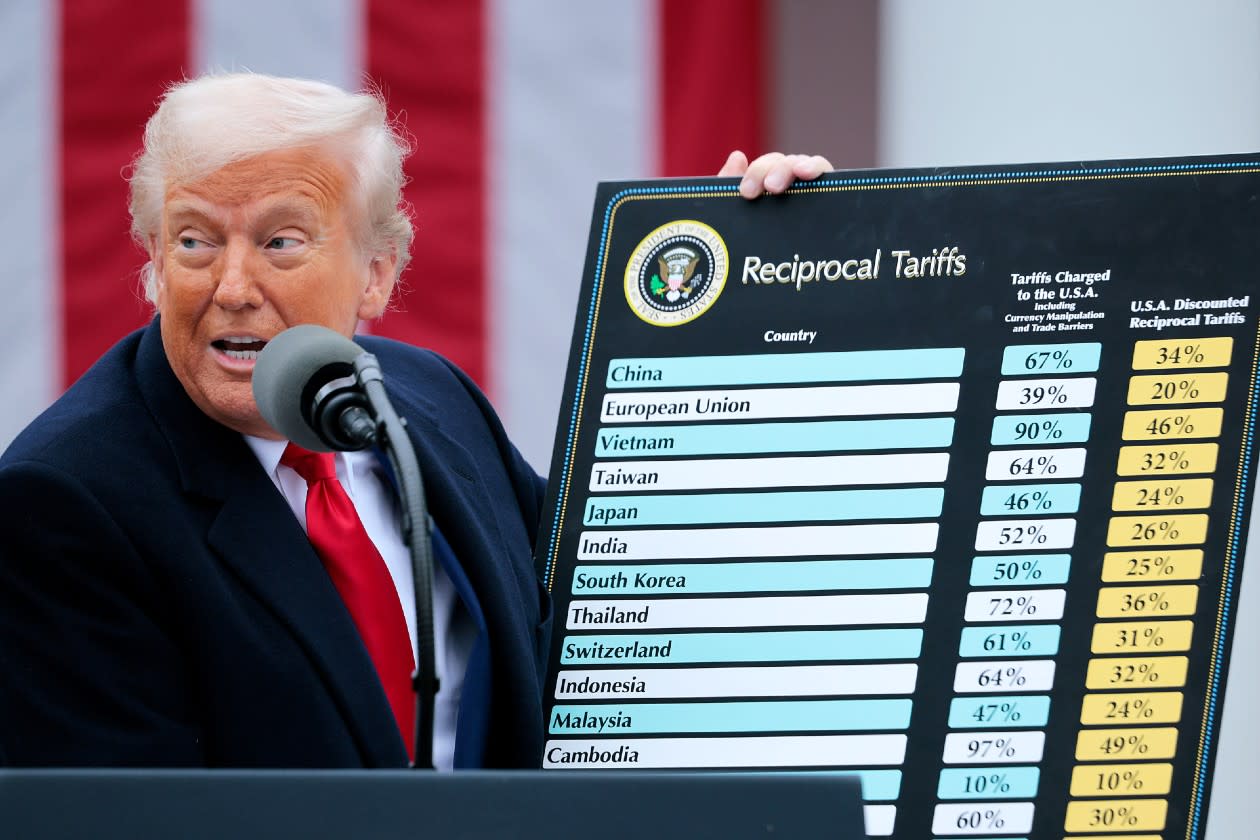
This month of market uncertainty came at the end of a broadly positive year for global markets. Despite the initial shock caused by President Trump’s ‘Liberation Day’ tariffs in April 2025, markets have risen steadily.

The growth part of the market led value for most of the year, as technology companies continued to perform well amidst the artificial intelligence (AI) trend. There’s also been a resurgence in the performance of smaller companies after a number of years of relative underperformance.
Annual percentage growth
March 2021 to March 2022 | March 2022 to March 2023 | March 2023 to March 2024 | March 2024 to March 2025 | March 2025 to March 2026 | |
|---|---|---|---|---|---|
MSCI ACWI | 12.89% | -0.93% | 21.18% | 5.33% | 17.97% |
MSCI ACWI Growth | 10.67% | -3.95% | 25.75% | 3.65% | 18.97% |
MSCI ACWI Value | 14.80% | 1.40% | 16.39% | 7.04% | 16.08% |
MSCI ACWI Small Cap | 4.83% | -3.22% | 14.54% | -2.17% | 23.88% |
What could the longer term impact of the conflict be?
At this stage, it’s difficult to know what the long-term effects might be. Uncertainty remains high over how long the conflict might last or whether tensions could escalate further. The situation is changing daily and market reaction continues to be volatile.
Much of the focus has been on the energy market, with disruptions in shipping pushing up oil and gas prices. Higher energy prices can have a material impact on inflation and, given the high level of uncertainty, expectations for inflation over the short term have risen in some countries.


In the US, short-run inflation expectations jumped to over 4% following the start of the war, although the longer-term forecast remained relatively stable at just over 3%. This increase has altered investors’ expectations of interest rate cuts in the US this year and even brought in the possibility that rates could now rise.
In Europe and the UK, which have a higher dependency on imported energy, inflation worries have also increased. One survey of short-term UK expectations saw a sharp increase to 5.4%, up from 3.3% the previous month. Unlike in the US, there was a notable increase in expectations over the long term too.
Given this uncertainty, the Bank of England opted to leave interest rates unchanged in March. And the European Central Bank did the same at their latest meeting. Both have signalled they’ll be ready to act if concerns over inflation deepen.
How have Wealth Shortlist funds performed?
The global equity funds on the Wealth Shortlist have delivered varying returns over the past 12 months. We expect this, as managers have different styles and areas of focus, which will perform differently in different economic conditions. Remember, past performance isn’t a guide to the future, and the performance here is over a very short time.
Investing in funds isn't right for everyone. Investors should only invest if the fund's objectives are aligned with their own, and there's a specific need for the type of investment being made. Investors should understand the specific risks of a fund before they invest and make sure any new investment forms part of a diversified portfolio.
For more detail on each fund, its charges and specific risks, please see the links to their factsheets and key investor information below.
The best performing Global fund on the Wealth Shortlist in the 12 months to the end of March 2026 was Artemis Global Income. The fund’s returns of 44.66%* were ahead of the benchmark’s growth and the IA Global Equity Income sector, where the average fund returned 12.26%.
Jacob de Tusch-Lec has managed the fund since 2010. He has a contrarian approach to investing, which can lead to the fund investing differently to its peers.
Our analysis suggests de Tusch-Lec’s stock selection was the driver of returns over the past 12 months. Investments in banks and a number of industrials companies have all performed strongly.
The fund can invest in smaller companies as well as emerging markets, both of which are higher-risk areas of the market. The manager can also use derivatives, which can increase risk. Charges are taken from capital, which can increase the income paid but reduces the potential for capital growth.
The weakest performing Global fund on the Wealth Shortlist was Lazard Global Equity Franchise. Over the 12 months to the end of March 2026, the fund fell -13.27%.
The fund uses a value style of investing which means it can often look different to both the broader stock market and other funds in the sector. The fund managers invest in companies they feel have a strong competitive advantage, predictable earnings, and robust balance sheets.
The largest detractor to the fund’s recent performance has been investments in technology. The managers’ style means they don’t tend to invest much in this area of the market, which has been a headwind as technology companies have generally performed well. That said, technology companies in the fund haven’t all contributed positively and this has also hurt performance.
The fund can invest in smaller companies as well as emerging markets, both of which increase risk. The fund is also concentrated, meaning each investment can contribute significantly to returns, although this approach is higher risk.
Annual percentage growth
March 2021 to March 2022 | March 2022 to March 2023 | March 2023 to March 2024 | March 2024 to March 2025 | March 2025 to March 2026 | |
|---|---|---|---|---|---|
Artemis Global Income | 12.89% | -3.56% | 30.30% | 17.77% | 44.66% |
Lazard Global Equity Franchise | 23.44% | 4.97% | 8.56% | 0.05% | -13.27% |
IA Global | 8.68% | -2.78% | 16.35% | -0.28% | 13.30% |
IA Global Equity Income | 11.90% | 2.23% | 13.49% | 4.70% | 12.26% |