
While tensions in the Middle East continue to attract headlines, plenty of countries in Asia have seen notable domestic events in recent months.
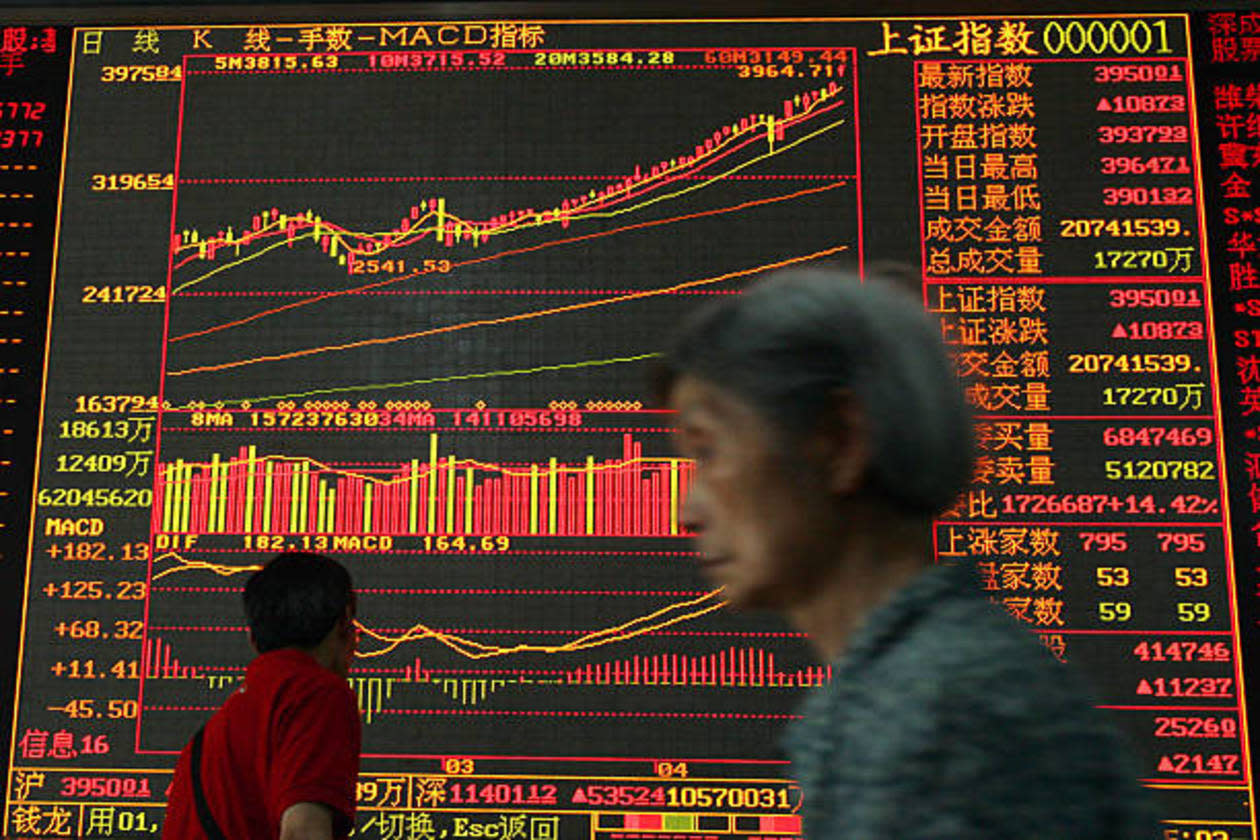
The Chinese economy continues to slow.
Growth of 4.3% in the second quarter of 2026 was below the government's annual target of between 4.5%-5% and the lowest figure since China emerged from its strict Covid-zero policy in 2022. Domestic demand remains soft as the country struggles to recover from a prolonged downturn in the property market.
This weakness has translated into poor stock market returns. The Chinese market rallied in late 2024 after the government announced a series of measures to stimulate the flagging economy. This provided a timely boost to investors and, for most of 2025, returns in China were positive.
However, the market failed to recover the all-time highs set in 2021 and has since fallen while other emerging markets have performed strongly. Consumer cyclical companies, which make up around a quarter of the Chinese market and are more sensitive to the wider economy, have been some of the largest detractors.
Despite the sluggish economy, China’s progress in developing artificial intelligence (AI) solutions remains strong. Domestic models are increasingly becoming as advanced as those developed in the US while producing results at a cheaper cost. Adoption of AI throughout the economy was a key part of China’s latest five-year plan.
Elsewhere in Asia, economic growth in India remains robust, with the latest data showing a GDP growth rate of 7.8%. However, recent rises in the price of oil, of which India is a large importer, are beginning to be reflected in rising inflation figures.
Meanwhile, Indonesia’s attempts at market reform continue. Index provider MSCI deferred its decision on whether the country should retain emerging status, or be downgraded to a frontier market, until the autumn. Indonesia’s stock market has fallen 34.3%* in 2026 so far. Its currency has also lost value, despite three interest rate rises.
What’s driven stock market performance?
It’s been a strong 2026 so far for emerging markets.
The MSCI Emerging Markets index, representing 24 countries, gained 20.2% to the end of July 2026, ahead of the 11.5% growth of the broader global stock market.
The standout performer is Korea, gaining 81.4%, although returns have been volatile. Investors have focused on high demand for memory chips, used in everything from mobile phones to sprawling data centres. With Korea’s two largest chip makers responsible for around two-thirds of global supply, share prices have reacted enthusiastically to the prospect of increasing profits.
July 2021 to July 2022 | July 2022 to July 2023 | July 2023 to July 2024 | July 2024 to July 2025 | July 2025 to July 2026 | |
|---|---|---|---|---|---|
MSCI Emerging Markets | -8.33% | 2.93% | 6.86% | 14.41% | 34.77% |
MSCI China | -18.00% | -3.54% | -12.03% | 38.16% | -2.63% |
MSCI Korea | -20.81% | 8.14% | 1.64% | 8.23% | 146.58% |
MSCI Indonesia | 40.44% | 6.20% | -8.76% | -12.51% | -33.72% |
MSCI AC World | 2.75% | 7.34% | 17.75% | 12.97% | 20.55% |
How have Wealth Shortlist funds performed?
Performance has varied for the Asia and emerging markets funds on the Wealth Shortlist over the past 12 months. This is expected though, as fund managers have different investment styles which perform differently at different times.
Investing in funds isn't right for everyone. Investors should only invest if the fund's objectives are aligned with their own and there's a specific need for the type of investment being made. Investors should also make sure any new investment forms part of a long-term diversified portfolio.
For those looking to invest in emerging markets, a global emerging markets fund or a fund offering wide exposure to Asia could be a good option, although these areas typically come with higher levels of risk than developed markets.
For more details on each fund, its charges, and specific risks, see the links to their factsheets and key investor information.
JPM Emerging Markets
Our top performing Wealth Shortlist fund over the 12 months to July 2026 was JPM Emerging Markets, which returned 47.2%*. It beat its benchmark as well as the 32.4% gain of the IA Emerging Markets peer group.
Leon Eidelman became the fund’s lead manager in 2016, and he’s supported by co-managers Austin Forey and John Citron.
The managers invest in high-quality companies they believe can sustain earnings growth over the long term. They consider the financial strength of a business, the quality of the management team, and the level of corporate governance.
Jupiter India
Jupiter India was the weakest of our Wealth Shortlist funds.
Following strong performance in previous years, India has been weaker more recently. The fund fell 8.3%, a smaller drop than the average fund in the IA India/Indian Subcontinent sector.
Avinash Vazirani, the fund’s lead manager, has a long track record of successful investing in India and has managed this fund since launch in 2008.
His philosophy is ‘growth at a reasonable price’, where he looks for financially robust companies that generate strong cash flow and are currently priced lower than their earnings potential.
As well as investing in a single emerging market, the fund can invest in smaller companies – both of which make the fund higher risk.
Annual percentage growth
July 2021 to July 2022 | July 2022 to July 2023 | July 2023 to July 2024 | July 2024 to July 2025 | July 2025 to July 2026 | |
|---|---|---|---|---|---|
JPM Emerging Markets | -18.61% | 1.95% | 1.24% | 14.42% | 47.20% |
IA Global Emerging Markets | -12.16% | 3.59% | 5.14% | 12.15% | 32.37% |
Jupiter India | 10.56% | 17.81% | 51.92% | -2.65% | -8.32% |
IA India/Indian Subcontinent | 10.84% | 4.54% | 31.91% | -7.89% | -8.52% |