


The US Federal Reserve (Fed) has raised interest rates for the first time since 2023 as it continues to battle persistent inflation, partly driven by higher oil prices following the US-Iran conflict.
Interest rates now stand at 3.75%-4%.
Although it was widely anticipated, with August inflation elevated at 3.4%, it still would have been a difficult decision for Fed Chair Kevin Warsh. President Donald Trump has repeatedly called for lower interest rates, and because he was the president's freshly picked Chair, many expected Warsh to be more inclined to deliver.
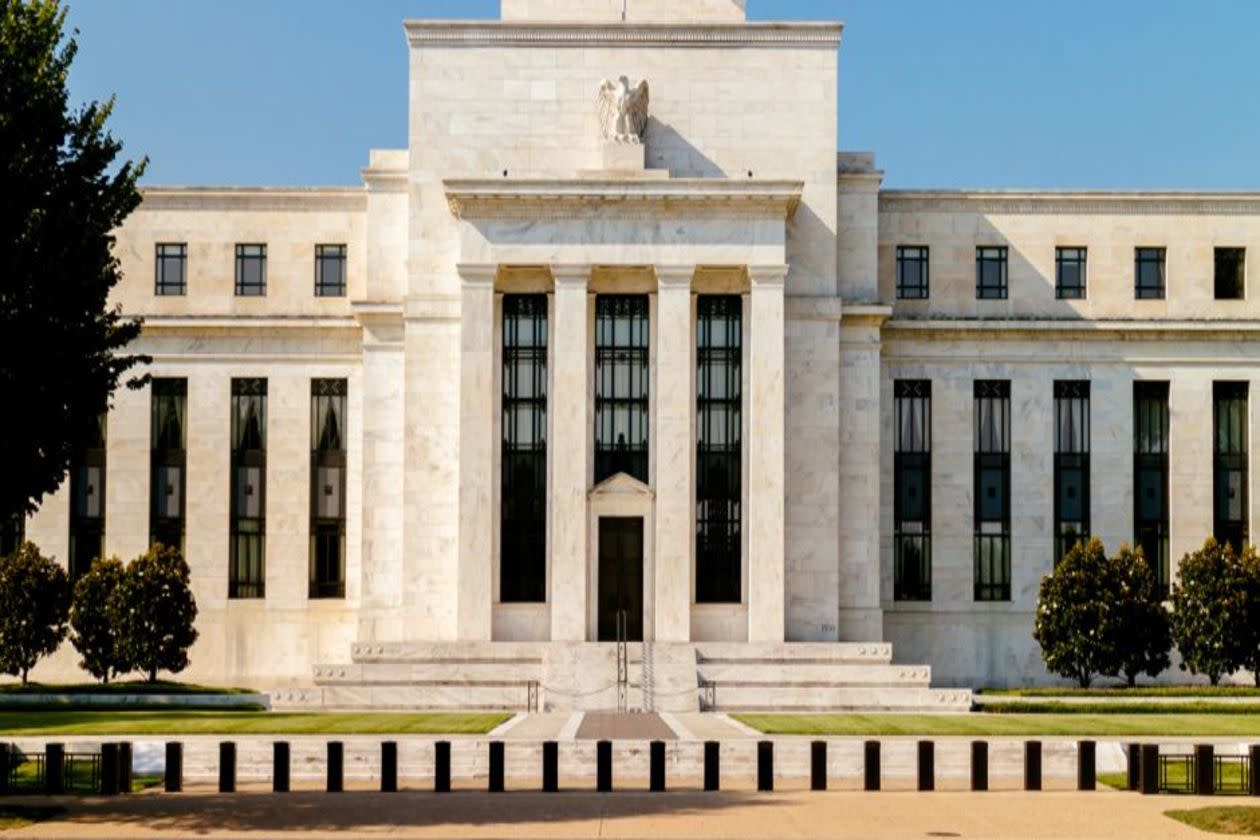

The US move follows similar action by the European Central Bank (ECB), which has already raised interest rates twice in 2026 as it seeks to rein in inflation.
For investors, the return to a rising-rate environment could have important implications. Higher interest rates tend to increase borrowing costs and can weigh on economically sensitive sectors, while also affecting how investors value future earnings – although the value of investments will naturally go up and down.
Poor timing for the midterms
The rise in interest rates is likely to be another setback for President Trump and the Republican Party as the November midterm elections draw closer. Higher borrowing costs risk adding to concerns among voters who are feeling financially stretched.
These economic concerns are already weighing on the administration's popularity.
Trump's approval rating is just 35%. And remember that all 435 seats in the House of Representatives and 35 of the 100 seats in the Senate will be contested, making November a significant test of public support for the president's agenda.
At present, Republicans hold narrow majorities in both chambers. However, polling indicates that the Democrats are likely to regain control of the House of Representatives. Democrats also potentially have an edge over the senate race; however, this will likely be a much closer vote.
A loss of either the House or the Senate would make Trump's advancing his legislative agenda during the second half of his term significantly more difficult.
To bolster support, Trump has made several voter-friendly policy proposals, including a pledge to provide every American adult with a $5,000 "dividend" payment if Republicans retain control in the midterms.
How have US stock markets performed?
The US stock market grew 20.0% during the last 12 months to the end of August 2026. Smaller companies outperformed their larger peers, returning 25.2%.
We’re well embedded into Trump’s second term, and the stock market has continued to be volatile.
The tariff threat has been a consistent cause of volatility since Trump returned to office. Starting with “Liberation Day” tariffs back in April 2025, when he announced sweeping tariffs on some of the country’s closest trading partners, causing markets to tumble.
Since then, tariffs have frequently been removed and re-added. Most recently, Canada was back in the firing line with a 50% tariff on roughly $20bn Canadian imports. Canada responded with similar counter measures.
Towards the end of 2025, there was a significant volatility as investors scrutinised artificial intelligence (AI) companies – some of the largest in the world. Money has poured into the so-called winners of AI, which has seen some of their share prices reach all-time highs. But more recently, investors have become concerned that AI could make some companies less relevant.
Companies in the software space have been particularly volatile. A steep sell-off occurred as many investors thought that their business models would become obsolete. However, share prices have rebounded more recently as many believe that they were oversold and some companies could still benefit from AI rather than be replaced.
Most recently, we have seen conflict with Iran in the Middle East. This resulted in the Strait of Hormuz's effectively being closed, causing oil prices to skyrocket. The markets fell off the back of this, as concerns moved to the impact of higher oil prices on inflation and a potential increase in interest rates.
From a sector point of view, energy was the best performing, returning 45.3%; technology also performed well, returning 33.2%. Utilities was the worst performing sector, returning just 2.6%.
August 2021 To August 2022 | August 2022 To August 2023 | August 2023 To August 2024 | August 2024 To August 2025 | August 2025 To August 2026 | |
|---|---|---|---|---|---|
MSCI North America Small Cap | 1.22% | -1.03% | 13.06% | 7.98% | 25.17% |
S&P 500 Energy | 107.89% | 5.69% | 2.54% | -0.72% | 45.27% |
S&P 500 Information Technology | 1.31% | 22.43% | 33.76% | 19.20% | 33.18% |
S&P 500 | 5.00% | 6.47% | 22.58% | 12.72% | 19.96% |
S&P 500 Utilities | 32.14% | -19.79% | 21.06% | 10.71% | 2.61% |
How have our Wealth Shortlist funds performed?
US funds on the Wealth Shortlist delivered positive performance during the past year, with some doing better than others.
A year is a short time to assess the skills of a fund manager, though. Managers with different strengths, styles and areas of focus will always perform differently over time.
Investing in these funds isn’t right for everyone. Investors should only invest if the fund’s objectives are aligned with their own, and there’s a specific need for the type of investment being made. Investors should understand the specific risks of a fund before they invest and make sure that any new investment forms part of a diversified portfolio.
This article isn’t personal advice. Investments and any income they produce will rise and fall in value, meaning that you could get back less than you invest. If you’re not sure if an investment is right for you, ask for financial advice. Remember, past performance is not a guide to the future.
For more detail on each fund, its charges and specific risks, please see the links to their factsheets and key investor information.
The strongest performing US fund on the wealth shortlist during the last year was Artemis US Smaller Companies. The fund rose 32.1%*, outperforming the IA North American Smaller Companies sector average which returned 22.6%.
Our analysis shows that managers Cormac Weldon and Olivia Micklem’s stock selection was the main driver of the fund’s impressive returns during the year. Stock selection in the technology sector has been a big contributor to the fund’s strong returns
Typically, we expect the fund to hold up better when markets are falling given its quality bias, but it has also outperformed when markets rise.
The fund can also be concentrated, investing in fewer companies compared to peers, which can increase risk, as each has a larger impact on performance. They also invest in smaller companies, which adds risk.
The weakest performer was the Legal & General US Index, which rose 19.4%. The fund tracks the performance of the US stock market, as measured by the FTSE USA Index.
As expected from an index tracker fund, it has fallen behind the benchmark because of the costs involved in running the fund. However, the tools used by the managers have kept performance tight to the index. Remember that past performance isn’t a guide to future returns.
The fund participates in securities lending, where some of its investments are lent to other providers in exchange for a fee. This helps offset some of the costs of running the fund but does add risk.
Although we believe that Wealth Shortlist funds have long-term performance potential, they won’t perform the same way at the same time. We think it’s important for investors to build a portfolio filled with managers who have different approaches and investing styles to help generate long-term returns.
Annual Percentage Growth
August 2021 To August 2022 | August 2022 To August 2023 | August 2023 To August 2024 | August 2024 To August 2025 | August 2025 To August 2026 | |
|---|---|---|---|---|---|
Artemis US Smaller Companies | -12.46% | -3.66% | 17.95% | 9.61% | 32.09% |
IA North American Smaller Companies | -6.39% | -1.99% | 11.85% | 3.01% | 22.63% |
Legal & General US Index | 4.41% | 5.09% | 21.52% | 13.95% | 19.35% |
FTSE USA | 2.91% | 6.40% | 22.71% | 13.37% | 19.64% |
IA North America | 0.61% | 4.14% | 19.17% | 10.63% | 16.31% |
The S&P500 is a product of S&P Dow Jones Indices LLC and has been licensed for use by Hargreaves Lansdown Asset Management.