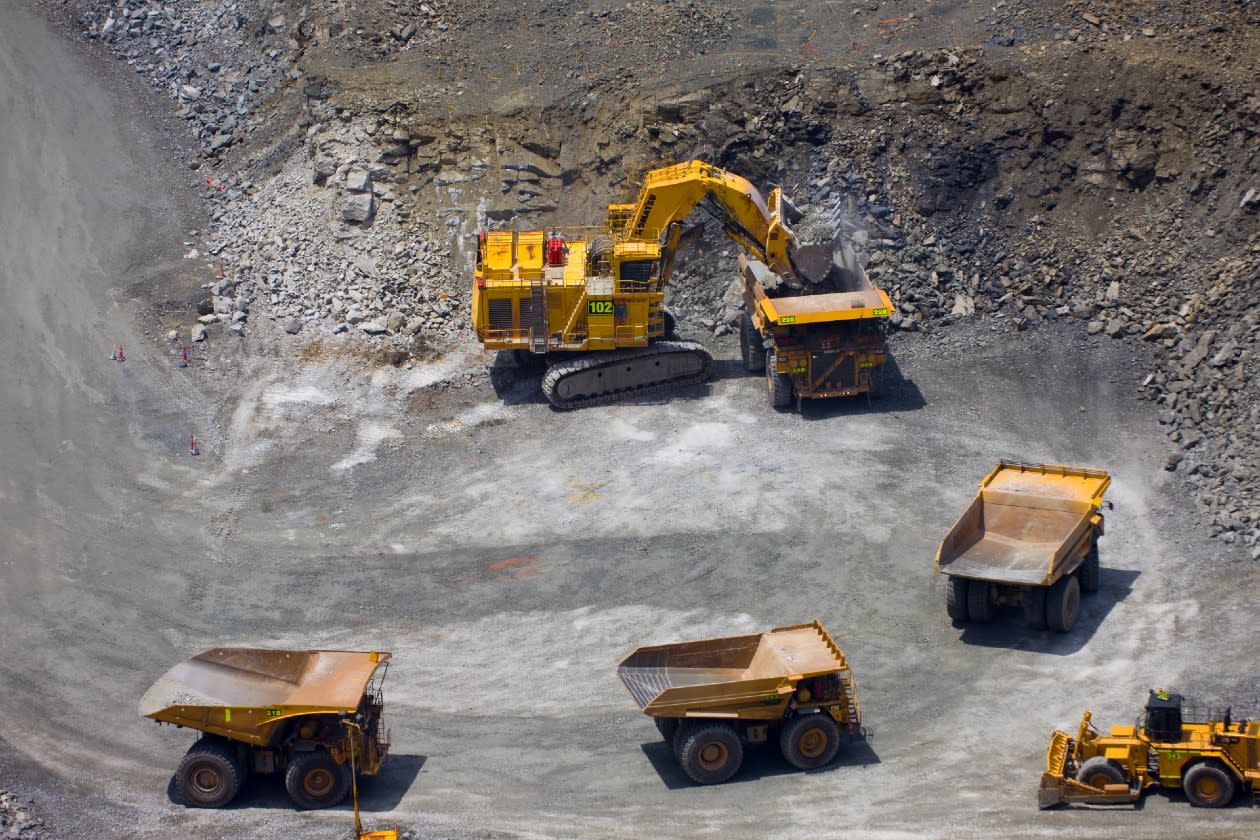


The UK Government recently committed £71mn to reopen the Hemerdon tungsten mine in Devon.
With the highest melting point of any known element, tungsten is a vital material for industries like defence, aerospace, electronics and renewable energy. Tungsten is classed as a critical mineral, and China produces roughly 80% of global supply, prompting growing concerns among western governments about the resilience of critical supply chains.
The UK happens to be home to one of the world’s largest tungsten deposits, making the reopening of the Devon mine an opportunity to strengthen domestic production of a strategically important metal. It could also support about 350 local jobs.
The announcement highlights an interesting paradox.
Mining is often viewed as one of the most environmentally destructive industries, yet the metals that it produces are essential to many of the technologies that will underpin a more sustainable future – from solar panels and semiconductors to high voltage equipment and industrial tooling.
As demand for these technologies grows, so does the need for mining. This raises an important question – can mining be considered sustainable?
The case against mining
Critics argue that a process that involves digging huge holes into the ground to extract finite materials can never be truly sustainable. The extraction, processing and transportation of metals requires significant amounts of energy, much of which is generated from fossil fuels, making the sector a meaningful source of greenhouse gas emissions.
Mining can also have a wide range of environmental impacts beyond just carbon emissions.
Operations often require substantial quantities of water, placing pressure on local resources, often in regions already facing water stress. Land must be cleared for excavation, processing facilities and supporting infrastructure; as well, pollution from mining waste and tailings can pose risks to surrounding ecosystems. These impacts can result in long-lasting damage that persists long after a mine has stopped operating.
There are also important social considerations. Large mining projects can affect local communities through changes to land use. In some cases, it has even been associated with the involuntary resettlement of communities and impacts on indigenous lands.
Mining as a sustainability enabler
On the other hand, virtually every technology associated with net zero relies on mined materials. Wind turbines need steel, copper and rare earth elements, and electric vehicles depend on lithium, nickel, cobalt and graphite. Expanding renewable energy capacity, electrifying transport and upgrading electricity grids all require significant increases in mineral production.
The scale of this challenge is enormous.
The International Energy Agency estimates that demand for minerals used in clean energy technologies could rise strongly as the world builds more batteries, electric vehicles and electricity grids.
The World Bank estimates that production of minerals like graphite, lithium and cobalt could rise nearly 500% by 2050 to meet demand for clean energy technologies. It also estimates that more than 3 billion tonnes of minerals and metals could be needed to deploy the wind, solar, geothermal and storage capacity needed to limit global warming to 2°C above pre-industrial times.
Recycling can help ease some of this pressure.
Increasing quantities of metals are being recovered and reused, reducing the need for newly mined material where supply is already above ground. But recycling is unlikely to remove the need for new mining altogether, particularly while demand for clean-energy technologies is expected to grow so rapidly.
Mining companies can also generate significant economic and social benefits.
Major mining projects often create skilled, well-paid employment, support local businesses through their supply chains, stimulate regional investment and infrastructure development, and generate tax revenues that fund public services and contribute to the long-term prosperity of local communities.
What does this mean for investors?
Investing is for the long term (typically five years) and can help your money grow, but the value of investments and income from them can rise and fall, so you could get back less than you put in. This article is not personal financial advice. If you’re not sure what’s right for you, a financial adviser can help.
The quality of each company’s practices, the materials it produces and the role those materials play in the wider economy all matter. These can vary, and it’s possible to identify companies with strong operational practice and those that produce critical minerals for the transition.
These mining companies tend to provide transparent, independently assured disclosure on emissions, water use, waste and tailings management. They follow recognised international standards, engage meaningfully with local communities, respect human rights and indigenous rights, and demonstrate strong governance through robust health and safety, anti-corruption and risk management controls. They also have credible strategies to reduce emissions, use resources more efficiently, and protect and restore biodiversity.
How to responsibly invest in mining
Some investors conclude that the environmental and social costs of extraction are too high, regardless of the end use of the materials. Others may accept exposure to mining where companies are producing minerals needed for the energy transition, national resilience or essential infrastructure – provided that those companies meet high standards of stewardship.
That’s why funds can take very different approaches to the sector. We look at two examples below.
Investing in these funds won’t be right for everyone. Investors should invest only if a fund matches their objectives, they understand its risks and charges, and it forms part of a diversified portfolio.
For more detail on each fund, its charges and specific risks, please see the links to their factsheets and key investor information.
CG Aegon Ethical Equity
Audrey Ryan has managed CG Aegon Ethical Equity for more than 25 years. She aims to identify and understand the key environmental, social and governance (ESG) risks facing each company, industry and sector she invests in.
The fund invests primarily in UK companies and applies a strict set of ethical exclusions, which means that it will not invest in activities that it considers unethical, including tobacco, alcohol and munitions production.
Mining is not automatically excluded from the fund. However, most mining companies fail to meet the fund's ethical criteria because of exposure to thermal coal, environmental concerns, human rights issues or governance shortcomings.
None of the diversified mining companies included in the FTSE 100, like Rio Tinto, BHP Group and Anglo American, currently meet the fund’s ethical standards. Although there are a small number of specialist mining companies that do, the fund currently has no direct exposure to the sector.
Instead, it gains indirect exposure to mining activity and demand for critical minerals through holdings like Weir Group, which supplies pump and process equipment to mining companies, and infrastructure businesses.
Investors should note that the fund’s investments in smaller companies add risk.
Legal & General Future World ESG Tilted & Optimised UK Index
The Legal & General Future World ESG Tilted & Optimised UK Index takes a different approach. It tracks the Solactive L&G Enhanced ESG UK Index, which is made up of about 300 companies spread across the whole of the UK market.
Companies are assessed against 32 ESG and transparency metrics, including carbon emissions, water management, biodiversity, supply-chain standards and corporate controversies. The index increases investments in companies that score well against these ESG factors, and reduces exposure to companies that score poorly.
Mining is a high-climate-impact sector, meaning that many mining companies receive lower weightings than they do in the broader market. The fund has about 3.4% invested in metals and mining, compared with 7.8% for the FTSE All Share. However, not all mining companies are treated equally. For example, Antofagasta receives a higher weighting than in the wider market, and exposure to companies like Rio Tinto and Anglo American is significantly reduced.
The fund will not invest in persistent violators of the UN Global Compact Principles (a UN pact on human rights, labour, the environment and anti-corruption) and companies that are involved in controversial weapons. It also excludes companies that earn a significant proportion of their revenues from tobacco, adult entertainment, gambling, civilian firearms, military weapon system manufacture, thermal coal and oil sands.
On top of this, the fund adopts a decarbonisation pathway. This means that it aims to reduce emissions by 7% per year until 2050.
Investors should note that the fund invests in higher-risk smaller companies. The fund can also lend some of its investments to others in exchange for a fee in a process known as stock lending. This offsets some of the costs involved with running the fund but can add risk.
Discover our responsible investment hub to access our latest insight and even more investment ideas.