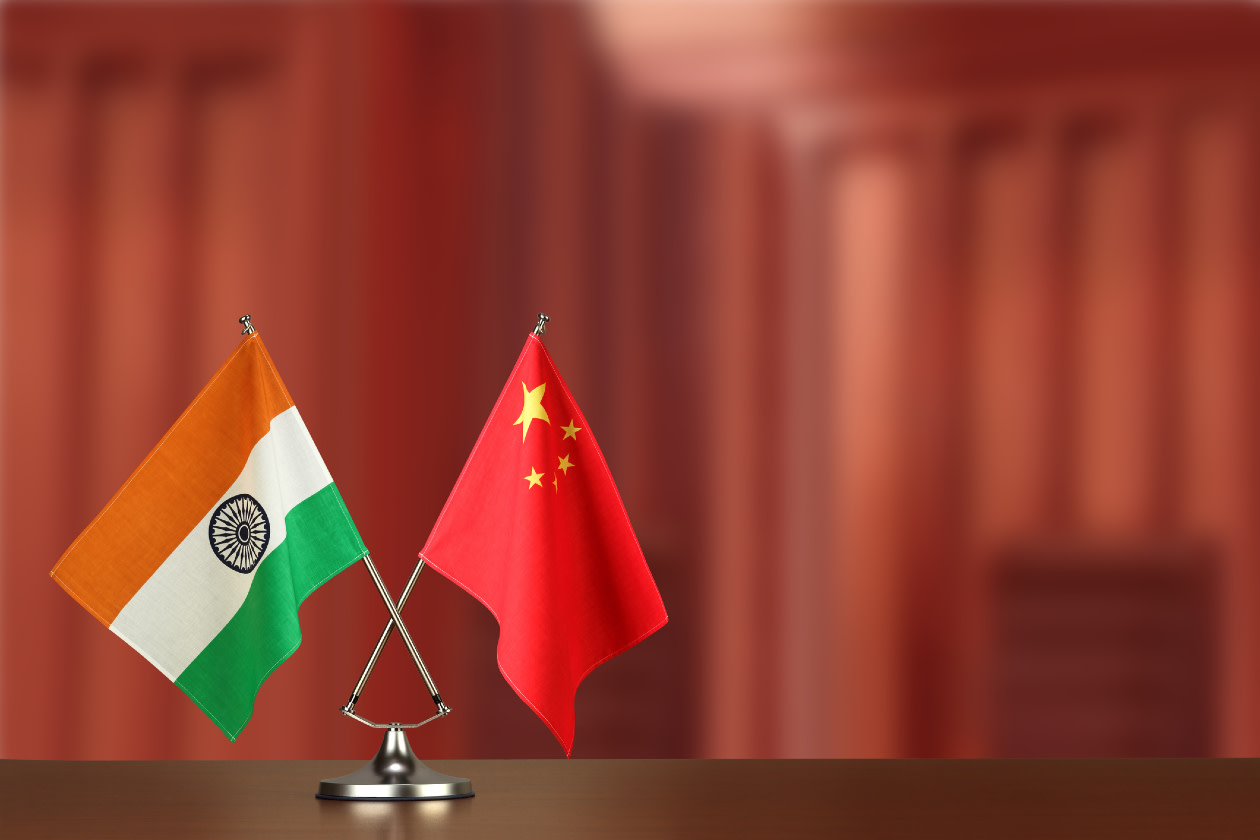

India and China are the world’s two most populous countries, home to nearly three billion people combined. At the same time, they’re also two of the largest economies in the world. But despite this, both have been overlooked by investors this year.
Investors across the globe have focused heavily on artificial intelligence (AI), with companies in Taiwan and Korea among the greatest beneficiaries. Both markets have performed strongly and together now make up more than half of the broader Asia ex Japan index.
Meanwhile, China and India account for less than 35% of the Asian market, down from more than 50% just over a year ago.
This article isn’t personal advice. If you’re not sure that an investment is right for you, then seek advice. Investments and any income from them will rise and fall in value, so you could get back less than you invest.
India – the anti-AI market?
India has largely been on the other side of the AI conversation.
The country has no competitors to the hardware manufacturers in Taiwan and Korea that have dominated headlines. Investors are also questioning the future relevance of IT outsourcing companies, which are a key part of India’s tech sector.
Financials are the largest part of India’s market, with regional banks making up a fifth of the country’s benchmark. And the current economic environment could support growth in the banking sector.
Inflation has risen steadily during 2026 but remains within the limits tolerated by the central bank. A poor monsoon season, which pushed up food prices, and higher fuel costs driven by conflict in the Middle East have both contributed.
The Reserve Bank of India responded in October by raising interest rates for the first time since 2023. Higher rates can be positive for banks.
India’s financial sector continues to expand, with financial inclusion initiatives bringing more of the rural population into formal banking. Credit growth is accelerating, too, having slowed in recent years because of concerns about consumers taking on too much debt.
Away from financials, Indian companies are working to establish a greater presence overseas.
The government is targeting annual goods exports of $1tn by 2031 – more than double the current level. Progress is being made in several important industries. Exports of engineering and electronic goods have risen, and industries like petroleum now make up less of the country’s exports.
The Indian stock market also continues to expand. It’s the world’s busiest market for Initial Public Offerings (IPOs), with 165 companies listing in the first eight months of 2026, giving investors plenty of fresh opportunities.
Indian companies typically trade at a premium to other emerging markets, reflecting stronger long-term economic growth, improving corporate governance, and increasing demand from domestic investors.
Strong stock market performance in recent years pushed this premium above normal levels, but this trend has since reversed, as foreign investors continue to withdraw cash from the country. Many fund managers we speak to believe that current valuations offer an attractive entry point for investors returning to the Indian market.
China – exporting its way to growth
In contrast to India, China may hold a place in the AI ecosystem.
The country grabbed headlines in early 2025 with the launch of DeepSeek, an AI model offering capabilities similar to leading US models but at a fraction of the cost. Several Chinese companies now offer cheaper AI solutions.
Technology makes up more than a quarter of the onshore Chinese stock market and includes companies like chipmaker CXMT, which listed on the stock market in July and is battling to take market share from Korean competitors.
Looking domestically, the Chinese consumer remains downbeat. Confidence hasn’t recovered from the lows reached in 2022 following the collapse of the housing market.
Chinese households are sitting on growing amounts of cash, rather than spending or investing. A recovery in confidence could see some of this money flow back into the wider economy.
Growing exports are helping to offset weak domestic demand, and the economy grew 4.5% in the third quarter of 2026 – in line with the government’s target. China’s 2026 trade surplus reached $1tn in October and is on track to beat the record set last year. Electrical components, including those related to AI, were among the key drivers.
Although growing exports are fuelling economic growth, they could further strain relationships with Western trade partners.
Companies are increasingly focusing on shareholder returns. Dividends continue to grow, and, with shares trading at their lowest valuation relative to global peers in more than 20 years, companies are also buying back shares. The reduction in outstanding shares means that existing investors own a larger piece of the company.
Many Chinese companies are world leaders and have compelling investment cases, but the overall economic picture remains mixed. There are signs that things are improving, but there’s still some way to go.
Investment ideas for India and China
Here are some fund ideas for investing in India and China from our Wealth Shortlist of funds chosen by our analysts for their long-term performance potential.
Investing in funds isn’t right for everyone. You should invest only if the fund's objectives align with your own. Investors should understand the specific risks of a fund before they invest. All of these funds invest in emerging markets, which are higher risk and volatility should be expected. A fund focused on a single emerging market should form only a small part of a diversified portfolio.
Jupiter India
Avinash Vazirani, the fund’s lead manager, has a long track record of successful investing in India and has managed Jupiter India since launch in 2008. He’s supported by co-manager Colin Croft.
The managers follow a ‘growth at a reasonable price’ approach. They look for financially robust companies that generate strong cash flow, where the share price is currently lower than what they believe the company’s earnings potential merits. The fund invests in companies of all sizes, including higher-risk smaller companies.
FSSA Greater China Growth
Managed by Helen Chen and supported by veteran investor Martin Lau, the FSSA Greater China Growth fund invests in companies in China as well as those in Taiwan and Hong Kong. Currently, 40% of the fund invests in Taiwan, meaning that it can perform differently than peers that only invest in China.
Chen and the FSSA team look for companies run by reputable management teams that have a competitive advantage that others will struggle to replicate. That could be a well-known brand or the ability to raise prices for their products, without affecting demand from customers.
The fund can invest in smaller companies, which increases risk.
Schroder Asian Alpha Plus
Investors seeking broader exposure to Asia, including China and India, have plenty of options. Abbas Barkhordar has managed Schroder Asian Alpha Plus since 2021, becoming lead manager in 2026. He’s supported by a large, dedicated team of analysts across Asia.
The fund invests in companies with strong franchises and good cash flow, that the team believe can sustain growth over the long term. At the end of September, 16.9% was invested in China and 6.2% in India.
Annual percentage growth
October 2021 to October 2022 | October 2022 to October 2023 | October 2023 to October 2024 | October 2024 to October 2025 | October 2025 to October 2026 | |
|---|---|---|---|---|---|
Jupiter India | 10.51% | 18.98% | 36.96% | 4.20% | -17.94% |
IA India/Indian Subcontinent | 6.18% | 3.06% | 22.00% | -5.63% | -14.09% |
FSSA Greater China Growth | -27.59% | 8.77% | 7.72% | 16.06% | 5.49% |
IA China/Greater China | -33.69% | 5.26% | 7.08% | 26.19% | -12.29% |
Schroder Asian Alpha Plus | -18.78% | 6.18% | 14.70% | 27.19% | 15.29% |
IA Asia Pacific ex Japan | -15.80% | 4.47% | 17.34% | 22.99% | 14.36% |