
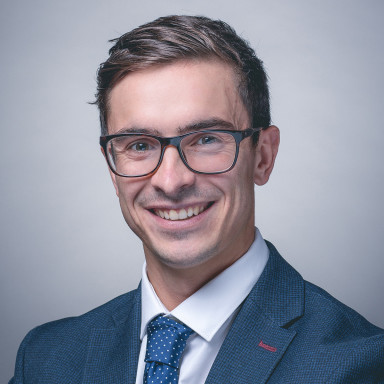

Following a strategic review of the trust the fund is now being managed by the Artemis Income team
We have a high level of conviction in all three experienced co-managers – Adrian Frost, Nick Shenton and Andrew Marsh
The managers invest in cash generative businesses with the potential to grow their earnings, and dividends, for years to come
How it fits in a portfolio
The Murray Income Trust mainly invest in large UK companies, with some holdings in medium-sized and overseas companies too. The managers look for companies they believe will deliver a resilient income, though there are no guarantees.
We view this as a more conventional UK equity income trust that could work well alongside other asset classes in an income focused portfolio. It could also complement a portfolio focused on growth, where investors who don’t need the income can benefit from the compounding effect of reinvesting it.
Manager
As a result of a strategic review from the board of directors, on the 2 March 2026 the management of the Murray Income Trust has moved from Aberdeen to Artemis. The trust will now be managed by the Artemis Income team.
You can read further details of these changes here.
The Artemis Income team is made up of the experienced trio of Adrian Frost, Nick Shenton and Andy Marsh.
Frost is an industry stalwart and one of the best known UK equity fund managers around. He began his career in 1983 at Deutsche Asset Management and in 2002, he joined Artemis to run the Artemis Income fund.
Shenton joined Artemis in 2012 to work alongside Frost as manager of the fund. His career began in 2003, working at F&C Asset Management and Polar Capital before joining Artemis.
Marsh joined Frost and Shenton at Artemis in 2018. His career began at accountancy firm Ernst & Young in 1997. He held a number of different roles before becoming a fund manager at Polar Capital in 2006, where he worked until joining Artemis.
The managers have over nine decades of investment experience between them and have developed a strong working partnership. They’ve been investing through good times and bad and we think their skillsets make them one of the best teams in the business. We have a high level of conviction in all three managers.
Process
With the trust now under the management of the Artemis Income team, it will adopt the same investment process the managers have followed since Frost became manager of the Artemis Income Fund in 2002.
The managers aim to outperform the FTSE All-Share over the long term, while providing a growing income and a dividend yield above what’s offered by the index. This means the management trio look for businesses they believe can pay a stable and resilient level of income, through the market cycle, regardless of the economic backdrop. Key to this is a company’s ability to generate free cash flow, an area of focus for the team. They seek companies with recurring revenues which they believe will still have consumers, profits, and therefore dividends, in the future, regardless of disruption – although nothing’s guaranteed.
The managers spend a lot of time assessing company management and think their ability to allocate capital efficiently is vital to making a success of the business. There’s also analysis of the structure of different industries, how value’s created within them and which companies have the best competitive position to take advantage.
They aim to have a portfolio of between 45 and 55 companies with diversified cash flows, and therefore a diversified income stream. Since taking over the trust in March the managers have finished changing the portfolio to one that they are happy with. They changed 75% of the portfolio whilst retaining 25% of the existing holdings.
Most of the trust invests in larger companies, with 92.6% of its assets currently invested here. In terms of sectors, as of 31 August, the trust had the most invested in financials at 36.6%, followed by consumer discretionary and consumer staples companies at 20.3% and 15.2% respectively.
This represents a material shift to the trust’s investments under Aberdeen’s management. For example, as at 28 February 2026, financials accounted for just 17.0% of the trust, followed by industrials at 16.1% and healthcare at 13.3%.
New investments since taking over the trust include consumer health company Reckitt Benckiser, a company the managers have owned in the past. But the managers believe it is attractively valued and offers a compelling yield. They also added financial company Standard Chartered as the managers believe they have a strong presence in fast growing markets in Asia. On the other hand, the managers sold accounting software company Sage. They believe that advancements in AI could hurt demand for the software business.
Investors should be aware the trust can borrow money to invest with the intention of increasing returns (known as gearing), but this could magnify losses in a falling market and increases risk. The managers are targeting gearing to be between 8–10%, as at 31 August, gearing stood at 7.8%.
Culture
Artemis provides an attractive environment for fund managers, allowing them the freedom to run money how they see fit without imposing a house view on them. It’s also a collegiate atmosphere, with managers supporting and challenging each other. The managers of the fund are partners in the business. We think this structure is a good thing for investors, as the managers and the firm are focused on the long term and can run funds without distractions from short-term shareholder demands. They are rewarded from the profits of the business, based on their long-term fund performance and payment of the profit share can be deferred over several years.
ESG Integration
Investment teams across Artemis are encouraged to think for themselves and invest according to their own style, so approaches to Environmental Social and Governance (ESG) integration across the firm vary. Meetings with the Artemis teams we back suggest ESG is an important factor.
Artemis has a firm-wide policy to support the aims of international conventions on cluster munitions and antipersonnel mines and therefore the firm will not knowingly invest in companies which produce these weapons. The firm also avoids companies involved in biological/ chemical weapons, blinding laser weapons, incendiary weapons, weapons that produce nondetectable fragments, and depleted uranium, as well as companies with a tie to nuclear weapons in countries not included in the Treaty on the Non-Proliferation of Nuclear Weapons. Companies that grow or sell cannabis are also avoided.
Artemis votes on all their holdings, unless restricted from doing so, and fund managers engage with firms to develop their understanding, raise issues with management and monitor subsequent developments. The firm provides engagement case studies, and other information about its engagement and voting efforts, in an annual Stewardship report. Artemis also provides a monthly voting summary which includes rationales for votes against management and abstentions. Stewardship activity is carried out in line with the firm’s comprehensive voting and engagement policies.
The managers of this investment trust integrate ESG analysis into their company research. They believe companies with strong ESG practices are more likely to support sustainable long‑term cash flows, while those that lag in ESG standards may see their long‑term cash flows become vulnerable. That said, the fund may still invest in companies from industries such as tobacco or oil & gas.
Cost
The ongoing annual charge as at the 30 June 2026 was 0.48%. This is the same level of charges that applied during the financial year to the end of June 2025 under Aberdeen’s management.
Artemis has also waived the annual management fee for the first nine months from when they took over the trust on 2 March 2026. Investors should refer to the latest annual reports and accounts and Key Information Document for details of the risks and charging structure.
The annual charge to hold investment trusts in the HL ISA, SIPP or Fund & Share Account is 0.35% (capped at £150 p.a. in each account) and 0.25% in the HL Lifetime ISA (capped at £45 p.a.). There are no charges from HL to hold investment trusts within the HL Junior ISA. As Investment trusts trade like shares, both a buy and sell instruction will be subject to the HL share dealing charges.
Performance
The Artemis Income team who are now running the trust, have an impressive record of investing in UK companies. Since Frost took over as manager of the Artemis Income fund in 2002, he has significantly outperformed the FTSE All-Share Index. Since the team became a trio in February 2018, they have outperformed the FTSE All-Share Index. Over this period, they have delivered returns of 107.53% compared to 99.70% of the index.
As the managers have only been running the trust for a few months, we believe it’s too soon to analyse their performance.
However, our analysis of the managers track record of managing the Artemis Income fund suggests that stock selection has been the driver of long-term returns. This is positive as it suggests the managers’ company analysis has added value, rather than performance being dominated by investing in the right sectors. Over the long term the fund has typically held up better when markets are falling however, they can lag when markets are rising. We expect the trust to perform similarly to the fund going forward although performance will differ depending on the portfolio, gearing, charges, discounts and other characteristics of an investment trust. As always though, past performance doesn’t guarantee future returns.
The new managers have also committed to raising the annual dividend every year to uphold their AIC Dividend Hero status. The trust has increased the annual dividend for 53 year’s which is one of the longest records of any UK equity income investment trust.
The trust’s dividend per share for the previous financial year, to the end of June 2026, was 41p, an increase from the previous years’ dividend of 40p. At the time of writing the trust trades at a discount of 7.08%, marginally better than its 12 month average of 7.39%. The trust also has a dividend yield of 4.18% compared to the FTSE All Share yield of 3.06%, although remember yields are variable and aren’t a reliable indicator of future income.
Annual percentage growth
August 2021 To August 2022 | August 2022 To August 2023 | August 2023 To August 2024 | August 2024 To August 2025 | August 2025 To August 2026 | |
|---|---|---|---|---|---|
Murray Income Trust PLC | -9.28% | 5.46% | 11.64% | 6.70% | 17.25% |
FTSE All-Share TR | 1.01% | 5.23% | 16.98% | 12.58% | 21.30% |
AIC Investment Trust - UK Equity Income | -9.16% | 3.76% | 15.78% | 12.45% | 21.54% |