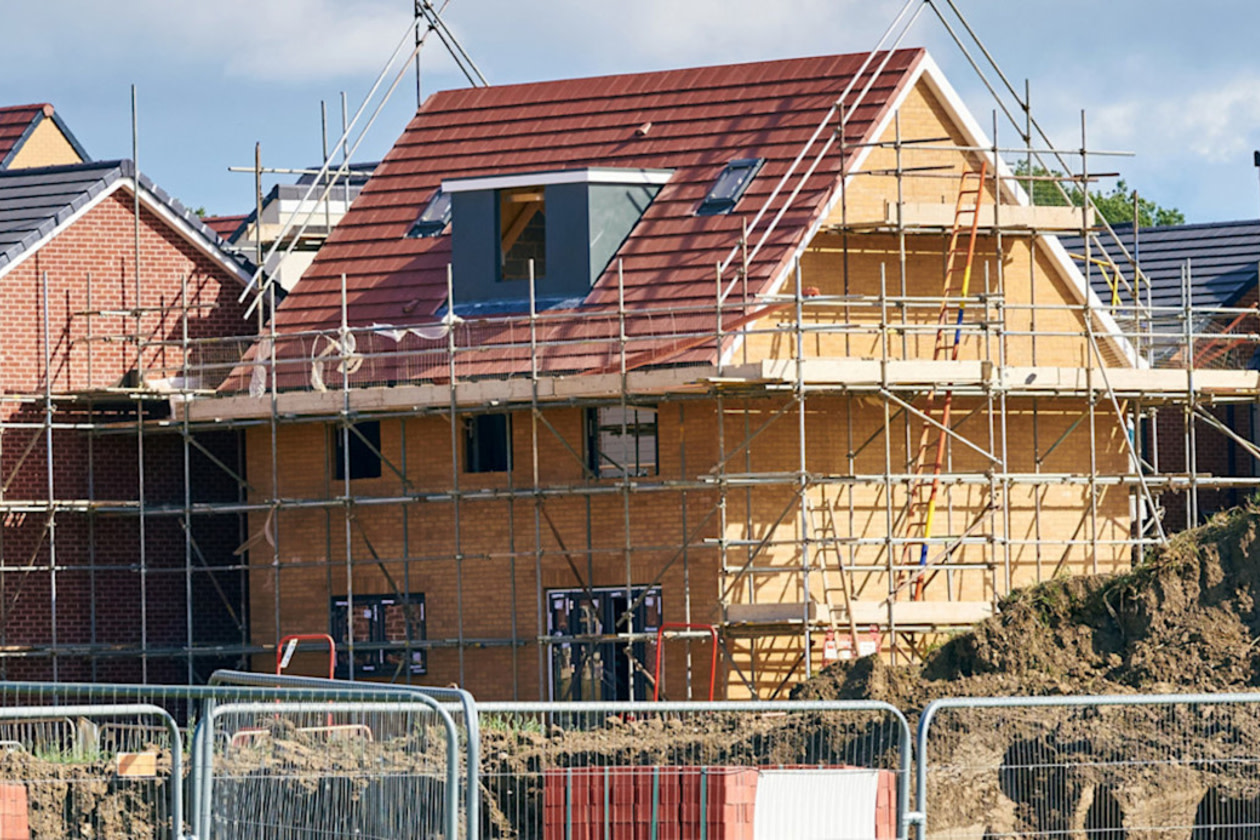


Barratt Redrow’s completions grew by 5% to 17,667 new homes last year, toward the top end of the group’s guidance range. Average selling prices rose 2% to around £352,000, helped by a shift in mix to larger homes in more expensive regions.
The order book edged down by £0.1bn to £2.8bn. The net cash position remained flat at £0.8bn.
Build cost inflation was 2% over the year, while the integration of Barratt and Redrow delivered £53mn of cost savings. As a result, 2026 full-year underlying pre-tax profits are expected to land in line with market expectations at around £560mn.
In 2027, new home completions are expected to rise to between 17,700-18,200, with ‘minimal’ house price inflation. Build cost inflation is expected to rise to between 3-4%.
Barratt expects to return around £0.4bn of cash to shareholders this year, primarily through share buybacks.
The shares rose 2.3% in early trading.
Our view
Barratt Redrow’s full-year trading update reflected good progress in a challenging market. Increased sales volumes, a growing contribution from larger, higher-value homes and continued cost savings following the Redrow integration all helped full-year underlying pre-tax profits land in line with market forecasts of £560mn.
Operationally, Barratt has been doing well. The group continued to trim the fat on overlapping operations following the Redrow acquisition, with more cost savings expected this year. The order book remains on solid ground, and new home completions look set to edge slightly higher this year.
Bringing Redrow into the fold has increased both its geographical reach and the different types of customers it appeals to. The Redrow brand focuses on larger, higher-quality homes for more affluent buyers, which has boosted average selling prices recently and helps relieve some pressure on margins.
However, the housing market is currently being hampered by macroeconomic uncertainty. The ongoing Middle East conflict is already pushing up building and material costs, and that’s expected to continue this year. If it leads to higher, more broad-based inflation, we could also see potential buyers become more cautious about signing on the dotted line for a new home.
In the meantime, buyer incentives (like part-exchange and a Barratt-funded deposit boost) are being used to drive demand and are expected to remain at current levels in the year ahead. Alongside rising building costs and current guidance suggesting a small decline in average selling prices this year, margins look set to get squeezed, weighing on near-term profit expectations.
Zooming out, there’s still a pressing need for new homes in the UK, so the long-term demand outlook remains favourable. In time, recent government-led planning reforms should help boost housing delivery. But Barratt’s still calling on the government to do more to help unlock supply and make it easier for first-time buyers to get on the ladder.
Barratt’s doing what it can to weather the storm, with land spending being reined back to help preserve its healthy £0.8bn net cash position – a move we approve of.
Given the current valuation weakness, we’re also pleased to see the group’s payout policy shift to a greater focus on share buybacks. So while the payout ratio remains the same, the dividend yield is likely to drop from the mid-single-digit level seen recently. As always, shareholder returns can go down as well as up.
All things considered, Barratt is in good shape with a strong balance sheet and formidable scale. The valuation has come down sharply since the Iran conflict began, which we think underappreciates Barratt’s long-term prospects. But it could be a while before macroeconomic conditions turn more favourable, so potential investors will need plenty of patience.
Environmental, social and governance (ESG) risk
Most housebuilders are relatively low risk in terms of ESG, particularly for those in Europe. However, there are some environmental risks to consider, from direct emissions to the impact of their buildings on the local ecology. The quality and safety of their buildings is also a key risk.
According to Sustainalytics, Barratt Redrow’s management of ESG risk is strong.
Commitments are in place to deliver net zero houses by 2030 through a combination of energy-efficient equipment, the use of renewables and the establishment of alternative heating technologies. While Barratt reports that all its revenues come from sustainable products, the total portion of recycled materials used in its operations is undisclosed.
Barratt Redrow key facts
All ratios are sourced from LSEG Datastream, based on previous day’s closing values. Please remember yields are variable and not a reliable indicator of future income. Keep in mind key figures shouldn’t be looked at on their own – it’s important to understand the big picture.
This article is original Hargreaves Lansdown content, published by Hargreaves Lansdown. It was correct as at the date of publication, and our views may have changed since then. Unless otherwise stated estimates, including prospective yields, are a consensus of analyst forecasts provided by LSEG. These estimates are not a reliable indicator of future performance. Yields are variable and not guaranteed. Investments rise and fall in value so investors could make a loss.
This article is not advice or a recommendation to buy, sell or hold any investment. No view is given on the present or future value or price of any investment, and investors should form their own view on any proposed investment.