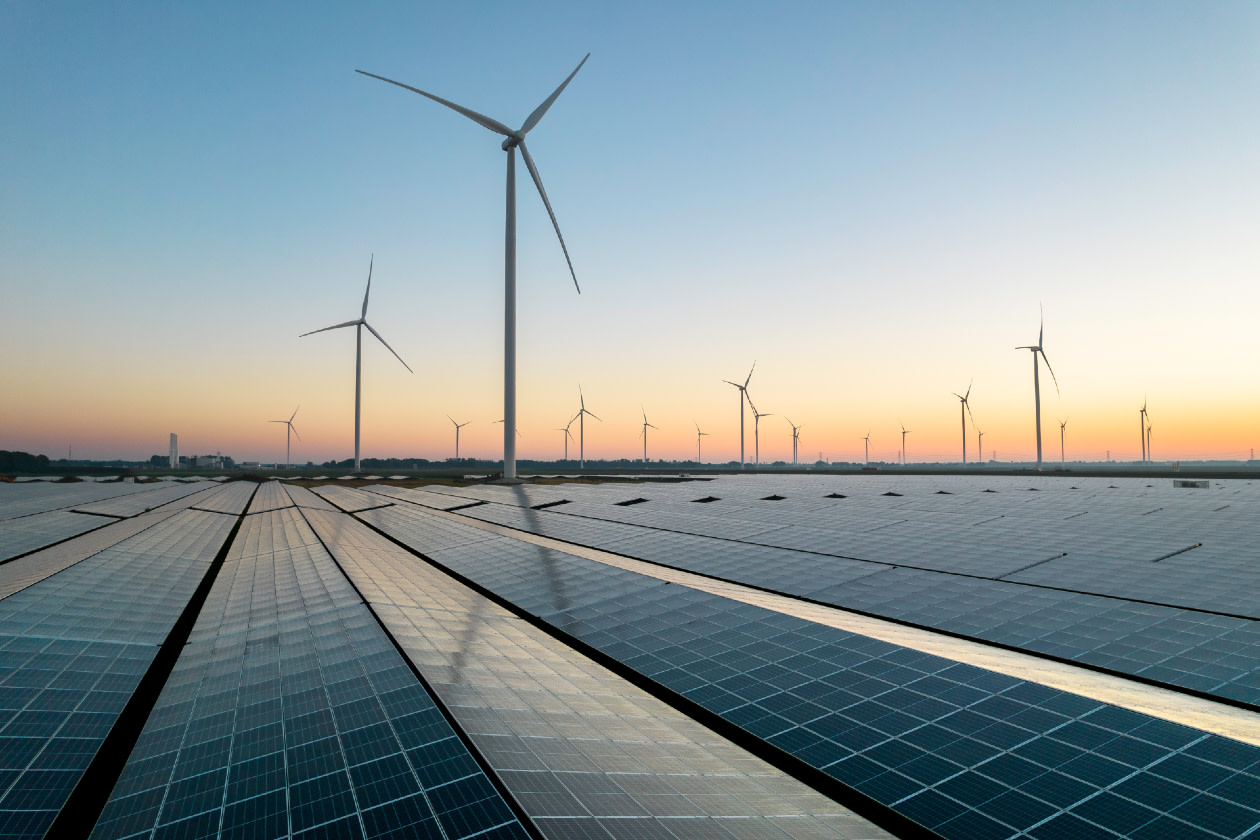


The energy sector covers all the companies in the wider energy supply chain. This ranges from upstream operations and the discovery and extraction of oil & gas reserves, to the transportation and storage in the midstream, all the way to the downstream and the refinement of raw materials into usable products, and then distribution through things like gas stations and aviation fuel depots.
The crude oil they extract also provides the raw materials for industrial chemicals that go into everything from plastics and adhesives to pharmaceuticals.
The sector is cyclical, meaning its fortunes wax and wane with those of the broader economy. It’s also exposed to structural growth in demand and the evolving shape of the energy mix, which is being sculpted not only by environmental concerns, but also by the quest for energy security.
This article isn’t personal advice. If you’re not sure an investment is right for you, seek advice. Investments and any income from them will rise and fall in value, so you could get back less than you invest. Ratios also shouldn’t be looked at on their own.
Key drivers in the energy sector
Economic growth
Demand for oil & gas is fundamentally driven by energy requirements, which in turn are positively linked to economic growth. Transport usage in particular ebbs and flows with the health of the economy, as goods and the raw materials used to make them are moved to meet industrial and consumer demand.
Supply dynamics
Historically, oil supplies have been dominated by a relatively small group of countries, the Organisation of the Petroleum Exporting Countries (OPEC). Except for Venezuela, membership is concentrated in Africa and the Middle East.
However, the U.S. shale boom in recent years has challenged the status quo, and with it, OPEC’s ability to control prices. In response OPEC reached out to non-member countries, most notably Russia (the world’s third-largest oil producer), to form OPEC+.
We see this more competitive environment on the world stage as broadly negative for prices and their stability.
Geopolitics

Readily available energy supplies are seen as key to both national security and economic development. And efforts by producing states to capture a higher market share are not the only geopolitical forces at play. Sometimes this tension can spill over into military conflict, disrupting supplies and causing dramatic oil price shocks, like is happening with Iran right now.
Sanctions, asset seizures, tariffs, development restrictions, and shifts in taxation are all factors investors also need to contend with.
Energy sector performance
The energy sector has significantly outperformed the wider stock market over the last five years, but it’s had a much bumpier ride, with returns broadly tracking the oil price.
There’s also other important context to be aware of. The strong sector performance early in the period reflects a recovery from the pandemic, which proved an attractive entry point for investors into the sector.
In the run-up to 2026, fears of oversupply had put significant pressure on sentiment. But the early months of 2026 have seen valuations strengthen again as prices surged following the outbreak of the Iran War. Quite how that situation unfolds is a key unknown which we think adds an extra layer of risk for investors, who regardless of their conviction, may be tempted to lock in some profits.
Key opportunities in the energy sector
The drive for energy security
The geopolitical gyrations of recent years highlight the world’s dependence on key regional production hubs and transport routes for oil & gas cargoes. We think this could drive demand for services from companies with trading capabilities and infrastructure to re-route commodity flows, as well as political support in some regions for new production and infrastructure.
Increasing energy requirements
Demand for energy appears to be accelerating, driven by continued industrialisation, urbanisation in certain regions, and the rapid expansion of power-hungry data centres. While forecasts differ widely, power generation looks set to more than double by 2050. Fossil fuels are expected to be a smaller part of the mix but are still likely to be a major contributor with further growth for at least several years to come, particularly for natural gas.
Renewed focus on sector competencies
While the pivot to gas could potentially displace some higher-carbon fuels, the industry’s been struggling to generate sufficiently attractive returns from renewable power generation efforts. As a result, many companies have been cutting back on investments towards these initiatives.
The drive for efficiency and sharpened focus on oil & gas should have a positive impact on profitability and cash flows although it will take time for the benefits to be felt. That doesn’t mean there isn’t a place for the incumbents in the energy transition, but it makes sense for them to look to complementary activities like biofuels and electric vehicle charging.
Key risks in the energy sector
Economic uncertainty
The spike in oil prices at the beginning of 2026 has seen valuations rise, but it’s important to note that this reflects disruption in the Middle East. Trying to forecast oil prices and military outcomes are not calls we’re comfortable with, but several commentators are expecting a limited impact on prices further out and the potential for oil prices to fall sharply can’t be ruled out. While a more drawn-out war could keep prices higher for longer, looking further ahead it could also cause longer-lasting damage to the demand picture.
Technical challenges
Oil & gas reserves are contained in naturally occurring geographical structures, meaning that there’s significant execution risk to both exploration success and forecasting financial returns from existing projects. Years of under-investment in new oil fields and changes in the production mix mean that producers are having to work harder to replace barrels in the ground.
Energy Transition
The pace and shape of the energy transition are key unknowns for the industry. China, for example, has shown that political willpower can accelerate the adoption of renewable energy. We’re not expecting a shift in attitudes, but policy and technology changes incentivising investment in green technology over oil & gas need to be closely monitored for their impact on the investment case for both traditional and emerging energy sources.
Our view on the energy sector
The energy sector is not suitable for all investors.
It’s more volatile than many industries, something that the current geopolitical situation is likely to worsen. There are also some who might want to avoid investing in carbon-emitting fuels on ideological grounds.
While pure-play exploration and development companies can generate high returns on big discoveries, they’re by nature highly speculative and carry more risk than we are comfortable with. While there are no guarantees, we think integrated producers, with strong balance sheets and diversified geographic footprints, are best placed to maintain strong cash flows and shareholder distributions over the longer term.
Environmental, social and governance (ESG) risk of the energy sector
Environmental concerns are the primary driver of ESG risk for the energy sector, with carbon emissions and waste disposal being the main issues. But health and safety, community relations and ethical governance are also contributors to ESG risk.
Fossil fuel exploration and production generate significant direct greenhouse gas emissions (GHG), including from flaring, venting and methane leaks. The combustion of fossil fuels is the largest source of global emissions, accounting for nearly 90% of carbon emissions.
Oil and gas companies have increasingly invested in lower-carbon energy to diversify as global demand rises, but progress has been uneven and, in some cases, stalled.
Regulatory efforts to reduce GHG emissions may increase compliance costs and financial risk, including carbon pricing, litigation, fines, and stricter emissions and permitting requirements.
Geopolitical risks also remain significant, as reliance on fossil fuels exposes consumers to price volatility and supply disruptions.
Companies in the energy sector on which we write research
This article is original Hargreaves Lansdown content, published by Hargreaves Lansdown. It was correct as at the date of publication, and our views may have changed since then. Unless otherwise stated estimates, including prospective yields, are a consensus of analyst forecasts provided by LSEG. These estimates are not a reliable indicator of future performance. Past performance is not a guide to the future. Investments rise and fall in value so investors could make a loss. Yields are variable and not guaranteed.
This article is not advice or a recommendation to buy, sell or hold any investment. No view is given on the present or future value or price of any investment, and investors should form their own view on any proposed investment.
This article is not advice or a recommendation to buy, sell or hold any investment.No view is given on the present or future value or price of any investment, and investors should form their own view on any proposed investment.This article has not been prepared in accordance with legal requirements designed to promote the independence of investment research and is considered a marketing communication.Non - independent research is not subject to FCA rules prohibiting dealing ahead of research, however HL has put controls in place(including dealing restrictions, physical and information barriers) to manage potential conflicts of interest presented by such dealing.Please see our full non - independent research disclosure for more information.