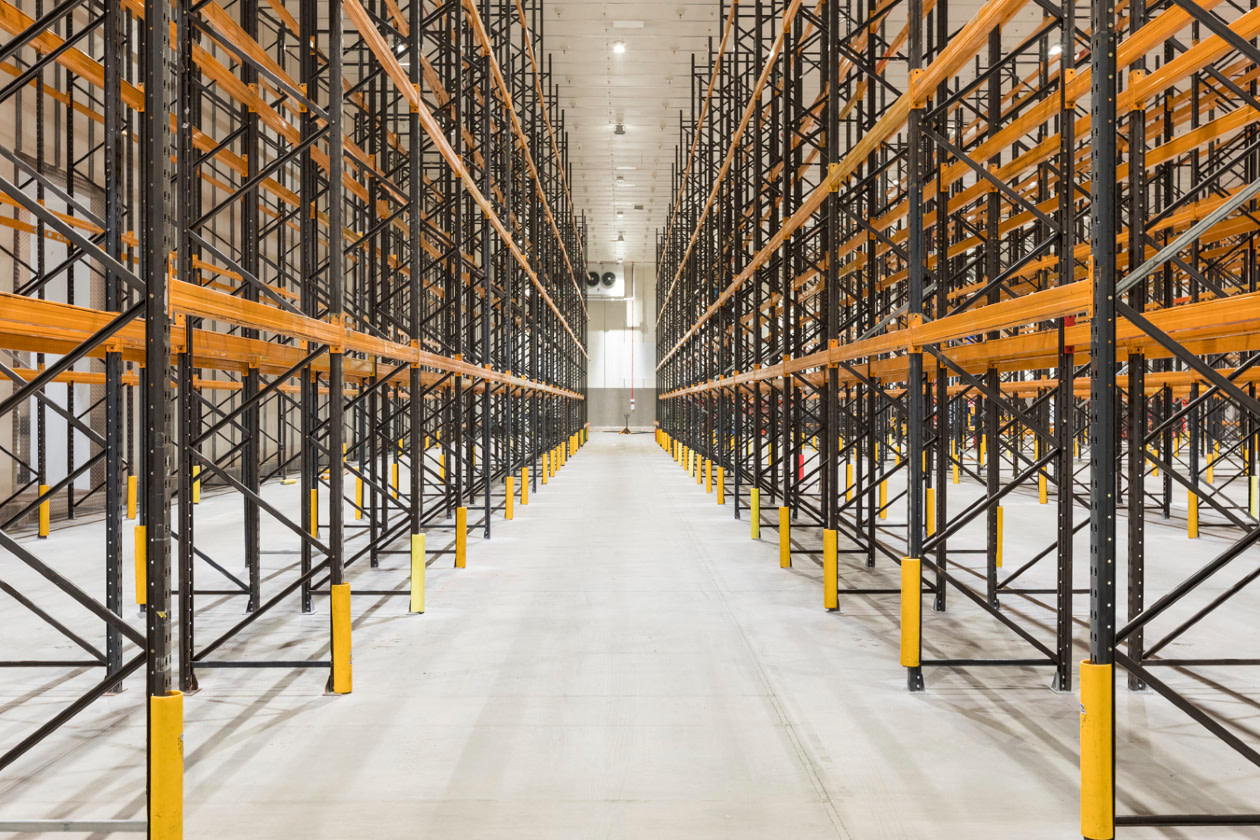


First half net rental income grew by 16.2% to £173mn, driven by underlying rental growth in the logistics portfolio of 5.1% and last year’s acquisition from Blackstone.
Operating profit was up 6.1% to £153mn, lagging rental income largely because of the absence of income from Development Management.
The portfolio value fell 2.7% because of disposals and lower property values.
Separately, Tritax has completed an equity fundraise at a price of 164p per share, a 4.5% discount to the previous close. The transaction is intended to accelerate development of the company’s data centre pipeline.
The shares fell 4.2% in early trading.
Our view
Tritax has made good progress in the first half, capturing income growth through lease reviews and new lettings. The early market reaction looks to reflect the discount in the equity fundraise, rather than a fresh knock to the investment case.
At its core, Tritax Big Box rents out large warehouses, or 'Big Boxes', which are central to modern logistics and e-commerce. Customers continue to snap up new developments as strong logistics networks are non-negotiable. Management has a few levers it can pull to drive growth over the coming years.
One lever is serving the booming, power-hungry data centre industry. Tritax is not looking to become an operator or power generator, but to use its land and development expertise to unlock grid-connected sites for occupiers. The £350mn equity raise is a bold step in that direction, not a wholesale shift. If executed well, these sites could become higher-returning assets than traditional logistics developments, though they bring added exposure to planning, power availability, grid connection timelines and execution risk in a still-evolving market.
Real estate investment trusts (REIT), like Tritax, must pay out the majority of rental profits to investors. Desirable assets mean attractive deal terms, such as upwards-only rent reviews, which are helping boost income. A wide range of high-quality tenants should hopefully add some more security to the 5.1% forward dividend yield, while further expansion could lead to increasing payouts – though not guaranteed.
Paying out rental income makes expansion complicated. Tritax is selling lower-yielding mature assets to invest in higher-yielding development opportunities. 2024’s merger with UK Commercial Property is helping too. Tritax has made good progress selling unwanted assets from the merger, freeing up cash. Against an improving backdrop, activity is picking up, which helps give options.
Developing new sites is also key, and a shortage of ready-to-occupy premises means that customers have been snapping up units before they've been completed. But it's expensive to get sites up and running, and if it doesn't get filled, it could become a financial headache.
Tritax’s valuation has recovered, narrowing the discount to its underlying net asset value and closing much of the gap with peers. That leaves less room for disappointment and puts more pressure on management to deliver higher returns. The data centre investment drive looks well thought through, but this remains relatively untested, so progress will need to be judged over time.
Environmental, social and governance (ESG) risk
Real estate is relatively low risk in terms of ESG. One of the principal drivers of this risk is the capacity to integrate material ESG considerations into decision-making, risk management and public reporting; the most material ESG considerations are environmental, like carbon emissions reduction, energy efficiency and physical climate risk. The rise of hybrid working has also reduced demand for commercial property, making product governance and customer satisfaction a top priority. Other risks to monitor include labour relations, business ethics, and emissions & waste.
According to Sustainalytics, Tritax’s overall management of material ESG issues is strong.
Tritax demonstrates strong ESG commitment with board-level oversight, robust reporting standards, and a clear code of conduct that protects employees reporting misconduct. The company integrates physical climate risk into its strategy, conducting full carbon life cycle assessments for new developments, but lacks detailed water management programs and transparency on managerial responsibility for safety. The move into grid-connected sites for data centre occupiers could also bring fresh scrutiny, given the sector’s heavy power needs and potential pressure on local infrastructure.
Tritax Big Box key facts
All ratios are sourced from LSEG Datastream, based on previous day’s closing values. Please remember that yields are variable and not a reliable indicator of future income. Keep in mind that key figures shouldn’t be looked at on their own – it’s important to understand the big picture.
This article is original Hargreaves Lansdown content, published by Hargreaves Lansdown. It was correct as at the date of publication, and our views may have changed since then. Unless otherwise stated estimates, including prospective yields, are a consensus of analyst forecasts provided by LSEG. These estimates are not a reliable indicator of future performance. Yields are variable and not guaranteed. Investments rise and fall in value so investors could make a loss.
This article is not advice or a recommendation to buy, sell or hold any investment. No view is given on the present or future value or price of any investment, and investors should form their own view on any proposed investment.