

Intuitive Surgical’s first quarter revenue increased by 23% to $2.8bn (consensus $2.6bn). Growth in all revenue lines was underpinned by an acceleration in surgical procedures performed using Intuitive’s platforms, and higher system placements.
Underlying operating profit was up by 40% to $1.1bn (consensus $0.9bn), helped by a better gross margin and a relatively modest increase in operating expenses.
The company spent $1.1bn on share buybacks during the quarter, bringing cash on hand down to $8.0bn.
Full year guidance has been raised for both gross margin and procedure growth on the da Vinci platform by half a percentage point, to 67.5–68.5% and 13.5–15.5% respectively. The mid-point of underlying operating expense growth has also been reduced by half a point to 12.5%.
The shares were up 1.5% in pre-market trading.
Our view
Intuitive Surgical exceeded first‑quarter expectations, reflecting strong demand. Wider industry concerns had pressured the valuation ahead of the results, but the update prompted a positive market response. We see scope for further upgrades if momentum is maintained.
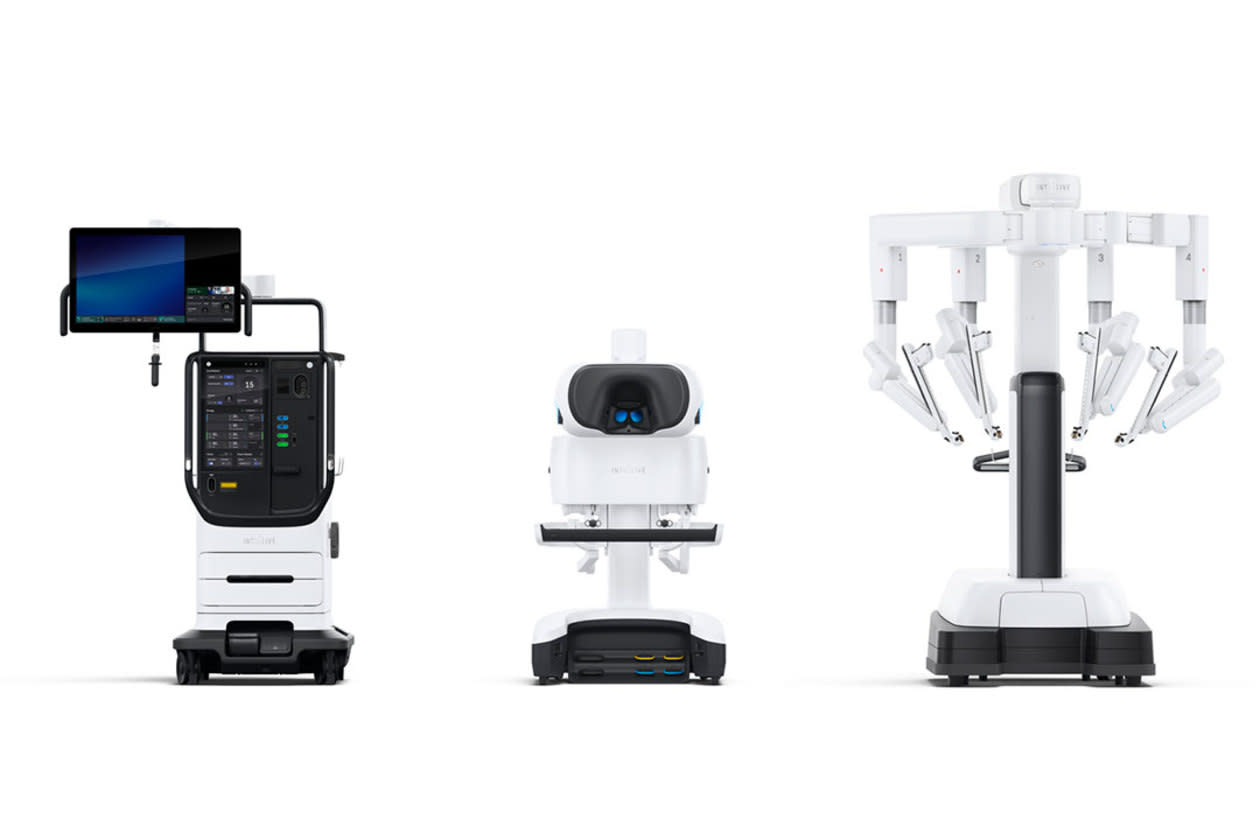
The company’s the market leader in the complex field of robotic surgery. At around $2mn a piece, its flagship da Vinci systems aren’t cheap. But they can offer compelling benefits to both healthcare providers and patients, including reduced complication rates and a lower overall cost of care.
That’s driven rapid adoption, with around 3.2mn procedures carried out using Intuitive’s platforms in 2025. With the latest da Vinci generation still early in its rollout, we see scope to expand the installed base and drive higher utilisation‑led revenues Once in place, the installed base of systems generates high levels of recurring income from instruments and accessories, and machine servicing.
Competitive threats, tariffs, and lower demand for some procedures following the boom in anti-obesity medicines are some of the risks we are monitoring. On balance we remain positive on Intuitive’s prospects, with potential to treble annual procedures based solely on established use cases of the technology. The total addressable market looks significantly higher and Intuitive is making good progress for approvals for use in new clinical areas.
Innovation continues at pace, with $1.3bn spent on research and development in 2025. Its more recently launched Ion platform for lung biopsies has very strong momentum with procedures up 51% last year. And Innovations such as ‘force feedback, which enables more delicate movements by surgeons continue to extend the company’s competitive edge.
The company was also an early adopter of artificial intelligence (AI), an area we see further scope for monetisation. Market domination provides access to large and unique data sets. These pave the way for further breakthroughs such as remote surgery and automation. However, there’s no guarantee of commercial success.
Intuitive’s high levels of innovation are supported by a robust balance sheet and strong cash flows. While the company doesn’t pay a dividend, the healthy financials supported $2.3bn of share buybacks last year. Buyback activity in 2026 also started strongly but there’s no assurance that will continue.
We think Intuitive looks well placed to stay at the forefront of surgical innovation. Forecasts have been moving in the right direction, and attractive upside could be on offer if execution remains strong. However, with sector profitability under the microscope, the valuation will likely remain sensitive to external news.
Environmental, social and governance (ESG) risk
The healthcare industry is medium/high risk in terms of ESG, depending on subindustry. Across the board, product governance is the most acute risk, with business ethics, labour relations and data privacy also contributing. Providing reasonable access to healthcare as a basic service is also a growing issue, with greater concerns surrounding the social implications of for-profit healthcare companies.
According to Sustainalytics, Intuitive Surgical’s management of ESG risks is strong and often ahead of the industry. Its surgical systems are subject to the relevant safety certifications, complemented by a robust internal product and safety programme. The advanced nature of Intuitive’s technology also requires specialist knowledge. That’s supported by initiatives for talent development and recruitment, reflected in a staff turnover rate below 10%.
While it manages most material risks better than peers, it falls behind on its approach to eco-friendly product design, and end of life product stewardship, although these issues are mentioned in its reporting.
Access to care for patients is another key ESG risk for the sector, and while Intuitive recognises this, its approach could be improved by setting targets and reporting on the progress of its initiatives.
Intuitive Surgical key facts
All ratios are sourced from LSEG Datastream, based on previous day’s closing values. Please remember yields are variable and not a reliable indicator of future income. Keep in mind key figures shouldn’t be looked at on their own – it’s important to understand the big picture.
This article is original Hargreaves Lansdown content, published by Hargreaves Lansdown. It was correct as at the date of publication, and our views may have changed since then. Unless otherwise stated estimates, including prospective yields, are a consensus of analyst forecasts provided by LSEG. These estimates are not a reliable indicator of future performance. Yields are variable and not guaranteed. Investments rise and fall in value so investors could make a loss.
This article is not advice or a recommendation to buy, sell or hold any investment. No view is given on the present or future value or price of any investment, and investors should form their own view on any proposed investment.