

First-half adjusted revenue rose 10% to £1.9bn (£1.8bn expected). The Engines division grew at the fastest pace, up 19%, driven by strong engine sales and aftermarket demand. Airframes revenue grew 4%.
Adjusted operating profit grew by 16% to £347mn (£342mn expected). This was driven by top line growth and operational improvements in Engines, more than offsetting costs linked to one of its chemical tanks overheating at Garden Grove in the US.
Free cash flow improved from an outflow of £54mn to an inflow of £13mn. Net debt rose by £0.1bn to £1.5bn.
Excluding the impact of Garden Grove, full-year guidance remains unchanged. Adjusted revenue is expected to land between £3.75bn and £3.95bn, with adjusted operating profit in the £0.70bn-£0.75bn range.
The shares fell 4.0% in early trading.
Our view
Melrose saw its revenues and profits rise at double-digit rates in the first half, driven by strong growth in its Engines division. But the costs of the Garden Grove chemical leak are racking up, prompting the group to pause its share buyback programme.
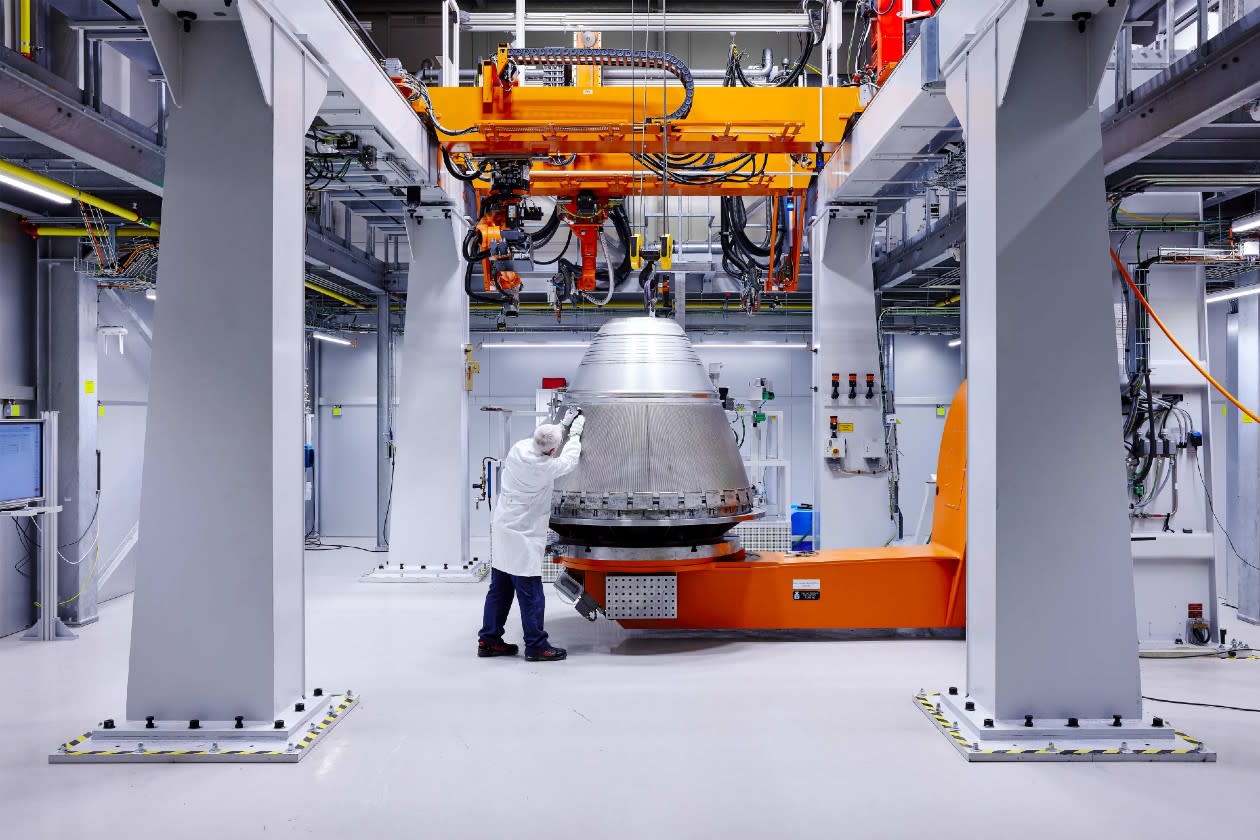
Melrose is a pure-play aerospace business. Its Airframes division deals with building the body and wings of planes. Performance has been improving recently, thanks to growing Defence demand. But Civil Aerospace remains a drag, impacted by lower volumes and manufacturing challenges.
At Garden Grove, one of the division’s chemical tanks overheated, triggering a major emergency response. Output is back to around 50% of normal capacity, but until full output resumes, revenue, operating profit and cash flow are taking a £6mn monthly hit. Repair work, compensation and legal costs could add pressure.
Truth be told, we view Airframes as one of the least attractive areas of aerospace. It generally has weak pricing power, and the supply chains involved can create a logistical nightmare, often leading to production delays.
The Engines business is the better asset, as it builds key components for aircraft engines. It has Risk and Revenue Sharing Partnerships (RRSPs) with engine makers, which cover around 70% of all global flights.
The RRSPs require Melrose to contribute an agreed percentage of annual engine costs and, in exchange, receive the same percentage of annual engine revenue. Given the long life of an engine model, typically 30+ years, Melrose can benefit from ongoing cash flows for decades after delivery.
Profitability in the Engines division continues to impress. Operating margins are moving higher, and further improvements are expected. While attractive, this relies on trimming fixed costs, improving productivity, and resolving unprofitable contracts. By no means a straightforward set of tasks.
The conflict in the Middle East has had a mixed impact on Melrose’s operations, with increased Defence demand broadly offsetting disruption to commercial flights. We’re not overly concerned for now, but we’ll keep monitoring the balance.
Melrose looks attractive on traditional valuation metrics, like the price-to-earnings ratio. But remember, ‘cash is king’ and Melrose had only just begun to produce positive free cash flow after three years of outflows. The Garden Grove incident has landed just as that recovery was starting to take shape, and if full production is not restored quickly, it risks becoming another setback for the business and investor confidence. Until Melrose builds a clearer delivery track record, we think other names in the sector look better placed to benefit from industry-wide tailwinds.
Environmental, social and governance (ESG) risk
The aerospace and defence sector is high-risk in terms of ESG. Product governance and business ethics are key risk drivers. Carbon emissions from products and services, data privacy and security and labour relations are also contributors to ESG risk.
According to Sustainalytics, Melrose’s management of ESG risk is strong.
It has board-level oversight of ESG issues and a very strong environmental policy. A part of executive remuneration is explicitly linked to sustainability performance targets, and there is a robust whistleblower policy in place. However, business is cyclical, depending highly on economic changes, which can lead to periodic layoffs.
Melrose key facts
All ratios are sourced from LSEG Datastream, based on previous day’s closing values. Please remember yields are variable and not a reliable indicator of future income. Keep in mind key figures shouldn’t be looked at on their own – it’s important to understand the big picture.
This article is original Hargreaves Lansdown content, published by Hargreaves Lansdown. It was correct as at the date of publication, and our views may have changed since then. Unless otherwise stated estimates, including prospective yields, are a consensus of analyst forecasts provided by LSEG. These estimates are not a reliable indicator of future performance. Yields are variable and not guaranteed. Investments rise and fall in value so investors could make a loss.
This article is not advice or a recommendation to buy, sell or hold any investment. No view is given on the present or future value or price of any investment, and investors should form their own view on any proposed investment.